
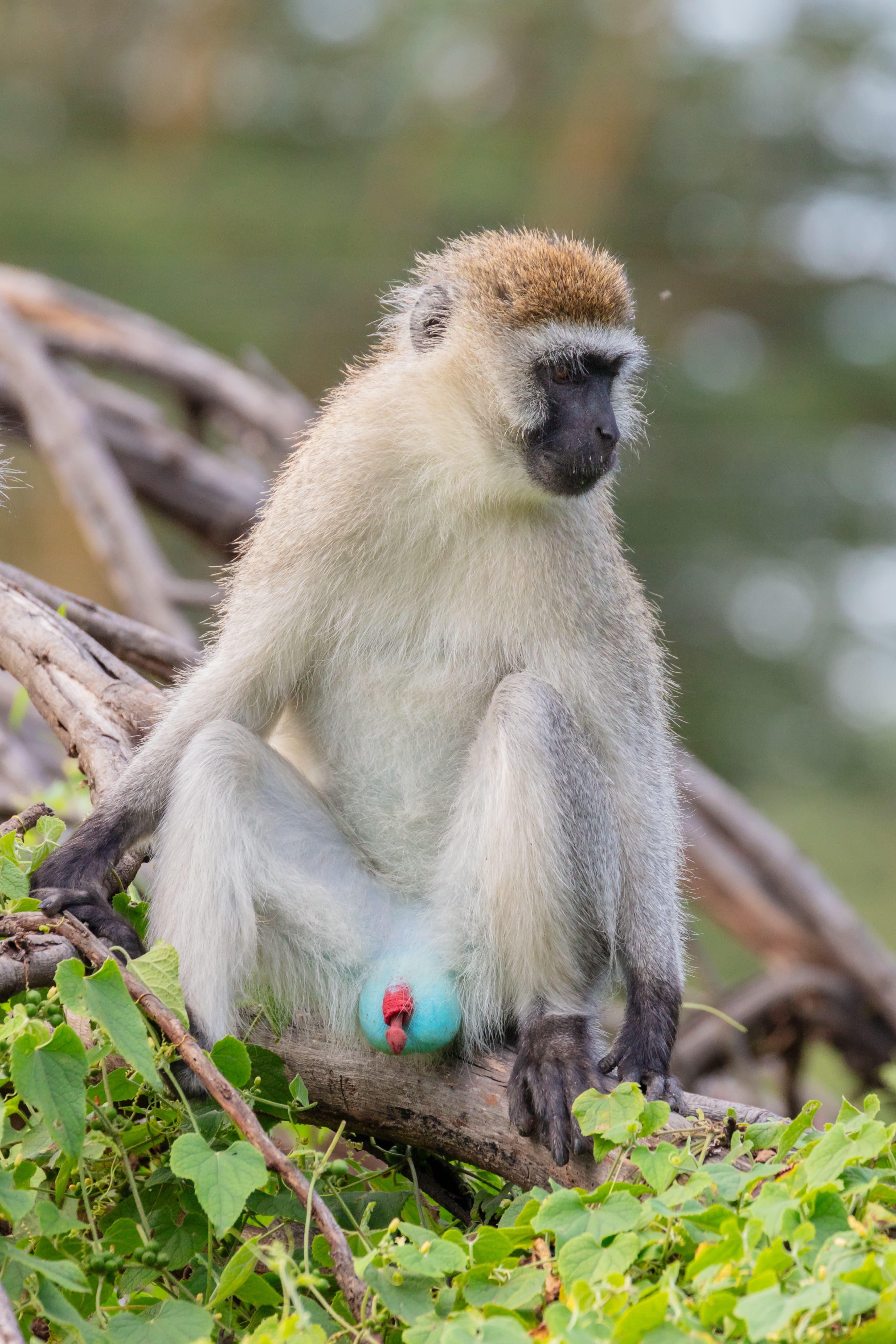
Vervet troops can number anywhere from 10 to 70 individuals. Everyone in the troop has a job - lookouts watch for eagles from the treetops while others forage for food below. If a lookout spots a predator, it makes a specific alarm call: a different sound for an eagle than for a snake or a leopard. Other vervets instantly understand the call and react in the right way.
Vervets eat a wide variety of food: fruits, leaves, seeds, insects and sometimes eggs. Because they live near water in many parts of Malawi, they often raid fields of maize or mango trees, which makes them clever but sometimes mischievous neighbours for farmers.
Young vervets spend a lot of time playing - chasing each other through branches, wrestling and jumping. Scientists believe play helps youngsters practise the skills they will need as adults, such as climbing, balancing and working out social situations within the troop. Sound familiar?
Vervet monkeys have one of the most complex communication systems of any non-human animal. They can give different alarm calls for different predators, remember individual troop members by their calls, and even appear to pass information between groups. Researchers who study them say they are endlessly fascinating.