
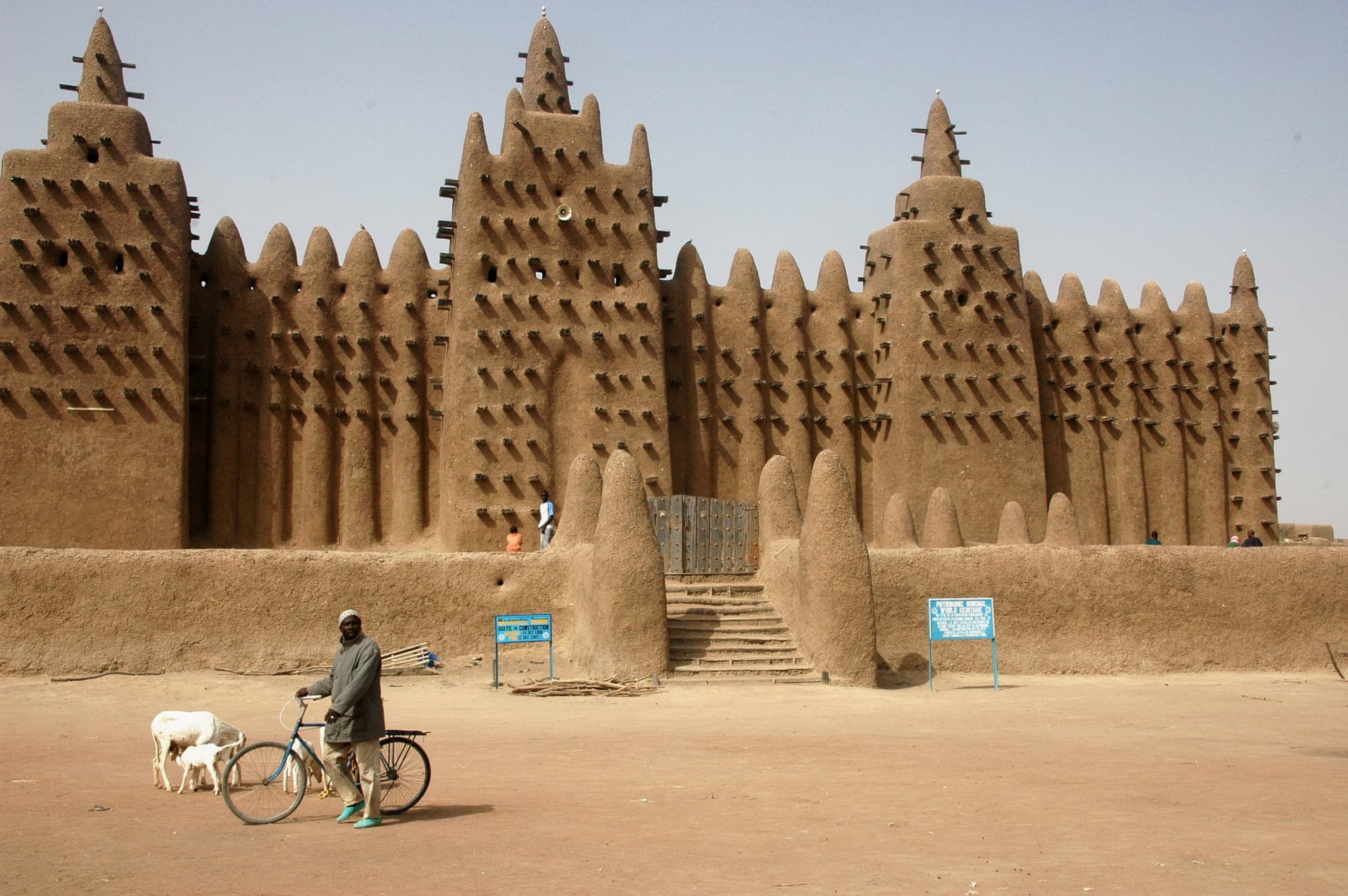
The mosque was first built around 800 years ago, though the current building dates from 1907. Its three large towers rise about 13 metres high - that is as tall as a four-storey house. The wooden poles sticking out of the walls are not decorations - they are built-in scaffolding, used by workers who need to climb up and repair the surface after the rains.
Every year in spring, the whole city of Djenné comes out for a great replastering festival. Thousands of people carry buckets of fresh mud mixed with rice husks (which make it strong), and they work together to smooth new mud all over the walls and towers. Music plays, families laugh and shout, and the mosque ends up looking brand new by the end of the day.
Djenné sits on an island surrounded by the Bani River, a tributary of the Niger. The town has been a trading centre for over a thousand years. The market that fills the square in front of the mosque every Monday is one of the most famous markets in West Africa, full of vegetables, spices, cloth and crafts.