
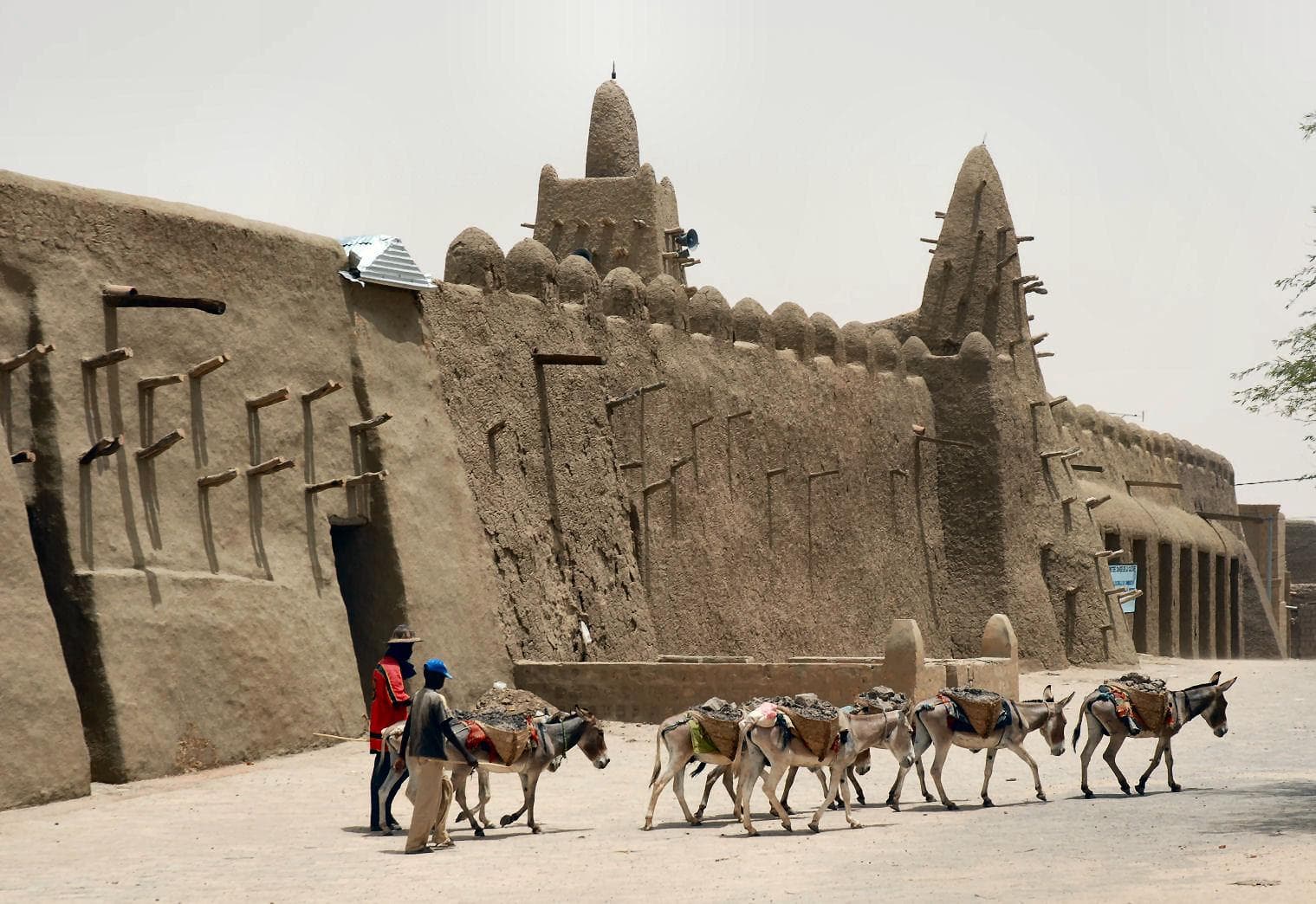
More than 600 years ago, Timbuktu sat right at the crossroads of great trade routes. Merchants carrying gold, salt and cloth passed through the city, and scholars from many different lands came to study and share ideas. At its busiest, the city may have had 25,000 students - huge for any city at that time.
Three famous mosques - Djinguereber, Sankore and Sidi Yahia - were also great schools called madrasas. Families stored their books in private libraries passed down from parents to children, generation after generation. Today, researchers think there are still around 100,000 ancient manuscripts tucked away across the city, written on parchment and goatskin.
The buildings of Timbuktu are made from mud brick and wood, which means they need regular repairs after each rainy season. Every year, the whole community comes together to replaster the mosques - neighbours passing buckets of mud, children helping to smooth the walls. It is a tradition that has happened for centuries.