
Classroom lesson ยท Wildlife ยท ๐Ÿ‡ฒ๐Ÿ‡ท Mauritania

Camel Racing

Speed, tradition, and excitement across the desert sands

Photo ยท Wikimedia Commons

What is it?

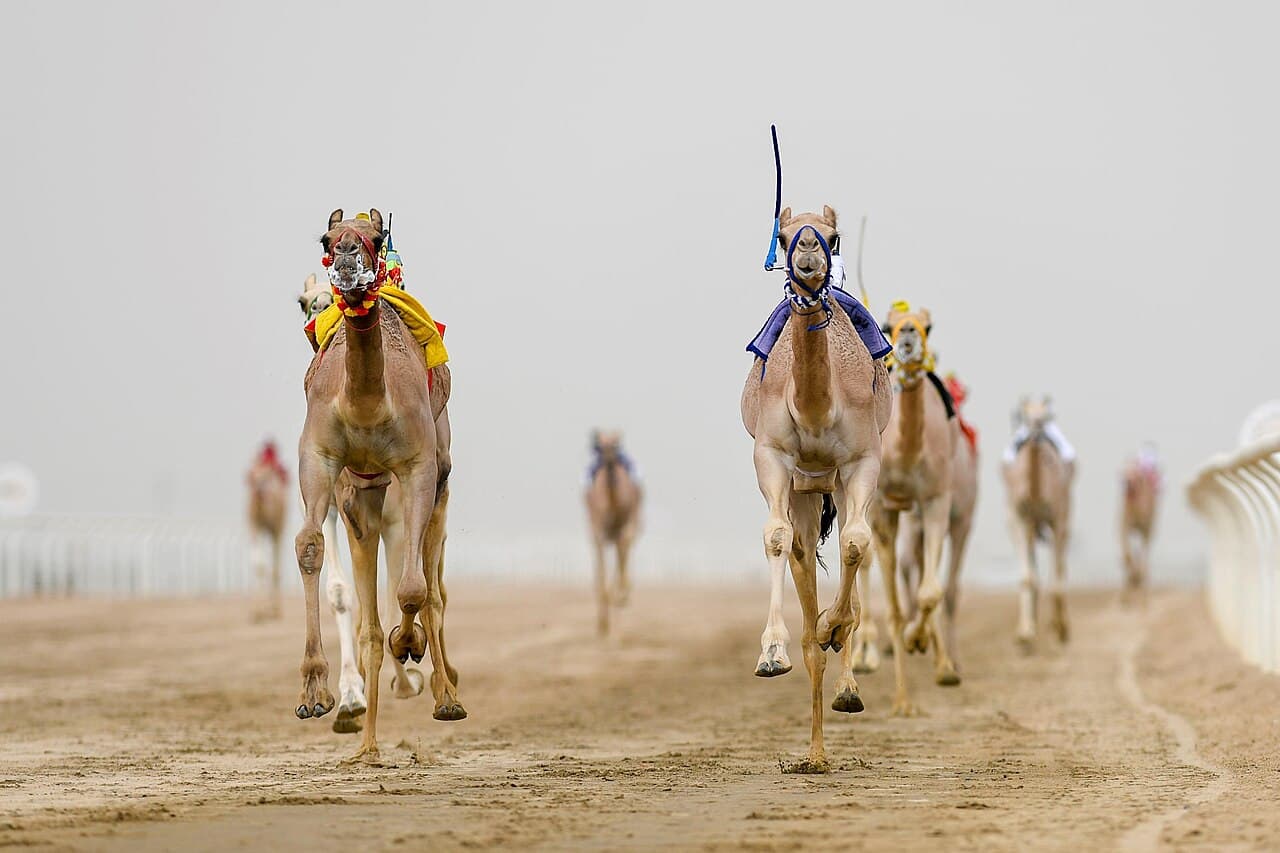
Camel racing is one of the most exciting and traditional sports in Mauritania. Racing camels are carefully trained over months and can reach speeds of around 65 kilometres per hour โ€” faster than a bicycle going downhill. Races are held at festivals and celebrations, and a well-trained racing camel is a great source of pride for its owner and family.

Tell me more

Camels might look slow and lumbering when they are walking, but racing camels move in a completely different way. At full speed they swing both legs on the same side forward at once โ€” a rocking gait called 'pacing' โ€” which lets them accelerate surprisingly quickly across flat desert ground.

Training a racing camel takes months of exercise, careful feeding, and building a trusting relationship between the camel and its trainer. Camels are intelligent animals with strong personalities; they work best with trainers they know well. Some racing camels become famous and have names that are celebrated across the region.

Camel races in Mauritania are a major community event. Families, friends, and visitors gather to watch, with the owners of the camels watching anxiously. The winning camel brings its owner great honour and sometimes a valuable prize. After the race, people share food and music.

Camel racing blends sport with culture โ€” it connects Mauritanian people to their nomadic Saharan heritage, where camels were essential partners in travel, trade, and survival. Racing celebrates the special bond between humans and camels that has existed for thousands of years.

In the classroom

Walk your class through this in 15 minutes.

Talk together

Discussion prompts

  1. 01Camels were essential to Saharan life for travel and trade. Why do you think people continue to race them now, even though cars and trucks exist?
  2. 02Training a racing camel requires trust between human and animal. Can you think of other sports where the relationship between an animal and its trainer is very important?
  3. 03What sports or games in your own community connect people to their history or traditions?
Try this

Classroom activity

Hold a classroom 'camel race' relay. Divide the class into teams of four. Each team member must complete a task representing a part of camel preparation: Task 1 โ€” run to a cone and back (training); Task 2 โ€” sort picture cards of camel food into 'good' and 'not good' (feeding); Task 3 โ€” answer a camel fact question (knowledge); Task 4 โ€” the final sprint race. First full team to finish wins.