
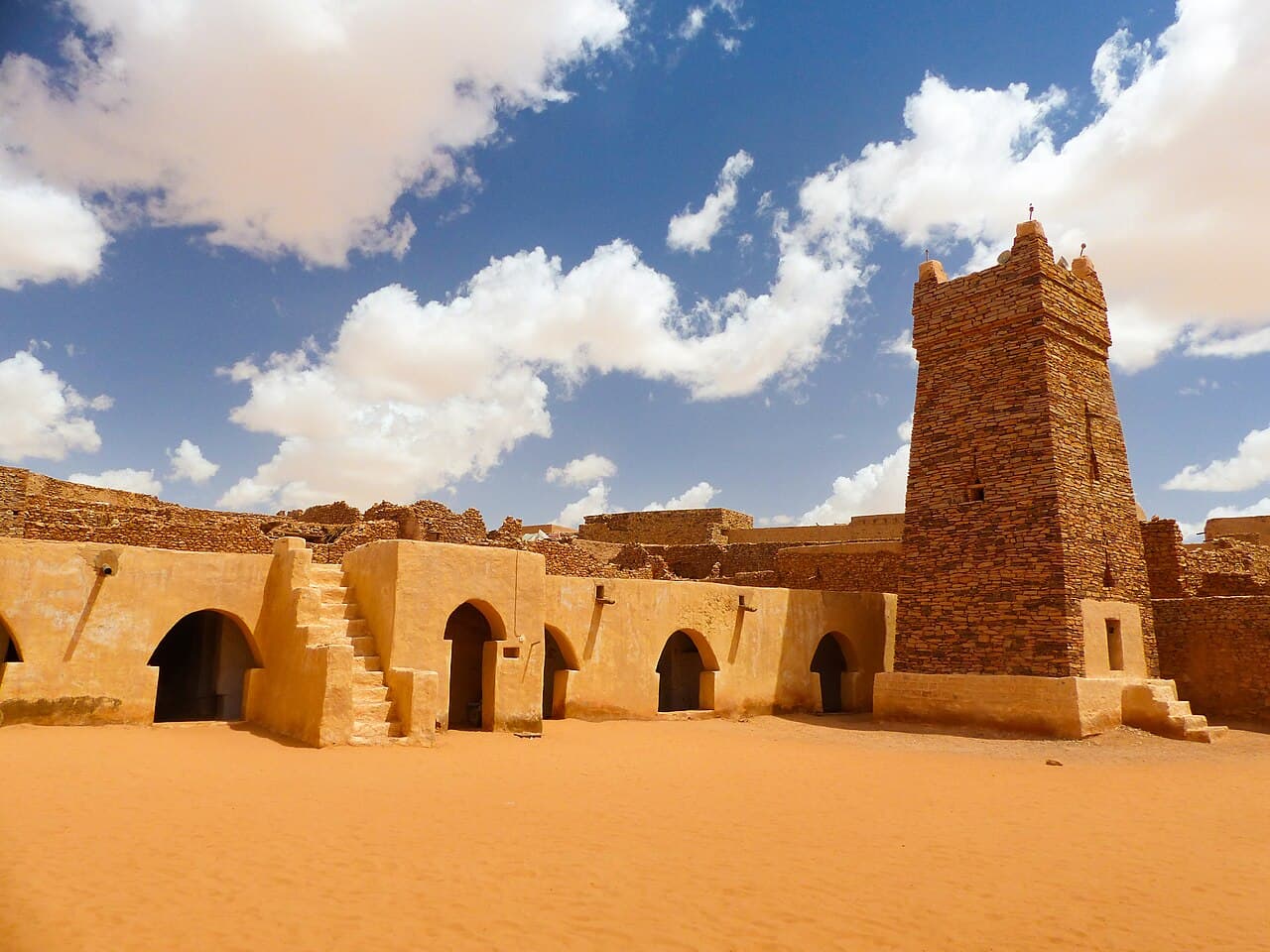
The festival usually takes place in the ancient walled towns that were once great centres of learning and trade. Streets fill with musicians playing ardin and tidinit, poets performing medh (devotional praise poetry set to a woodblock rhythm), and storytellers who know the old tales of desert caravans by heart.
One of the most spectacular parts of the festival is the camel parade, where beautifully decorated camels are led through the streets wearing colourful saddle cloths and ornaments. Their owners dress in traditional robes and turbans, and the camels are trained to walk slowly and proudly for the crowd.
Craftspeople set up stalls selling silverwork, leather goods, and woven baskets - traditional skills that have been passed down for generations in the desert. Visitors can watch a silversmith hammering delicate patterns, or a weaver working at a loom, and buy something made by hand right in front of them.
The festival also includes open-air markets where every kind of food from the region is available: thieboudienne, méchoui (roasted lamb), sweet dates, and mint tea poured in great foaming streams. The smell of charcoal fires and spices drifts through the old mud-brick alleys.