
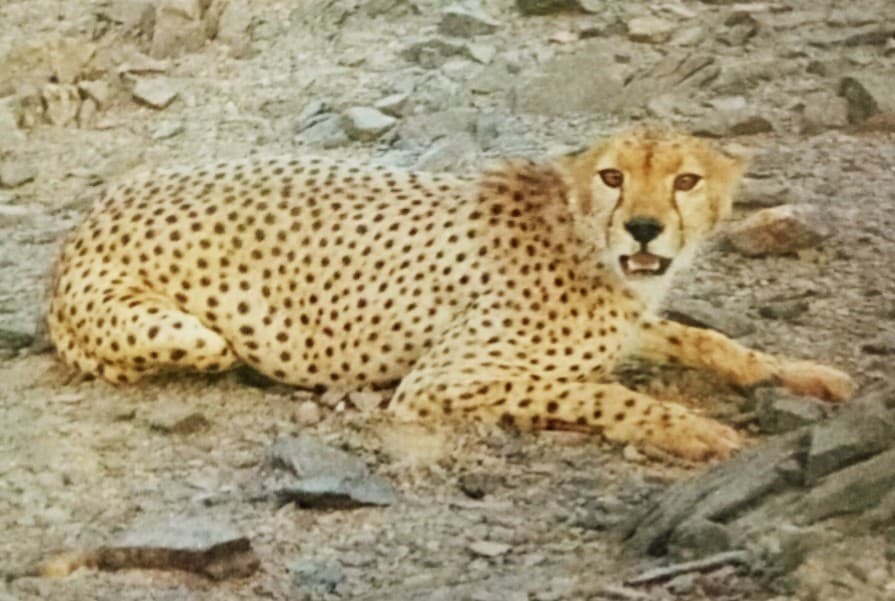
Scientists estimate there are fewer than 250 Saharan cheetahs left in the wild. They are so shy and live in such remote areas that most of what we know about them comes from camera traps - cameras left in the desert triggered by movement - rather than direct observation. Spotting one is incredibly rare even for expert researchers.
Their pale, cream-coloured coat is an adaptation to the sandy, rocky Sahara. They are slightly smaller than African cheetahs and seem to need less water, surviving on the moisture in their prey - mainly addax, gazelles, and hares. They are thought to hunt mostly at night or in the cool of early morning to avoid the desert heat.
Saharan cheetahs range across enormous areas of desert - one individual was tracked covering more than 1,500 kilometres in a single year, wandering through Mauritania, Mali, and Algeria. This huge range means protecting them requires cooperation across several countries.
Mauritania is considered one of the strongholds of this ghost-like cat. Local conservation teams set up camera traps and work with nomadic communities, who sometimes spot cheetah tracks in the sand, to map where the cats still live.