
Classroom lesson ยท Food ยท ๐Ÿ‡ฒ๐Ÿ‡ท Mauritania

Thieboudienne

The great West African fish-and-rice celebration dish

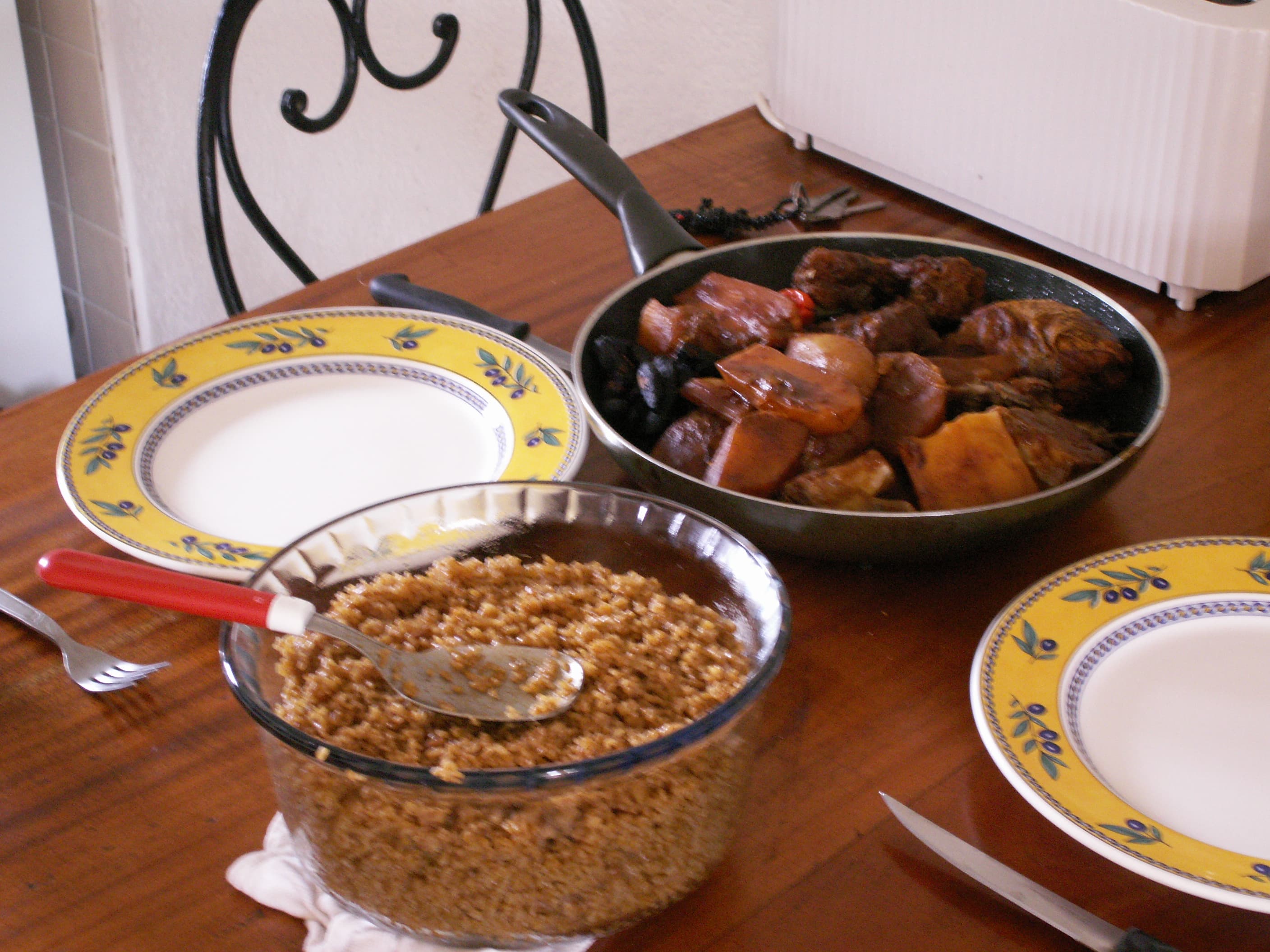
Photo ยท Wikimedia Commons

What is it?

Thieboudienne (say it: cheb-oo-JEN) is the beloved national dish shared across Mauritania and Senegal, made with fish, rice, and vegetables all cooked together in one big pot. The fish is stuffed with a fragrant mix of herbs and spices, then the rice soaks up all the flavourful broth โ€” making it incredibly tasty. It is the dish families serve on special days and when guests come to visit.

Tell me more

The name 'thieboudienne' comes from Wolof words meaning 'rice with fish'. The key to its special flavour is a herb paste called 'rof' โ€” a mix of parsley, garlic, and spices โ€” which is stuffed into the fish before cooking. This way, the flavour works from the inside out.

The dish usually includes vegetables like cassava, carrot, cabbage, aubergine, and sometimes tamarind for a gentle sour note. Everything cooks together so the rice absorbs a deep, savoury broth. The most prized part for many people is the crispy rice layer at the bottom of the pot, called 'xooรฑ' โ€” slightly caramelised and absolutely delicious.

Along Mauritania's Atlantic coast, fresh fish is plentiful thanks to the cold, fish-rich Canary Current. Grouper and red snapper are popular choices. The dish is traditionally eaten from one large communal plate, with everyone gathering around and sharing โ€” a symbol of togetherness and welcome.

Thieboudienne takes time and skill to prepare well, so making it is often a group activity. Older family members teach younger ones the exact amount of each spice, when to add each vegetable, and how to judge when the rice is ready. It is a dish that carries family tradition in every bite.

In the classroom

Walk your class through this in 15 minutes.

Talk together

Discussion prompts

  1. 01Why might cooking and eating from a shared plate be a symbol of friendship and welcome?
  2. 02Recipes are passed down through families by teaching and watching, not always written down. What skills or traditions in your family are passed on this way?
  3. 03Thieboudienne uses fish from the sea and vegetables from farms. Can you think of a dish from your country that brings together different kinds of ingredients?
Try this

Classroom activity

Create a 'dish map'. On a large piece of paper, draw a simple outline of Mauritania and Senegal. Draw a big plate of thieboudienne in the middle. Around it, draw arrows pointing to where each main ingredient comes from โ€” fish from the Atlantic coast, vegetables from farms, spices from markets. Label each one and colour your map.