
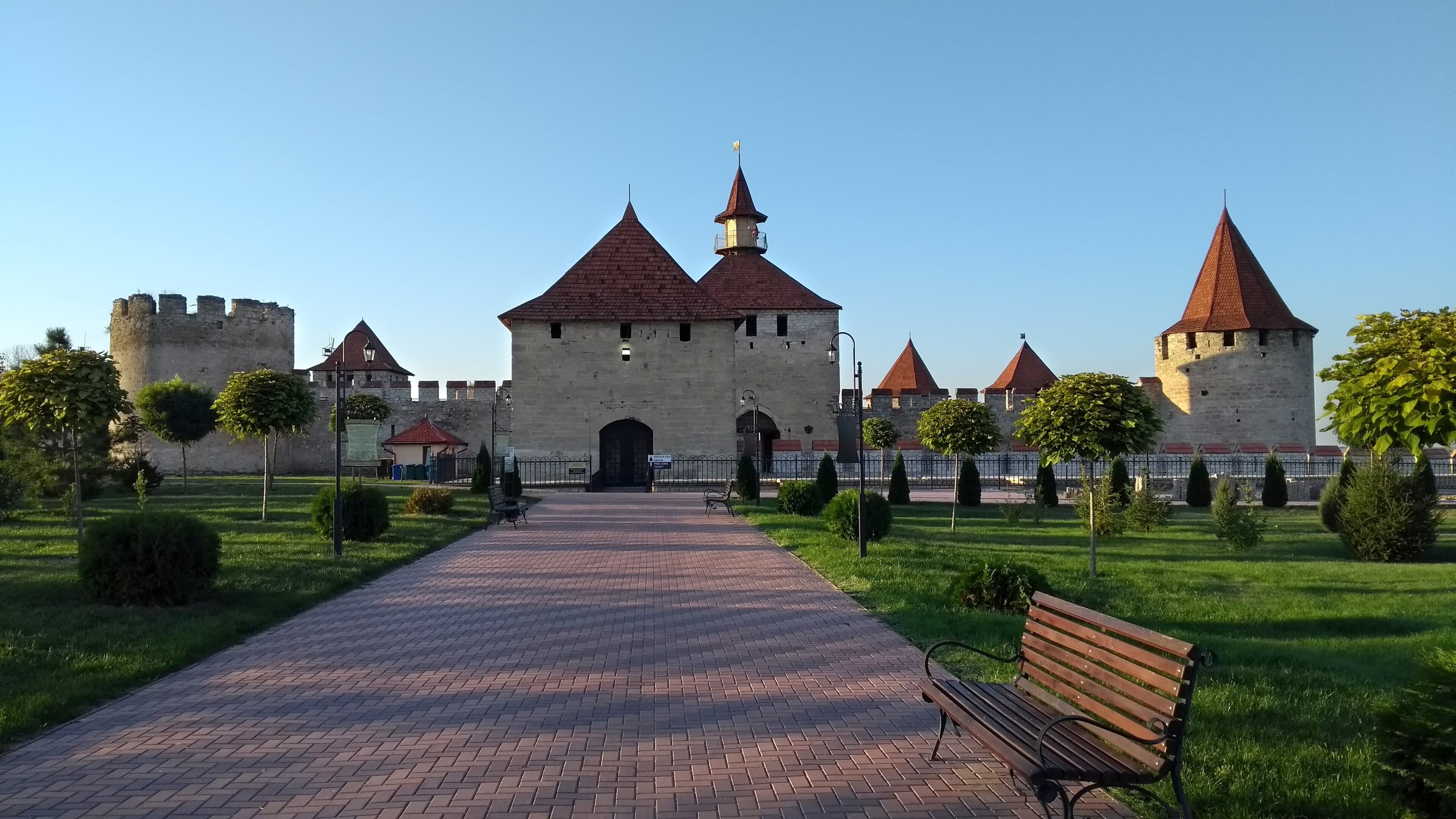
The fortress was built to guard an important crossing point on the Dniester - a wide, slow river that has been used as a trade and travel route for thousands of years. The builders chose a high spot on the riverbank so that lookouts on the towers could see a long distance in every direction. From the top of the walls today, you can still see far across the flat land on the far bank.
The walls of Bender Fortress are made of massive stone blocks and are several metres thick. They were built to withstand the heaviest attacks that existed at the time - including cannons. Inside the outer walls there are courtyards, the remains of old buildings, and tunnels that once connected different parts of the fortress.
One of the most interesting features is the main gateway, which has a rounded arch and is flanked by two solid towers. In the days when the fortress was active, iron gates could be dropped across this entrance in seconds to seal the whole fortress. The mechanism for raising and lowering those gates can still be seen in the gatehouse ceiling.
Today the fortress is a place for exploration and imagination. Children visiting can walk along the top of the ramparts, peer through arched windows, and try to work out how the different parts of the fortress connected to each other. Some sections have been carefully restored so that you can see exactly how the original stonework was built.