
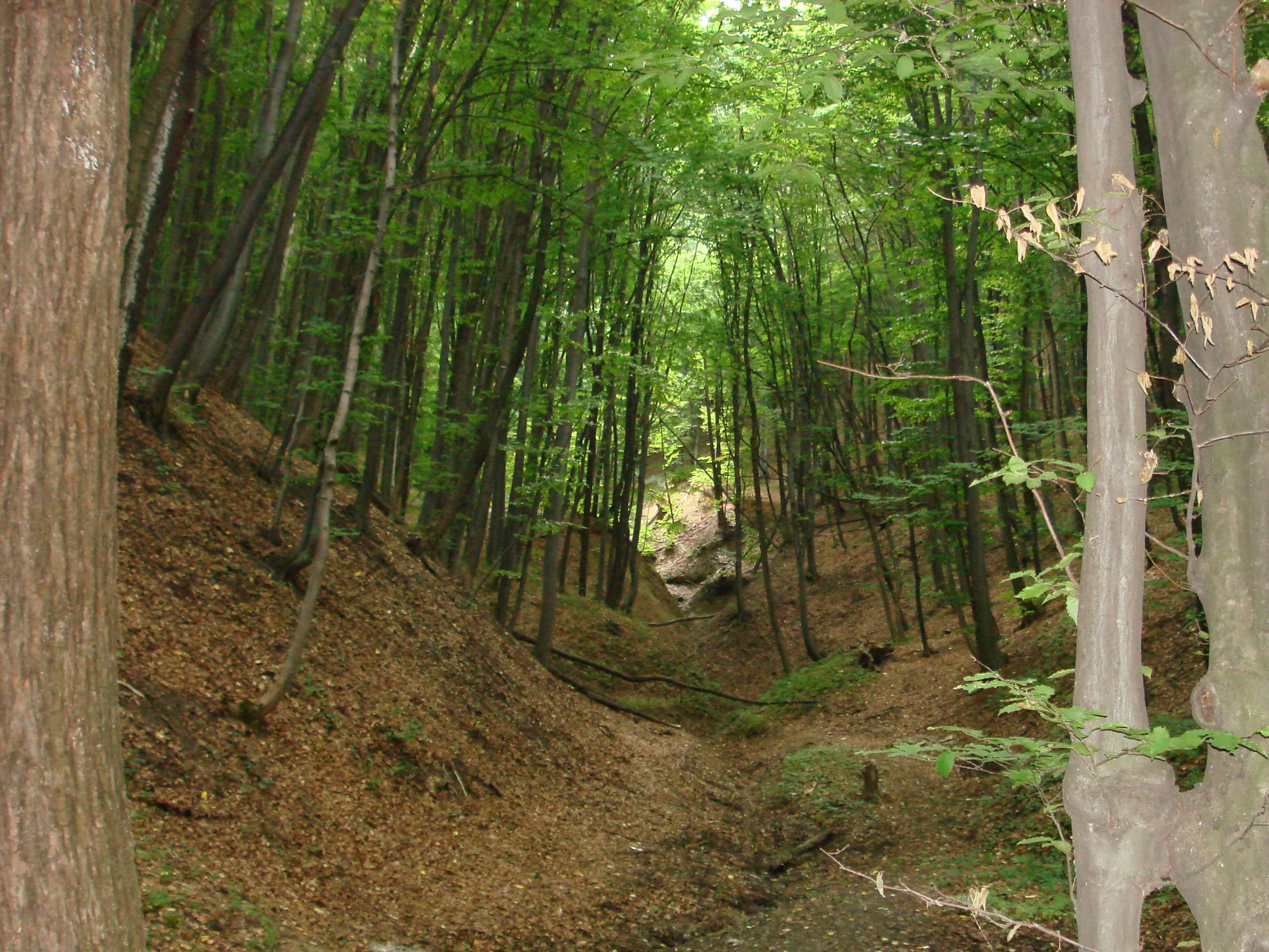
The forest grows across rolling hills, so the path through it goes up and down, in and out of light and shadow. In spring the woodland floor turns blue and white with wildflowers - wood anemones, bluebells and wild garlic. In autumn the oaks turn copper and gold, carpeting the ground with acorns that squirrels and deer collect before winter.
Codru is home to a remarkable variety of wildlife. Roe deer pick their way quietly between the trees, woodpeckers drum on bark searching for beetles, and barn owls roost in hollow trunks. Wild boars rootle through the leaf litter with their snouts. At dawn and dusk, white storks can sometimes be seen flying overhead on their way between feeding grounds.
The trees themselves are extraordinary. Some of the oak trees are more than 400 years old - they were already mature trees when people were first exploring the Americas. Their trunks are so wide that several children holding hands could not reach all the way around them. Old oaks like these become miniature worlds of their own, with dozens of different mosses, lichens, beetles and birds depending on a single tree.
In Moldovan folk culture, the codru is a symbol of strength, freedom and home. The most famous national poem begins with the line 'What is your lovely codru like?' It is a forest that people carry in their imagination even when they are far away.