
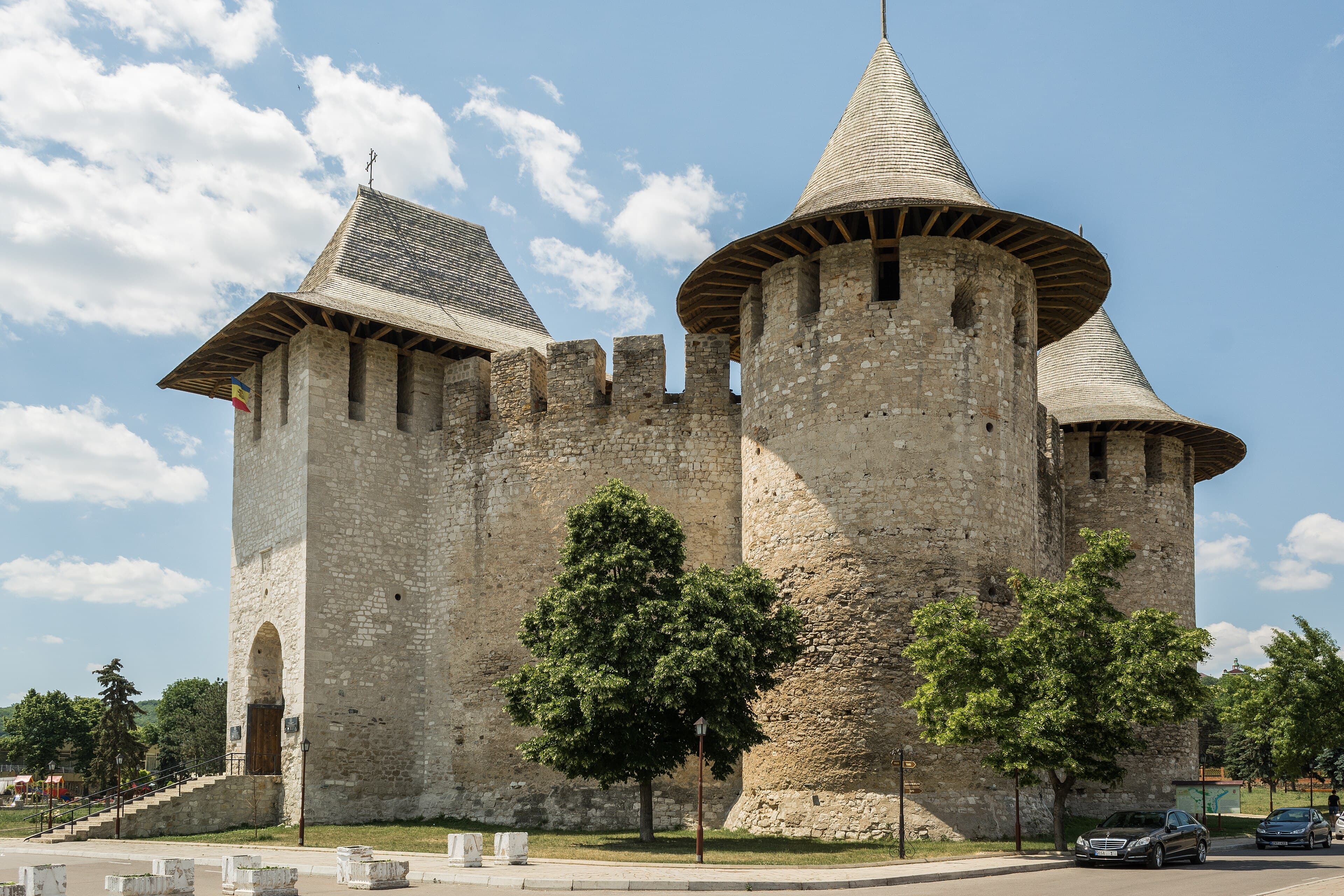
The fortress was built in the 1500s and the round design was chosen for a clever reason: a circular wall has no corners. Corners on a fortress are a weakness, because cannonballs strike them at an angle and can crack the stone. A curved wall deflects the same cannonball sideways, spreading the force and keeping the wall intact. The Soroca builders were using mathematics to make their fortress stronger.
The outer ring is made up of five round towers connected by curved curtain walls. From above - as you can see in photographs taken by drones - the whole fortress looks like a coin or a bracelet. The towers are tall and solid, with small arched windows. A walkway runs along the top of the walls between the towers, so defenders could move quickly from one position to another.
The Dniester river runs close beside the fortress. At the time it was built, the river formed a natural moat on one side - any attacker would have to cross the water before even reaching the walls. Today the river is still wide and lovely here, with willows dipping their branches into the water and swallows skimming the surface.
Soroca Fortress has been carefully restored and is one of Moldova's best-loved historic sites. Children can walk all the way around the outer ring and enter the central courtyard. Looking up from inside, you can see the circular sky framed by the curved tops of the old stone towers - a view that has been there for over 500 years.