
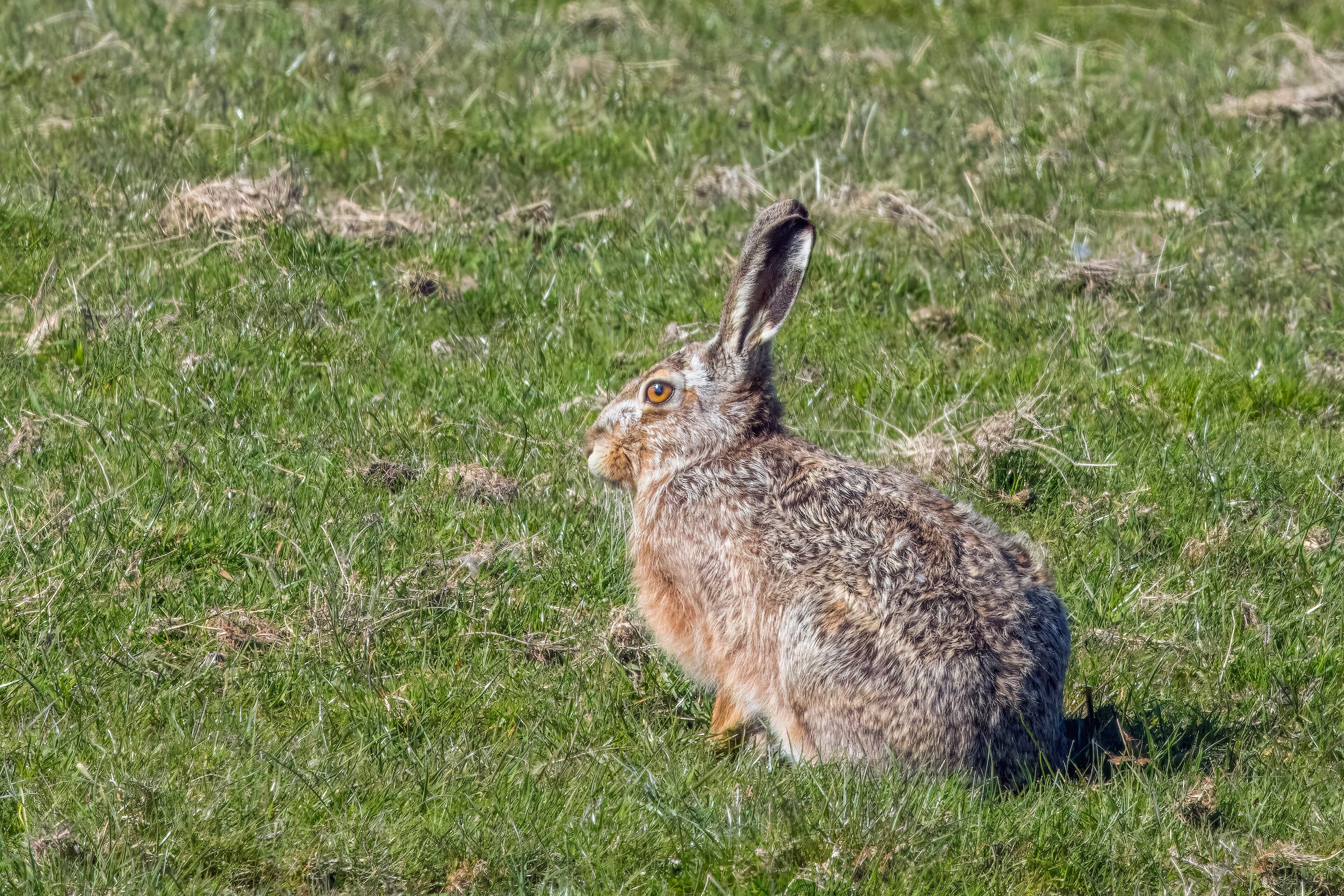
A hare's back legs are much longer and more powerful than its front legs, giving it that lolloping, bounding run. When a hare is alarmed and sprints away across a field, it can cover three metres in a single leap. It also changes direction suddenly at high speed - a trick called 'jinxing' - to confuse any animal chasing it.
A hare's ears are spectacular - they can be longer than the animal's own head. Each ear can swivel independently to catch sounds from different directions at the same time. This means a hare can hear something approaching from behind while also listening to what is happening in front. The ears also help to control the hare's body temperature - blood flowing through the large ear flaps cools down in the breeze.
Baby hares, called leverets, are born with their eyes open and a full coat of fur. Within hours of birth, a leveret can run. This is very different from rabbit kits, which are born blind and helpless underground. Leverets lie flat and still in a shallow dip in the ground called a 'form', relying on their camouflage to stay safe.
In early spring, hares can be seen behaving very energetically in the fields - chasing each other, leaping and boxing with their front paws. This is where the saying 'mad as a March hare' comes from. The sunflower and grain fields of Moldova provide hares with a large amount of food through summer and autumn.