
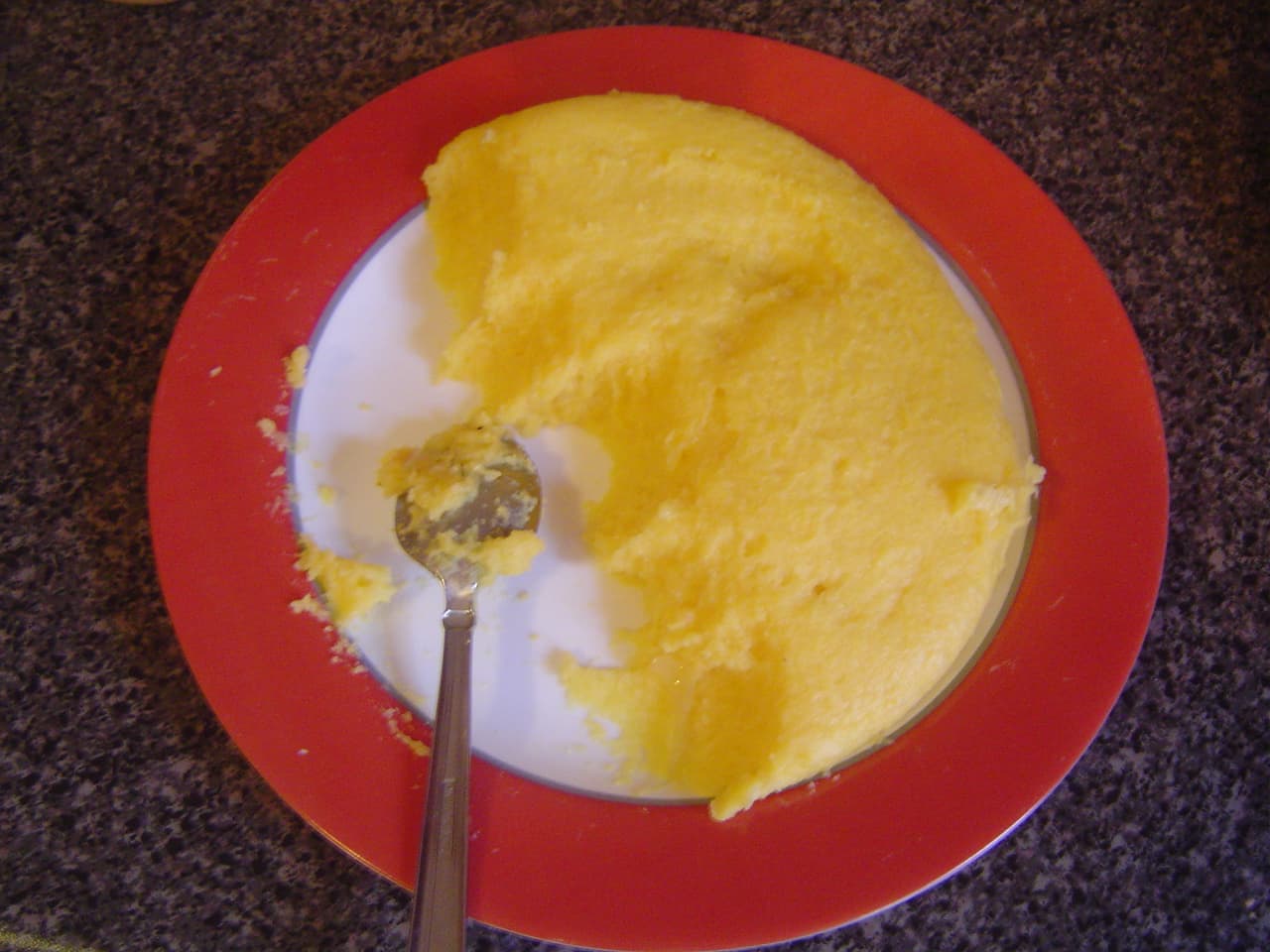
To make mămăligă, yellow cornmeal is stirred into boiling salted water and cooked slowly while being stirred continuously. As it cooks it thickens from a pourable batter into a firm, dense dough. Traditionally it was cooked in a special rounded iron pot called a 'ceaun' over an open fire, and stirred with a long wooden spoon. The smell of mămăligă cooking is one of the most recognisable kitchen smells in Moldova.
Mămăligă is famously simple but incredibly flexible. It is eaten for breakfast with sour cream and fresh white cheese. It is served for lunch alongside stews or roasted vegetables. It can be cut into wedges and grilled until crispy on the outside. Some cooks layer it with melted cheese between the layers - this version is called mămăligă cu brânză and is especially beloved by children.
Traditionally, mămăligă was not cut with a knife - it was cut with a piece of string or thread, which slices through it cleanly without sticking. This old tradition is still kept alive in many Moldovan homes and restaurants, and it always surprises visitors to see a cook cutting food with what looks like ordinary string.
Because corn grows so well in Moldova's fertile fields, mămăligă has been a staple food here since maize was first brought to Europe from the Americas around 400 years ago. Today it is enjoyed at home, at festivals, and in restaurants. Moldovan grandmothers are often considered the best mămăligă cooks, and every family has its own preferred version.