
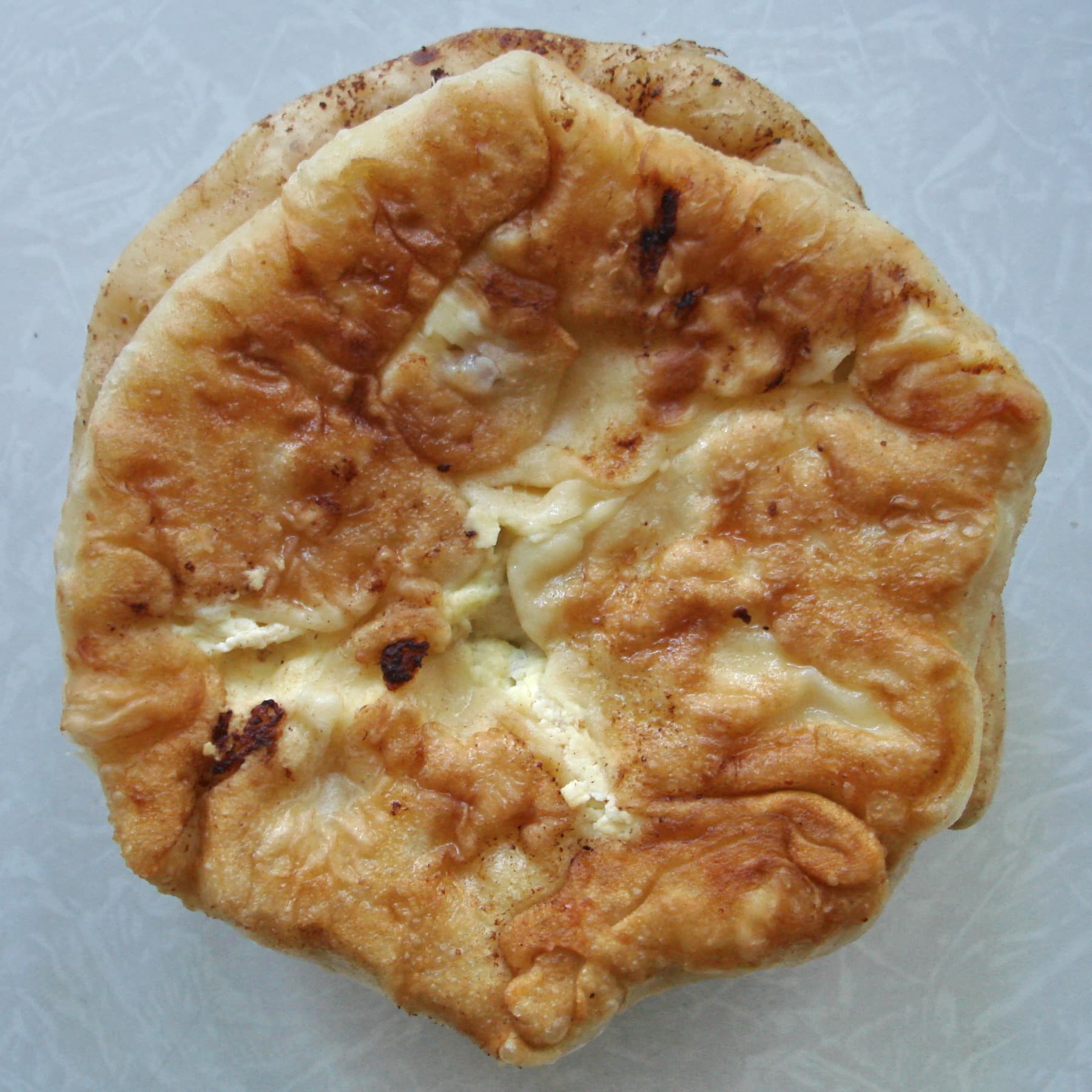
The pastry dough for plăcintă is stretched incredibly thin - almost see-through. A skilled pastry cook can stretch a ball of dough until it covers a whole large table without tearing. The filling is placed in the middle, and then the pastry is folded or rolled around it in layers. Those many thin layers are what makes the finished plăcintă so deliciously flaky when it bakes.
There are two main styles. The baked version comes out golden and crispy on the outside, with a soft, steaming filling inside. The pan-fried version cooks in a small amount of oil and develops dark, toasty spots on the surface. Many Moldovan cooks have a strong preference for one or the other, and the debate about which is better is always friendly but passionate.
At Moldovan festivals and village gatherings, plăcintă are made in large batches and shared among everyone. Village women often gather in each other's kitchens to make them together, with everyone assigned a different task - stretching the dough, preparing the filling, folding, cooking. The whole process becomes a social occasion as much as a cooking one.
Sweet plăcintă filled with cherries or apple are eaten as a dessert or snack, while savoury versions are eaten alongside soups and salads. Some are shaped into circles, some into squares and some into long rolls. Whichever shape they take, freshly made plăcintă warm from the pan are considered one of the great pleasures of Moldovan home cooking.