
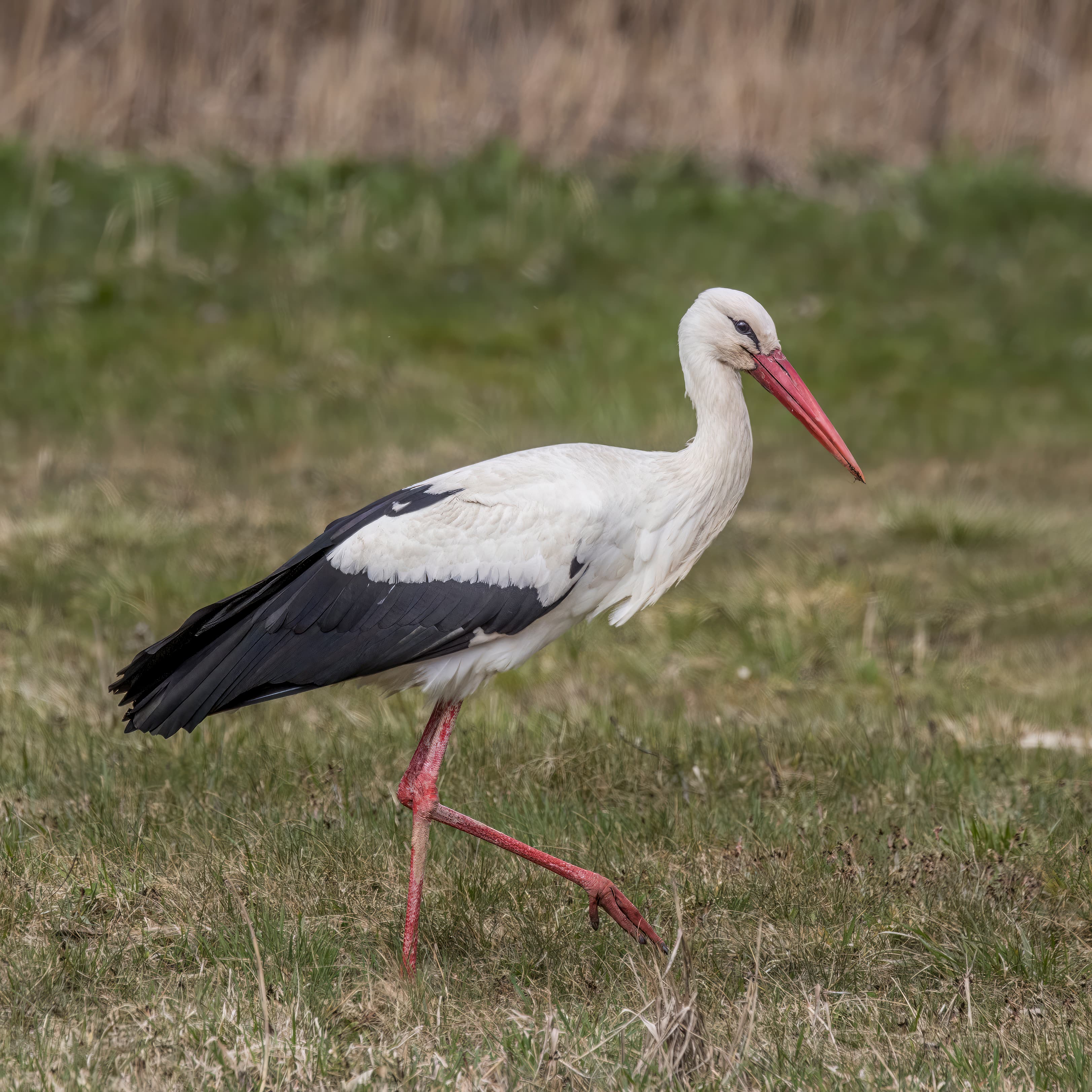
White storks are large birds - their wingspan can reach two metres, the same as the height of a very tall person. They fly with their neck stretched out straight in front and their legs trailing behind. Because they are heavy birds, they rely on warm air currents called thermals to carry them upward without flapping, then glide for long distances. This makes their flight look serene and effortless.
Every autumn, Moldovan storks gather in huge flocks and migrate all the way to Africa - a journey of thousands of kilometres. They use the same thermal air currents they use daily, riding the warm air upward and gliding downward, flap by flap covering the enormous distance. In spring they return to exactly the same nest. Storks are extraordinarily loyal to their home site.
A stork's nest starts as a simple platform of sticks but grows bigger every year as the pair adds more material. After ten or twenty years, a nest can weigh hundreds of kilograms - more than a large motorbike. Some ancient stork nests are so large and heavy that they need special poles to support them. Many nests in Moldovan villages have been used by successive generations of storks for over a hundred years.
Storks hunt in wet meadows, marshes and the edges of rivers. They walk slowly and deliberately, then stab at the ground with their sharp beaks to catch frogs, large insects, mice and small lizards. Their red beaks are a striking feature - the beak of a large stork is longer than a school ruler.