
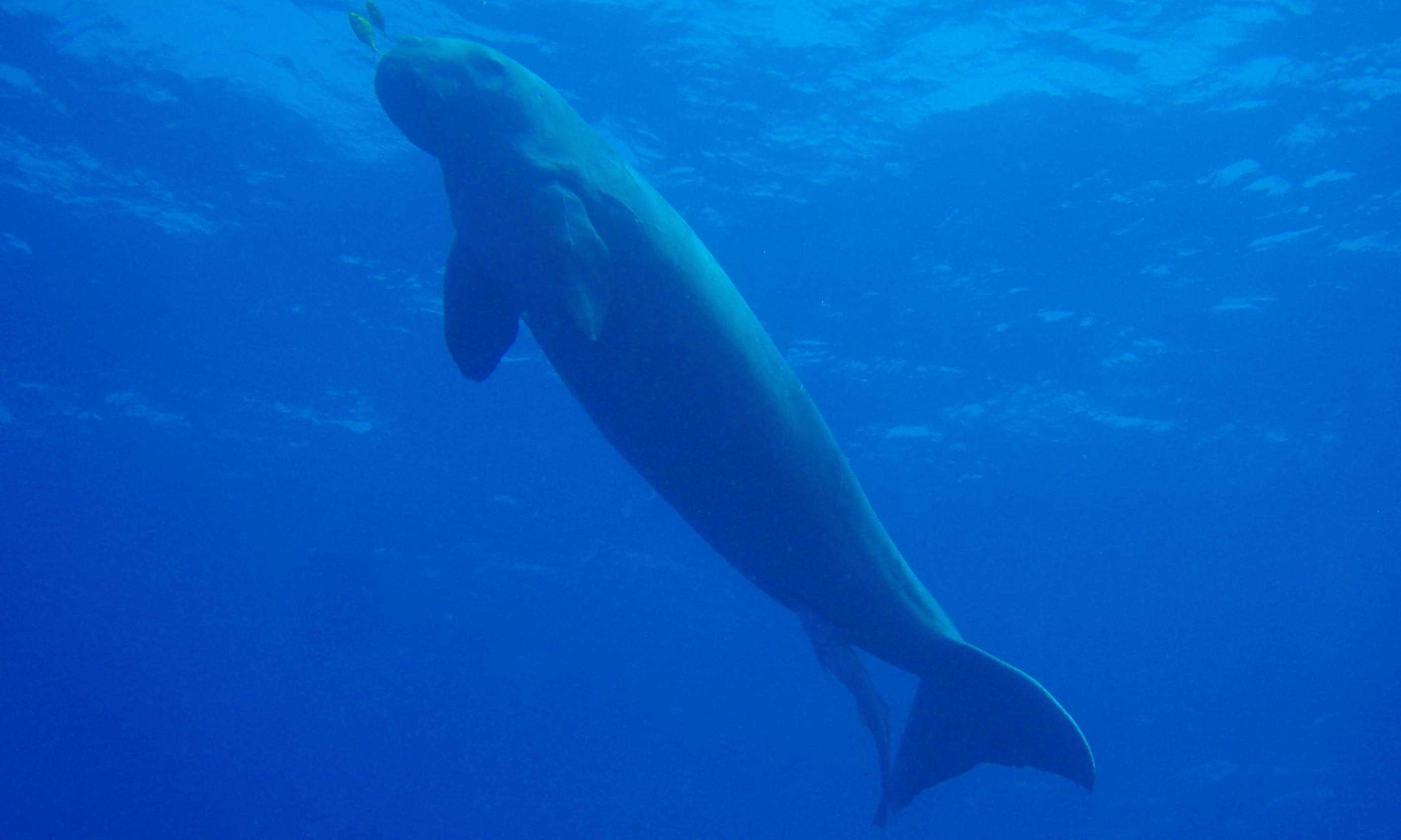
Dugongs are closely related to manatees and are sometimes called 'sea cows' because of the way they calmly munch on underwater meadows of sea grass. A hungry dugong can eat up to 40 kilograms of sea grass in a single day. They use their muscular, bristly lips to uproot the grass from the sandy sea floor.
Dugongs breathe air, just like us, so they must swim to the surface regularly. They usually come up every few minutes for a breath. Baby dugongs, called calves, are born in the water and their mothers help them to the surface for their very first breath.
Dugongs have a whale-like tail called a fluke that moves up and down (not side to side like a fish's tail). They also have two paddle-shaped front flippers. They are not fast swimmers - they prefer to drift slowly through shallow, sunny bays where the sea grass grows thickest.
Sea grass meadows are crucial for dugongs, but they are also important for the whole ocean. They store carbon, produce oxygen, and give hundreds of smaller animals a place to live. Protecting dugongs means protecting the sea grass, which in turn helps the whole reef ecosystem.