
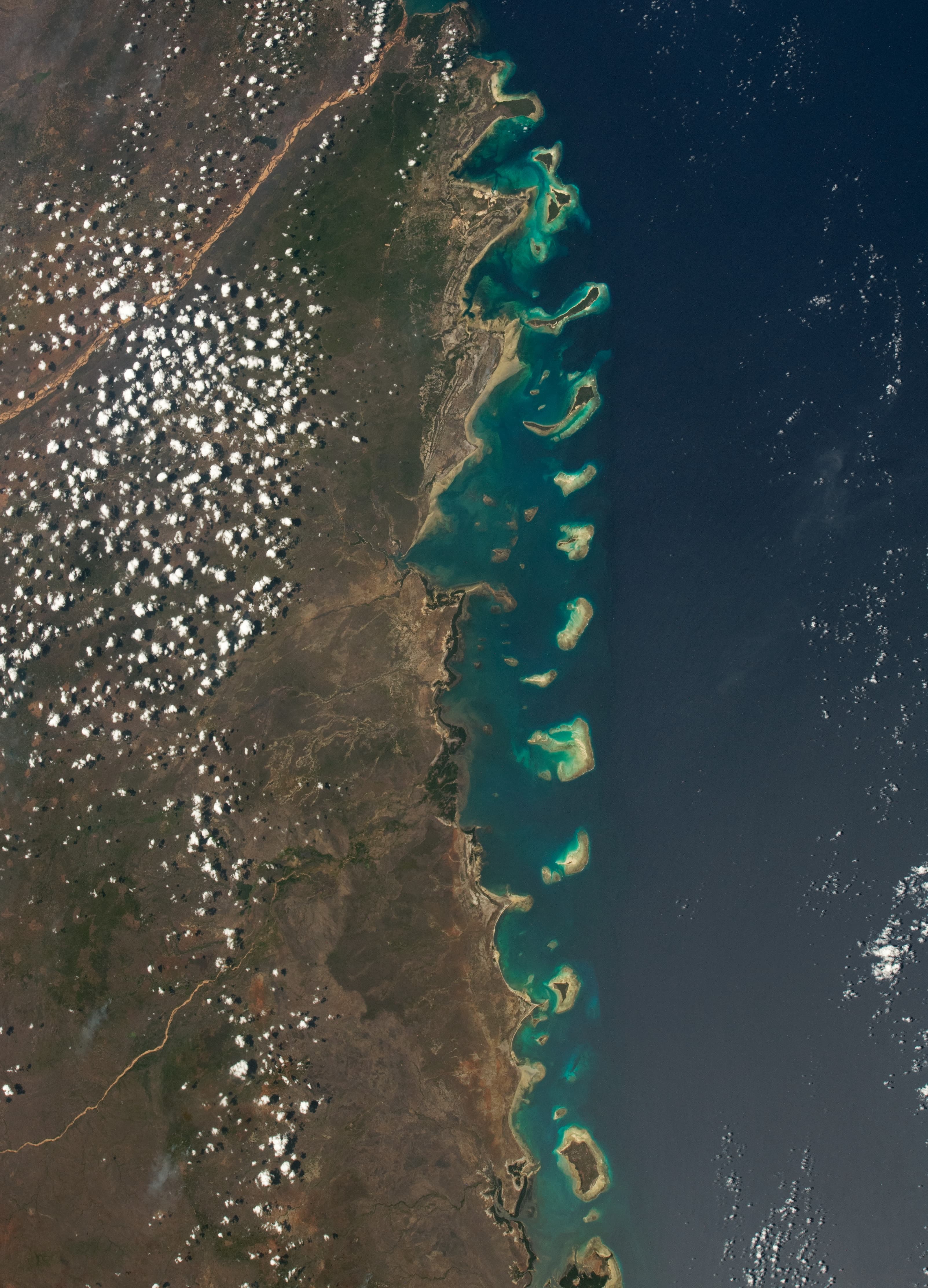
Long before modern ships arrived, Arab traders stopped at these islands to rest and trade goods like cloth, spices, and gold. You can still find old stone buildings and wells on some islands today, left behind from those busy trading days hundreds of years ago. Archaeologists - people who study the past through objects - love exploring here.
The reefs around the Quirimbas are full of life. Giant sea turtles glide past soft corals, and whale sharks - the biggest fish in the world - pass through on their ocean journeys. The mangrove forests that grow right at the water's edge are important nurseries where young fish hide until they are big enough to swim in the open sea.
Many of the islands are home to small communities of Swahili-speaking people who have fished and farmed here for generations. Island life means the sea provides almost everything - food, transport, and trade. Children often learn to swim and paddle canoes from a very young age.
The national park covers both the islands and the sea around them. Rangers work with local communities to look after the wildlife, making sure that fishing is done carefully so that fish populations stay healthy for future generations.