
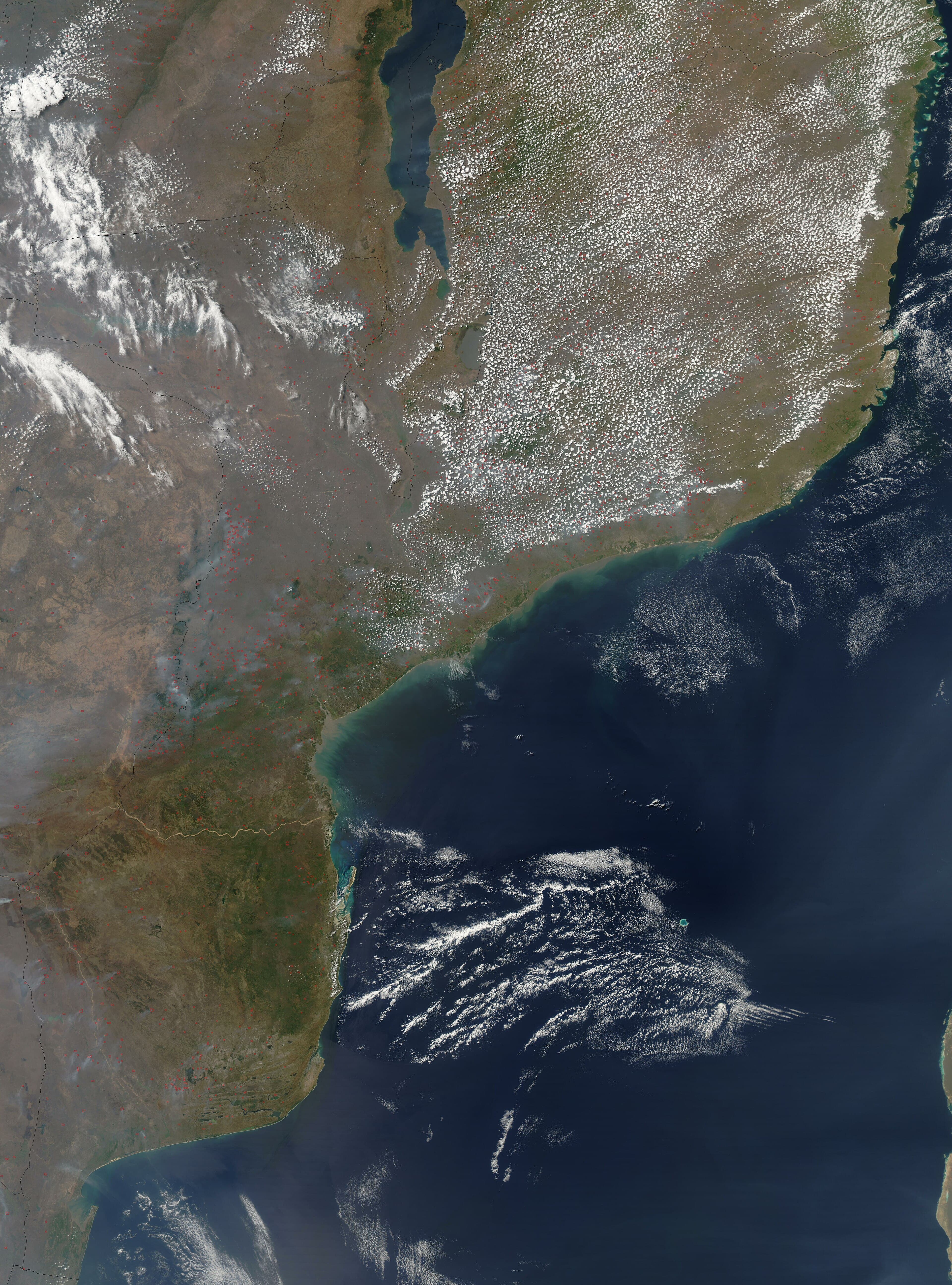
The Indian Ocean on Mozambique's doorstep is warm, clear, and full of life. Twice a day the tide comes in and goes out, revealing rock pools full of sea creatures. Children in coastal villages grow up knowing exactly which pool has the best crabs, which beach to collect shells on, and when the whale sharks arrive each season.
Mangrove forests line much of the coast. These are special trees with twisting roots that rise above the water, giving fish, crabs, and birds a place to shelter and breed. Mangroves also act like a natural wall, protecting the shore from strong waves and storm surges.
The Mozambique Channel - the stretch of ocean between Mozambique and the island of Madagascar - is one of the world's great marine highways. Humpback whales, whale sharks, manta rays, and dolphins all travel through it on their annual migrations. Every year, whale watching boats set out from fishing villages to watch these giants pass by.
Fishing is one of the most important activities along the coast. Traditional fishermen use handmade nets, small canoes, and wooden dhow boats. The fish they catch - prawns, kingfish, tuna, and rock lobster - feed local families and are also sold across the region. Mozambican prawns are considered some of the finest in the world.