
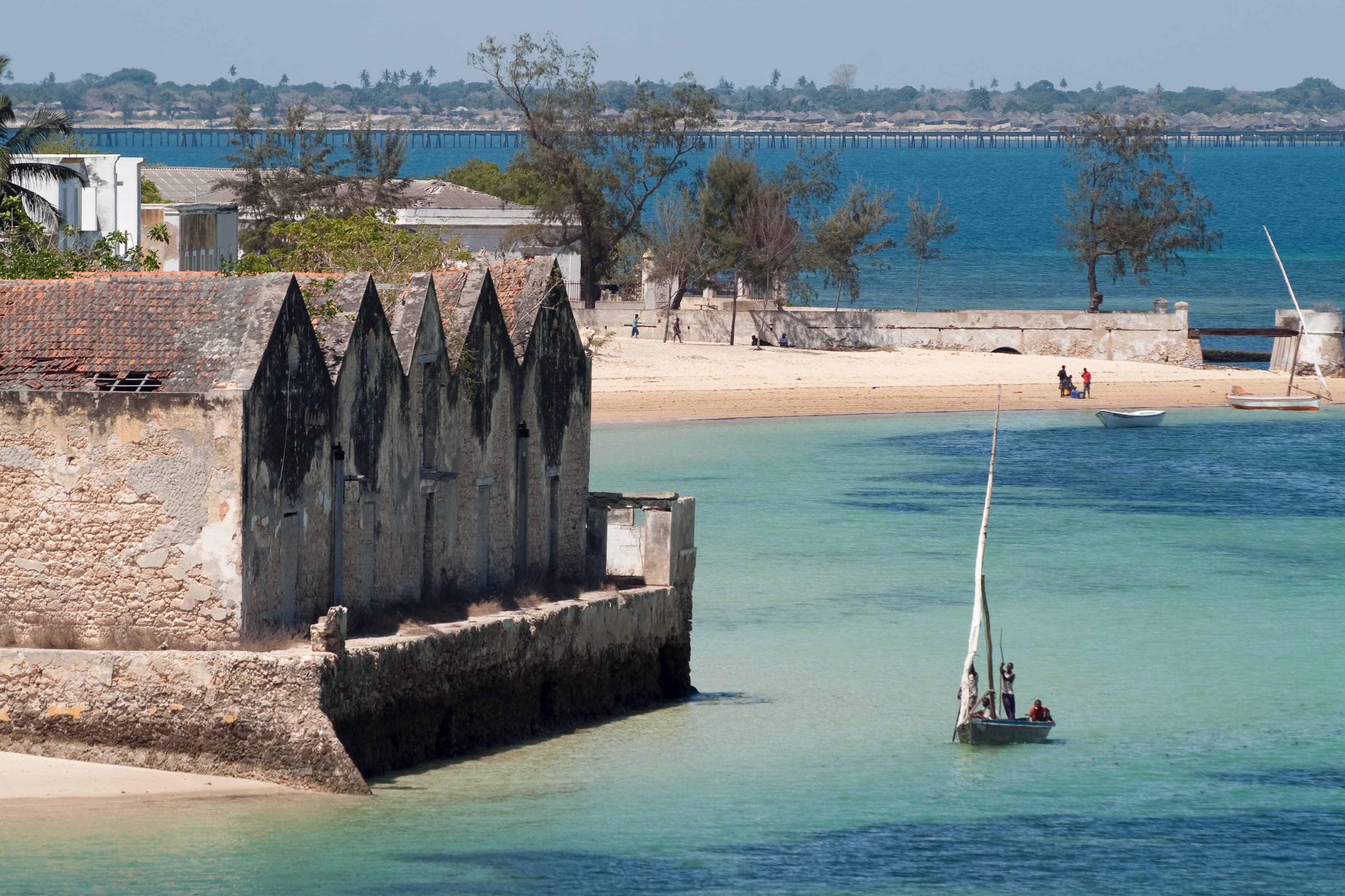
The island is only about 3 kilometres long and 500 metres wide - you could jog around it in under half an hour. But packed into that small space are coral-stone palaces, a 16th-century fort, a chapel built in 1522 (one of the oldest buildings in the southern hemisphere), mosques, and brightly painted merchants' houses.
For centuries, ships sailing between Africa, Arabia, India, and the Far East stopped here to stock up on fresh water and food and to trade their goods. Merchants from many different cultures settled on the island, which is why its architecture, food, and music are a wonderful mix of all those different influences.
The north end of the island has tall stone buildings that were once used by merchants and officials. The south end, called Makuti Town, is where most of the local community has always lived, in houses with roofs made from palm leaves - makuti in Swahili. Walking from one end to the other is like walking through hundreds of years of history.
UNESCO recognised the island in 1991 because it is one of the best-preserved examples of a pre-colonial and colonial port city in the whole Indian Ocean region. Restoration teams work carefully to repair buildings using the same coral-stone techniques that were used 400 years ago.