
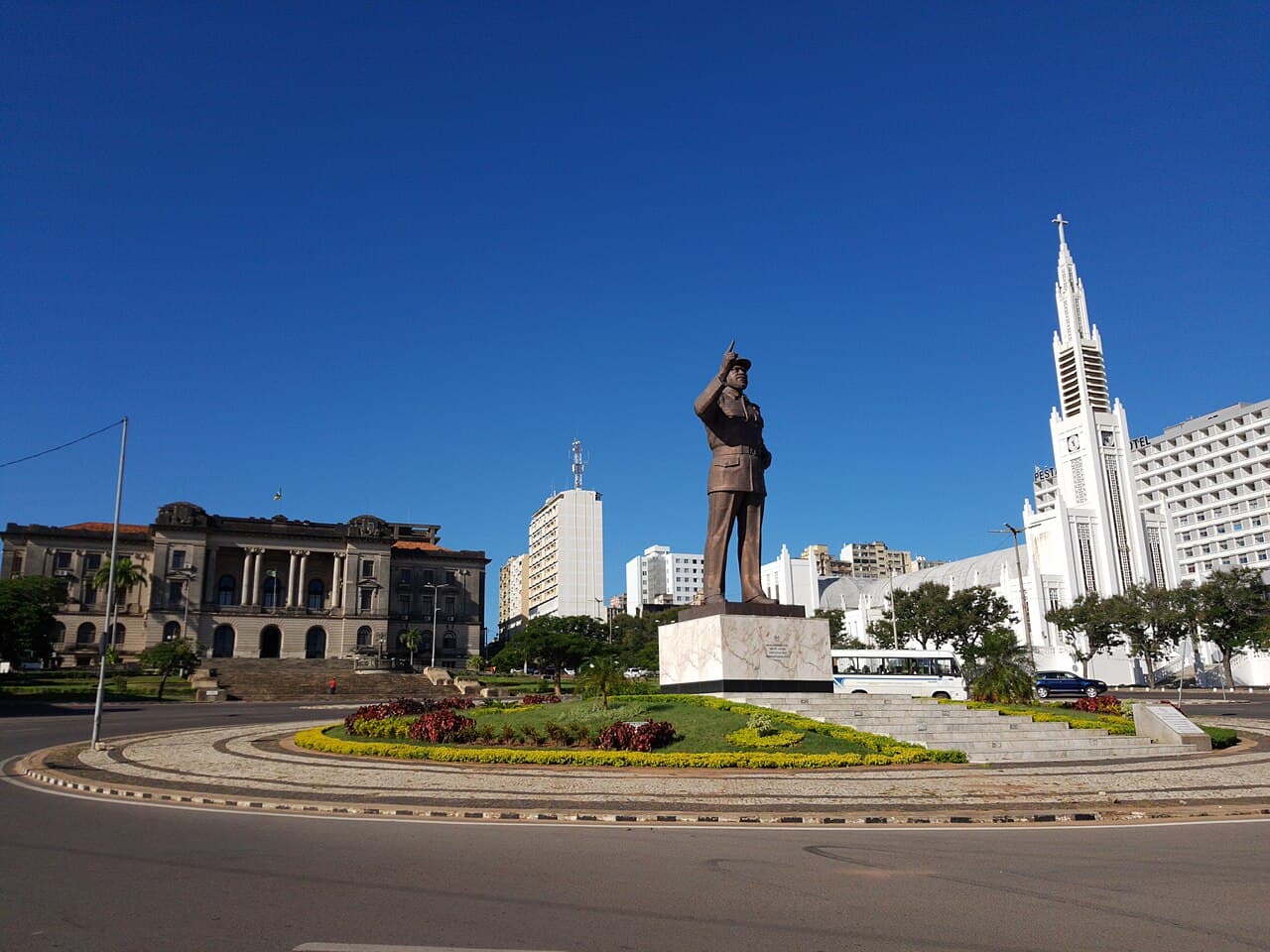
The celebrations begin the night before with concerts and community events in cities and towns across the country. On the morning of 25 June, military parades march through the main squares, and cultural groups perform traditional dances from Mozambique's many different ethnic communities - you might see timbila orchestras, mapiko masked dancers, and tufo performers all in one day.
Children play a big role in Independence Day. Schools organise their own celebrations with performances, flag-raising ceremonies, and artwork. Children dress in the national colours - green for the land, black for the African continent, yellow for the country's wealth, red for struggle, and white for peace. The flag also features an open book and a hoe, representing education and farming.
Food is central to the celebrations. Families gather for big meals of xima, matapa, peri-peri prawns, and bolo polana. Street vendors sell grilled corn, coconut sweets, and fresh fruit juices. The smell of cooking and the sound of music fill every neighbourhood.
Independence Day is also a moment for Mozambicans to feel pride in how far their country has come. People celebrate the beauty of their landscape - from the great mountains to the long coastline - the richness of their culture, and their hopes for the future. It is a day to feel proud of everything that makes Mozambique unique.