
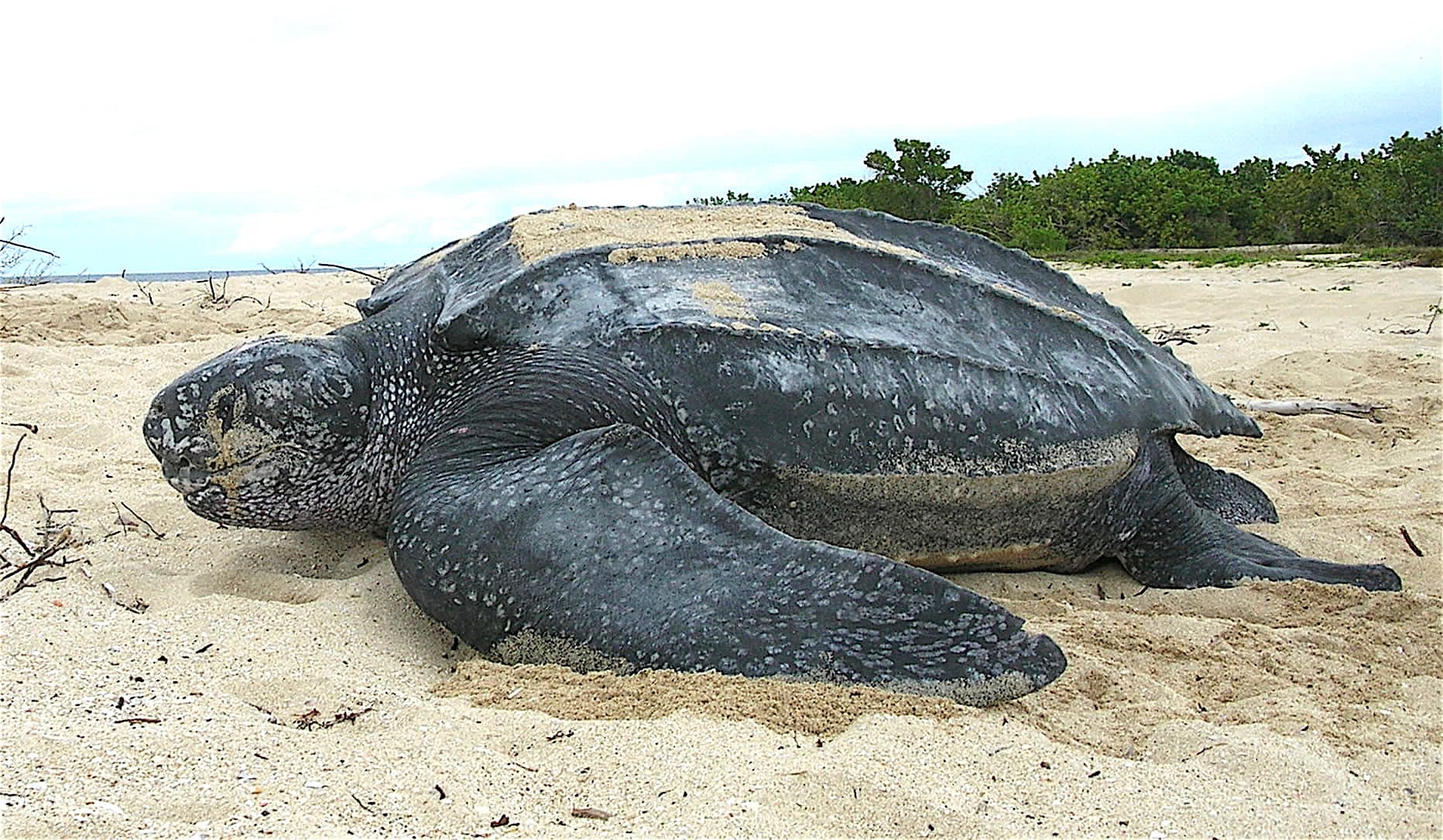
Leatherback turtles are extraordinary travellers. They swim across entire oceans - some have been tracked travelling more than 10,000 kilometres in a single year. They dive deeper than any other turtle, sometimes reaching depths of over 1,000 metres in search of their favourite food: jellyfish.
Female leatherbacks return to the exact beach where they hatched to lay their own eggs - even if that beach is on the other side of the world. They use the Earth's magnetic field as a compass to find their way. Scientists think this ability is so accurate that a turtle can navigate back to within a few kilometres of its birth beach.
On Mozambique's northern beaches, especially around the Quirimbas area and Ponta Mamoli in the south, leatherbacks dig nests in the sand at night, lay around 80-100 soft eggs, and then return to the sea. About two months later, the tiny hatchlings dig their way out and race to the water under the moonlight.
Leatherbacks have survived on Earth for over 100 million years - they were alive at the same time as the dinosaurs. Today they face challenges from plastic bags in the ocean, which they can mistake for jellyfish, and from bright lights near beaches that can confuse the hatchlings. Communities in Mozambique work hard to protect nesting beaches.