
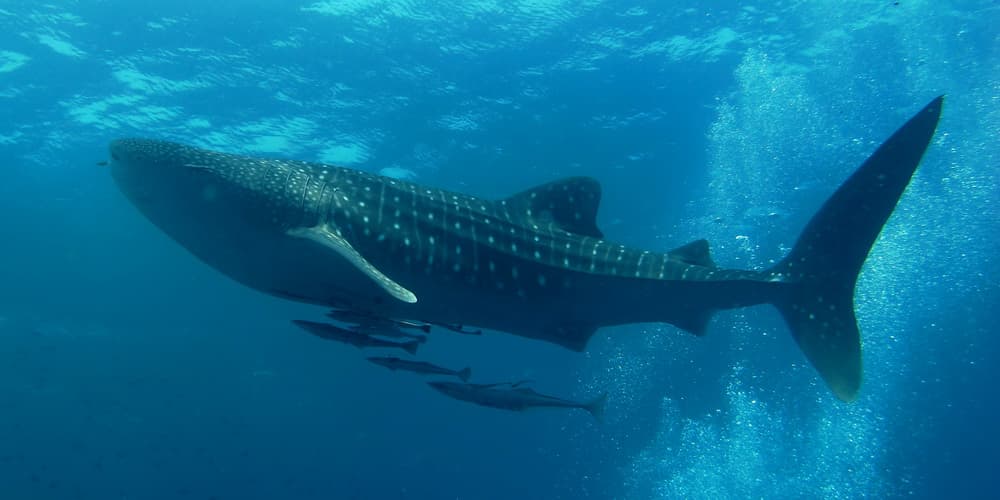
Whale sharks have enormous, flat-fronted heads and a wide mouth that can be over a metre across. To eat, they swim slowly with their mouth open, filtering millions of tiny creatures called plankton from the water. It takes a lot of tiny bites to fuel such a giant body - a whale shark might filter hundreds of thousands of litres of water in a day.
Each whale shark has a unique pattern of white spots and stripes on its dark back, just like a fingerprint. Scientists photograph the patterns and use computer software to tell individual sharks apart, even when they meet them years later in completely different parts of the ocean.
Whale sharks are known to gather in the waters off Mozambique's coast, especially near Tofo Beach in the south. Local dive guides have got to know many of them individually and have given some of them names. Snorkellers come from all over the world to swim alongside these gentle giants.
Despite their size, whale sharks are considered vulnerable - their numbers have dropped because of fishing and boat collisions. Mozambique's warm waters are an important refuge, and local communities work hard to make sure visitors treat the sharks with respect and do not disturb them.