
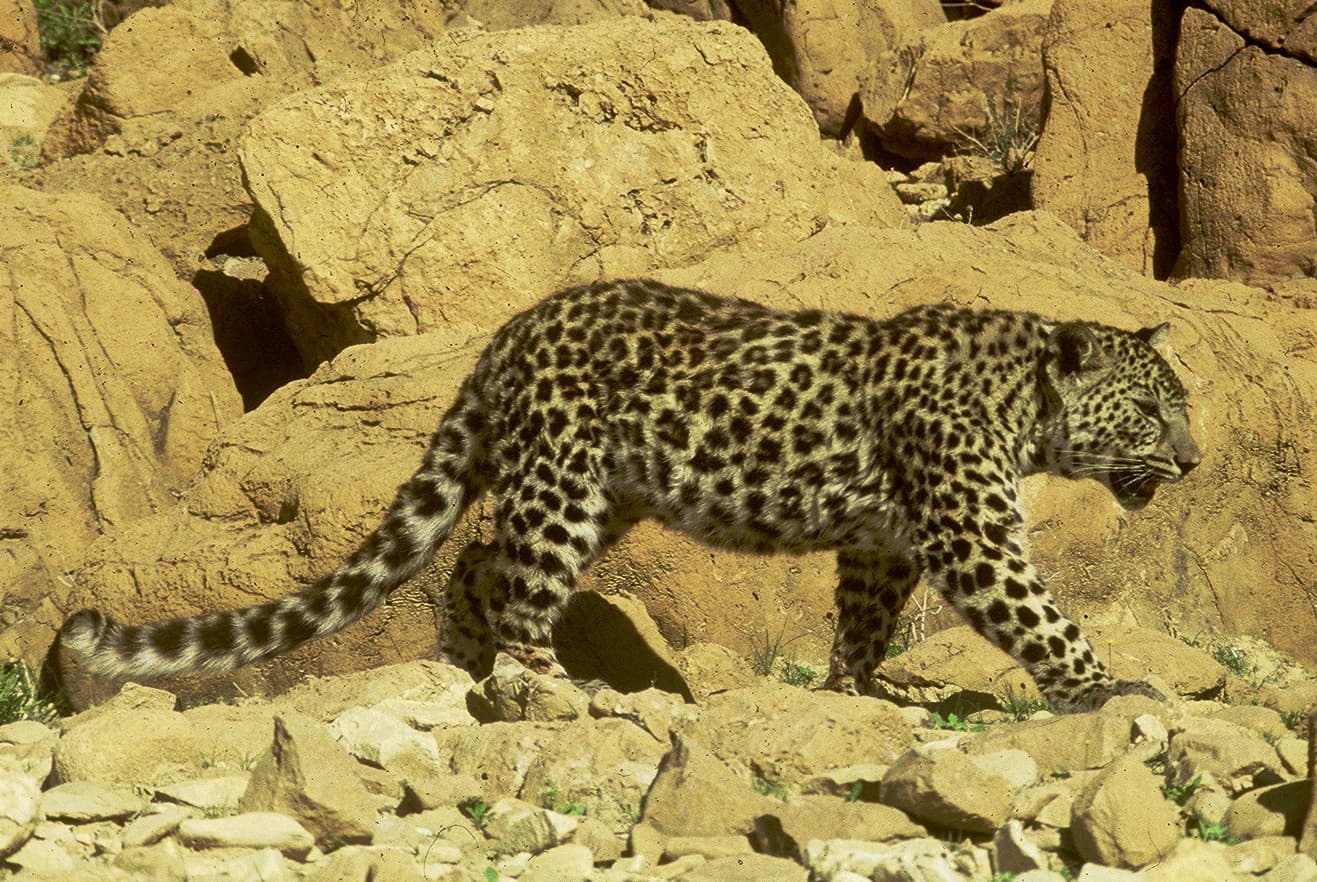
The Arabian leopard is smaller than African leopards - about the size of a large dog - but it has the same stunning spotted coat that gives leopards their name. Its spots are arranged in clusters called rosettes. The pale golden coat and smaller size help it blend into rocky mountain landscapes.
Arabian leopards are nocturnal, which means they are most active at night. During the hot day they rest in the shade of rocky overhangs or caves. At dusk they go hunting, creeping silently on padded paws. Their main prey includes ibex (wild mountain goats), hares, and foxes.
Conservation organisations in Oman are working hard to protect Arabian leopards. The Jebel Samhan Nature Reserve in Dhofar was set up partly to give leopards a safe place to live. Scientists use cameras hidden on mountain trails - called camera traps - to photograph the leopards without disturbing them, helping researchers understand their habits.
Oman is also running a captive breeding programme - keeping some leopards in a safe, well-cared-for facility and carefully breeding cubs. The aim is to boost the number of leopards so that one day more can be released back into the wild. It is a long and patient process, just like the oryx story.