
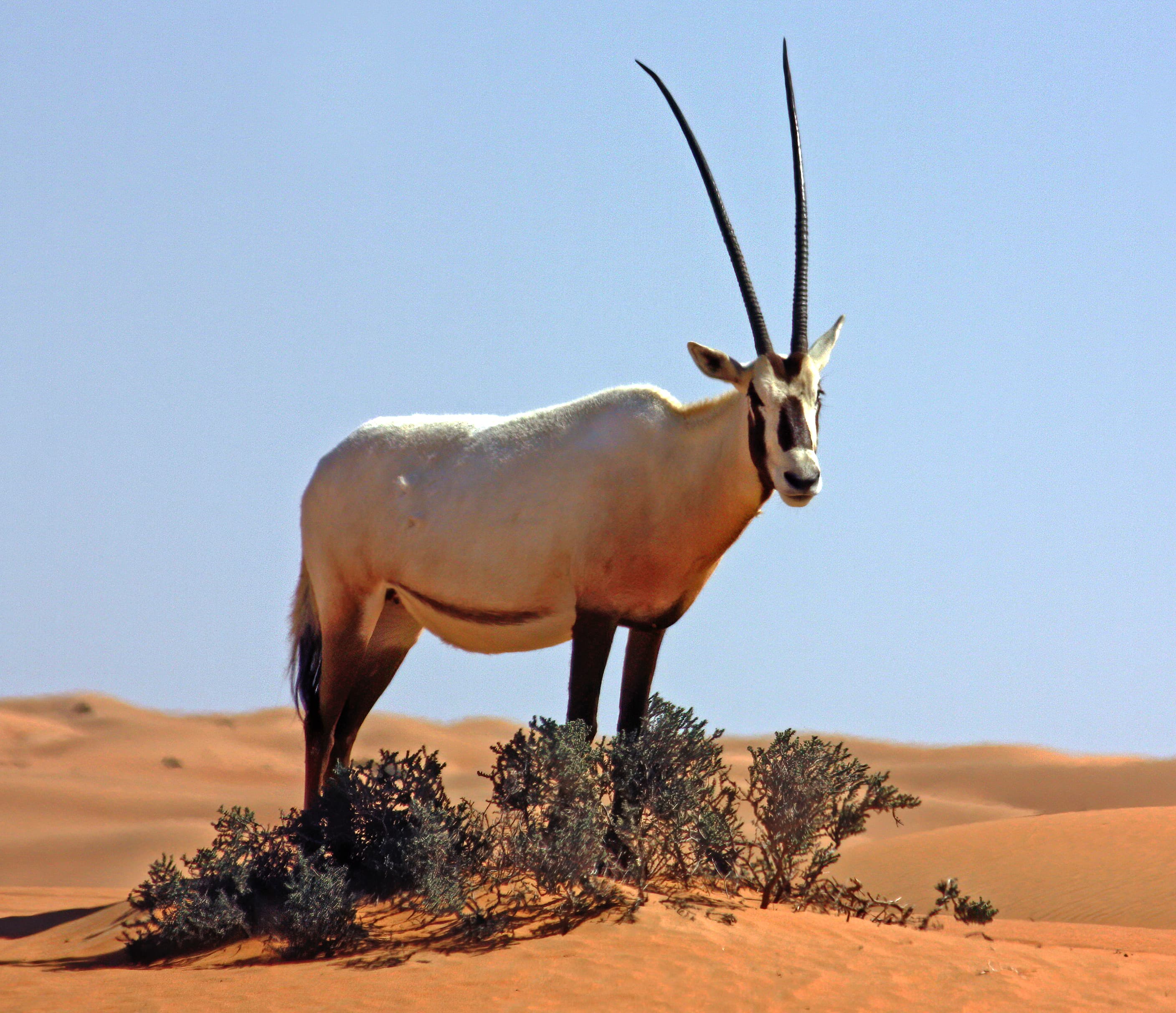
By 1972, the Arabian oryx had completely disappeared from the wild. Hunting and habitat loss had wiped out every wild oryx. But a small group of scientists and zoos had kept some alive in captivity - in controlled, protected environments. Working together, they carefully bred more animals with the plan of one day returning them to the desert.
In 1982, Oman led the effort to bring Arabian oryx back to the wild in the Jiddat al-Harasis desert. Rangers protected the animals day and night. Slowly, the herd grew. By the 1990s, the wild herd numbered in the hundreds. It was such a success that the Arabian oryx became the first animal in history to be removed from the 'Extinct in the Wild' category.
The oryx is perfectly adapted to desert life. Its coat is brilliant white - a colour that reflects the harsh sun. Its hooves are wide and splayed, like built-in snowshoes, perfect for walking on sand. It can go for long periods without drinking, getting moisture from desert plants and dew.
Today you can visit the Arabian Oryx Sanctuary in Oman, which is a UNESCO World Heritage Site. Seeing a herd of white oryx moving silently through the desert, horns catching the light, is a sight that many people describe as magical - and a reminder of what teamwork and patience can achieve.