
Classroom lesson · Wildlife · 🇴🇲 Oman

Dugong

A gentle sea mammal that grazes on underwater meadows

Photo · Wikimedia Commons

What is it?

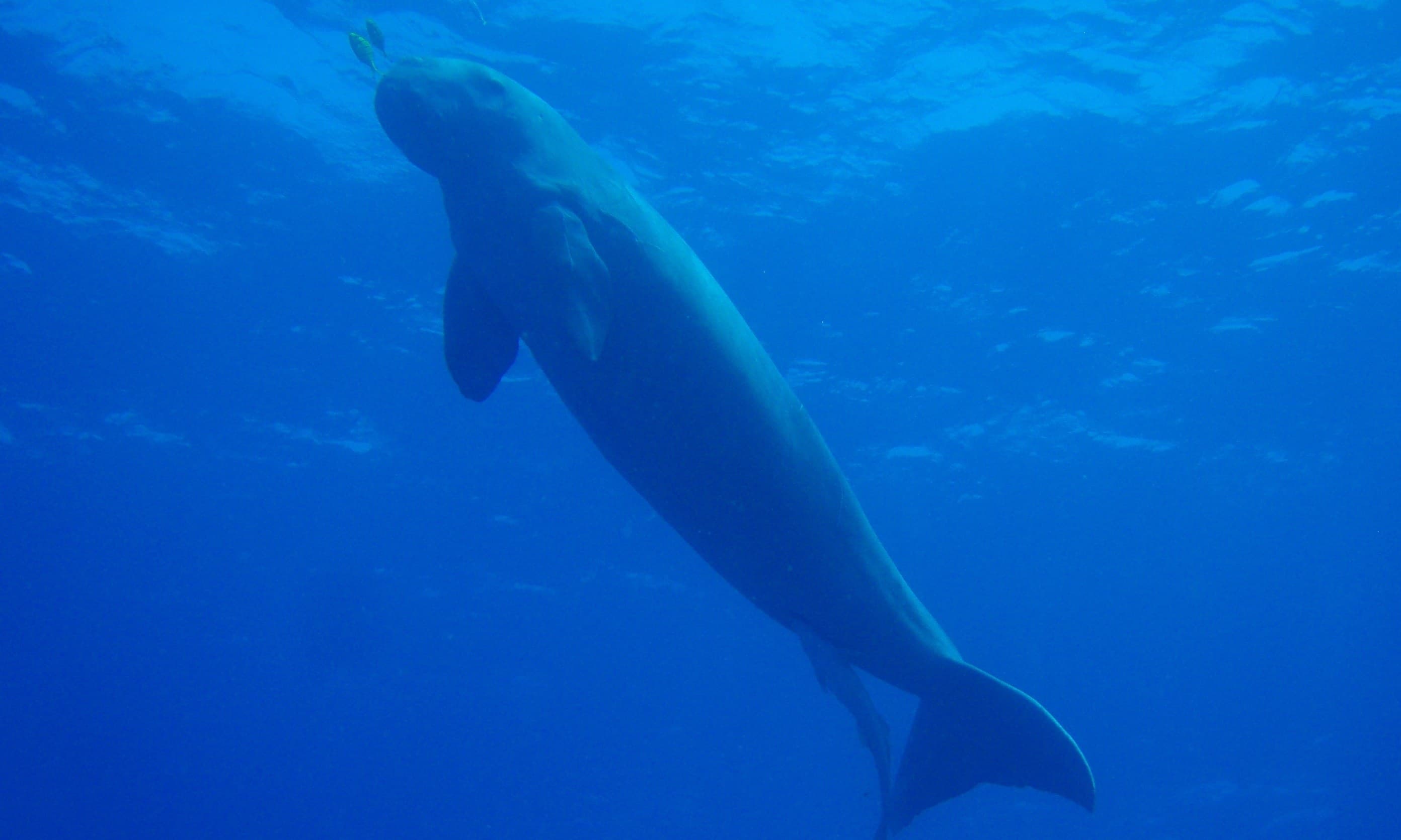
Dugongs are large, gentle sea mammals that live in warm, shallow waters along Oman's coast. They are related to manatees and sometimes called 'sea cows' because they graze quietly on underwater meadows of seagrass. Oman has one of the largest populations of dugongs in the world.

Tell me more

Dugongs look a little like large, smooth grey or brown blobs — adults can grow up to three metres long and weigh around 400 kilograms. Their tail is shaped like a whale's rather than a fish's tail, and their front flippers help them steer. They have a rounded, bristly snout that they use to root through the seabed pulling up seagrass.

Seagrass meadows are their whole world. Dugongs graze slowly and peacefully, munching through large amounts of seagrass every day. A healthy dugong can live for 70 years — roughly as long as a human. They breathe air, so every few minutes they rise to the surface for a breath before drifting back down.

Oman's warm, clear coastal waters are perfect for dugongs because they support large seagrass beds. The waters of the Gulf of Masirah, off Oman's east coast, are especially important. Fishermen in the area have traditionally respected the dugong, and Oman's government has put protections in place to keep their habitat safe.

Scientists studying dugongs in Oman sometimes watch them from boats, and very rarely a swimmer gets to see one quietly grazing below. Because they are shy and slow-moving, spotting one feels like a very lucky encounter.

In the classroom

Walk your class through this in 15 minutes.

Talk together

Discussion prompts

  1. 01Dugongs and manatees are related but live in different parts of the world. How do you think they ended up living so far apart?
  2. 02Seagrass meadows are very important for dugongs. Can you think of other habitats that are really important for specific animals?
  3. 03Dugongs can live as long as humans. Does knowing that change how you think about them?
Try this

Classroom activity

Draw an underwater seagrass meadow scene showing a dugong in its habitat. Include the seagrass it eats, fish that might share the meadow, and the water surface above. Write one sentence on the drawing explaining why protecting the seagrass also protects the dugong.