
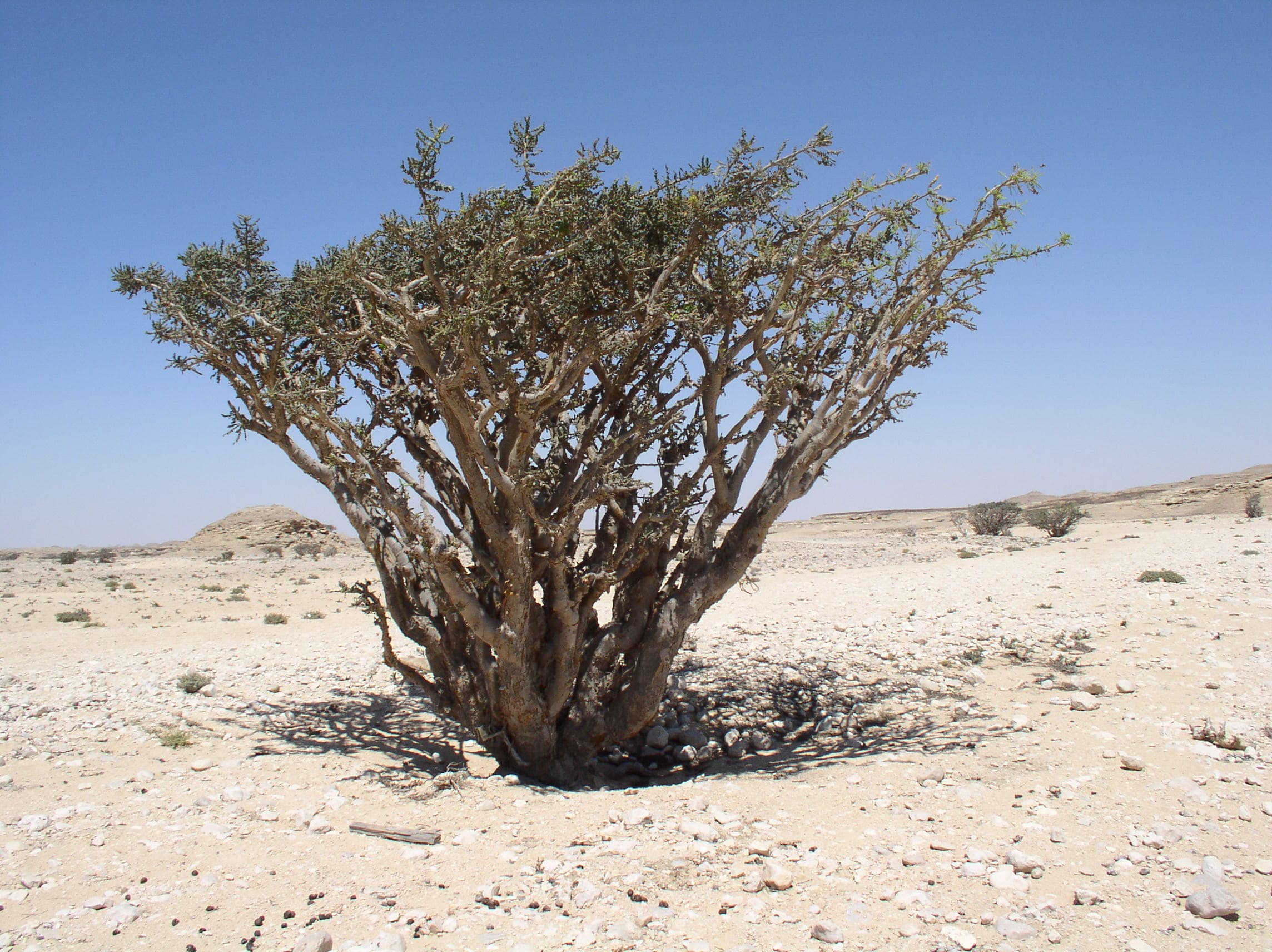
To collect frankincense, a farmer makes a small cut in the bark of a Boswellia tree with a special tool. A milky liquid - called resin - slowly oozes out. After a few weeks it hardens into small, teardrop-shaped lumps that look a bit like cloudy lemon drops. These lumps are then collected and dried in the sun.
When you burn a piece of frankincense on a small charcoal burner, it releases a warm, woody, sweet smoke. In Oman, this smoke is wafted through homes to make them smell welcoming, and guests are often offered a frankincense burner to pass under their clothes as a fragrant welcome. It is one of the most distinctive and beloved scents in Omani life.
The ancient Frankincense Trail is a series of trade routes that once connected the frankincense-growing lands of Dhofar with the great civilisations of the ancient world. Camel caravans would travel thousands of kilometres carrying the precious resin. UNESCO has recognised the Frankincense Trail in Oman as a World Heritage Site because of its enormous importance to ancient trade and culture.
Boswellia trees are tough survivors - they grow in rocky soil in hot, dry conditions where almost nothing else can grow. They can live for hundreds of years. Modern scientists are studying frankincense because some research suggests it may have useful properties for medicine.