
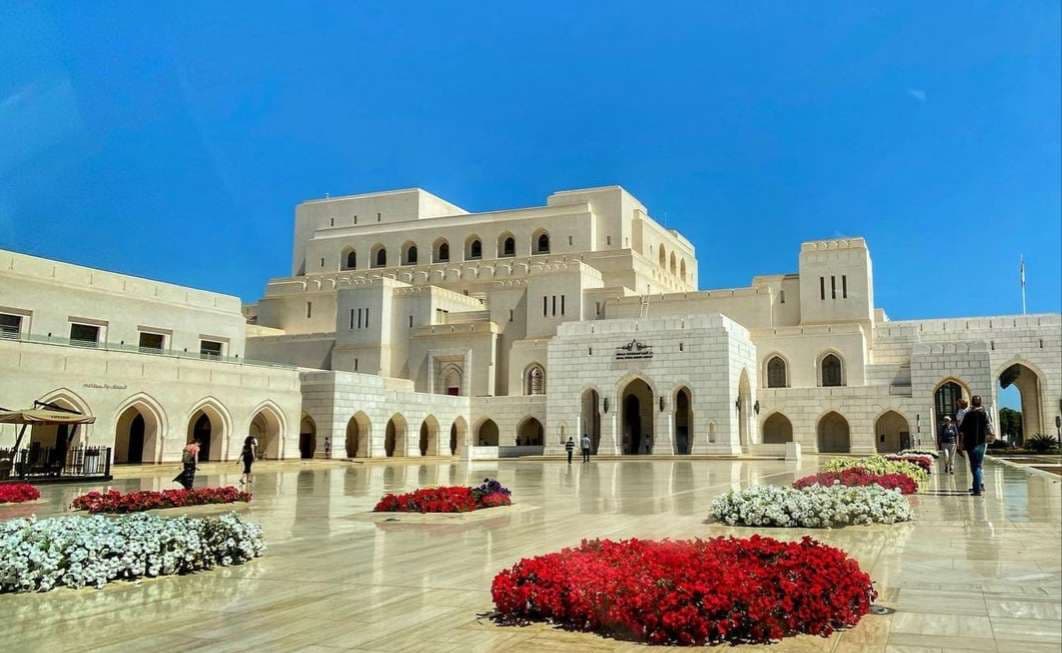
The building was designed to blend traditional Omani architecture with a world-class performance space. Its thick stone-coloured walls, arched windows, and detailed carved plasterwork are inspired by the palaces and mosques that have shaped Omani architecture for centuries. The gardens around it are planted with date palms, bougainvillea, and fountains.
Inside, the main auditorium has perfect acoustics - that means the sound travels beautifully to every seat. The stage is large enough for a full orchestra with more than 80 musicians, plus a choir and soloists. The ceiling has intricate patterns inspired by traditional Omani crafts.
The opera house hosts both Omani performers and artists from every part of the world. A child visiting might see Omani oud players one week and a visiting dance company from Asia or Europe the next. This mix of local and global arts is very deliberately chosen - Oman wants to share its own culture and also connect with arts everywhere else.
There is also a smaller studio theatre and outdoor spaces used for concerts and festivals. Music education programmes at the opera house help Omani children learn instruments, singing, and appreciation of the arts from a young age.