
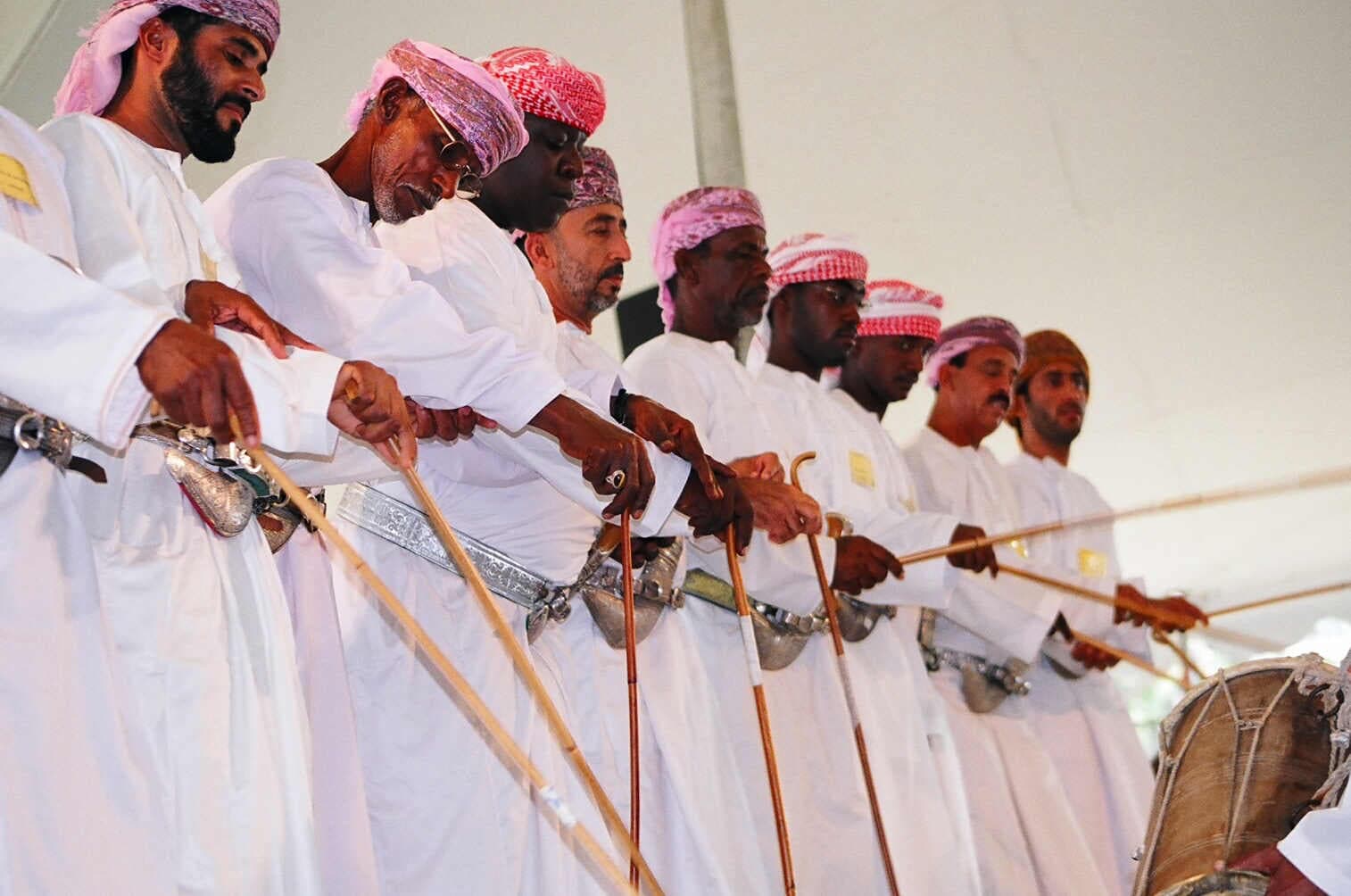
Classroom lesson · Razha Sword Dance · 🇴🇲 Oman

Razha Sword Dance

A proud traditional dance performed with swords and rifles

Photo · Wikimedia Commons

What is it?

The razha is one of Oman's most famous traditional dances. Performed by men in bright white robes carrying decorated swords, the razha is a powerful, proud performance of poetry, music, and movement. It is performed at weddings, national celebrations, and festivals — and watching it is an unforgettable experience.

Tell me more

In a razha performance, two lines of men face each other. One side recites poetry or chants, and the other responds. As they chant, they sway and step in formation, waving their swords or rifles in graceful arcs above their heads. The movements are precise and practised, passed from generation to generation.

The swords used in razha are called khanjar-style swords — ceremonial blades that are beautifully decorated and worn as symbols of Omani identity and pride. They are not used as weapons but as part of the cultural expression of the dance. Wearing traditional dress and carrying a khanjar is considered a mark of great respect.

The chanting in razha is often improvised — poets make up verses on the spot in response to what the other side says, which requires great skill with language. This call-and-response structure is found in music and performance traditions all over the world, from African drumming to playground clapping games.

UNESCO has recognised Omani traditional arts, including these performance forms, as important parts of intangible cultural heritage — meaning they are not buildings or objects but living traditions that exist only as long as people keep practising and passing them on.

In the classroom

Walk your class through this in 15 minutes.

Talk together

Discussion prompts

  1. 01The razha passes poems and movements from one generation to the next. Why is it important to keep cultural traditions alive?
  2. 02Call-and-response — one side says something and the other answers — appears in music and games all over the world. Can you think of examples you know?
  3. 03If you had to design a traditional dance for your class or community, what movements, words, or music would you use?
Try this

Classroom activity

Create a class call-and-response chant. Divide the class into two groups. Group A makes up one line about something in your school or community. Group B must respond with a matching line. Practise until both groups can say their lines rhythmically together. Perform for another class.