
Classroom lesson Β· Wildlife Β· πŸ‡ΆπŸ‡¦ Qatar

Arabian Oryx

Qatar's national animal – once extinct in the wild, now back home

Photo Β· Wikimedia Commons

What is it?

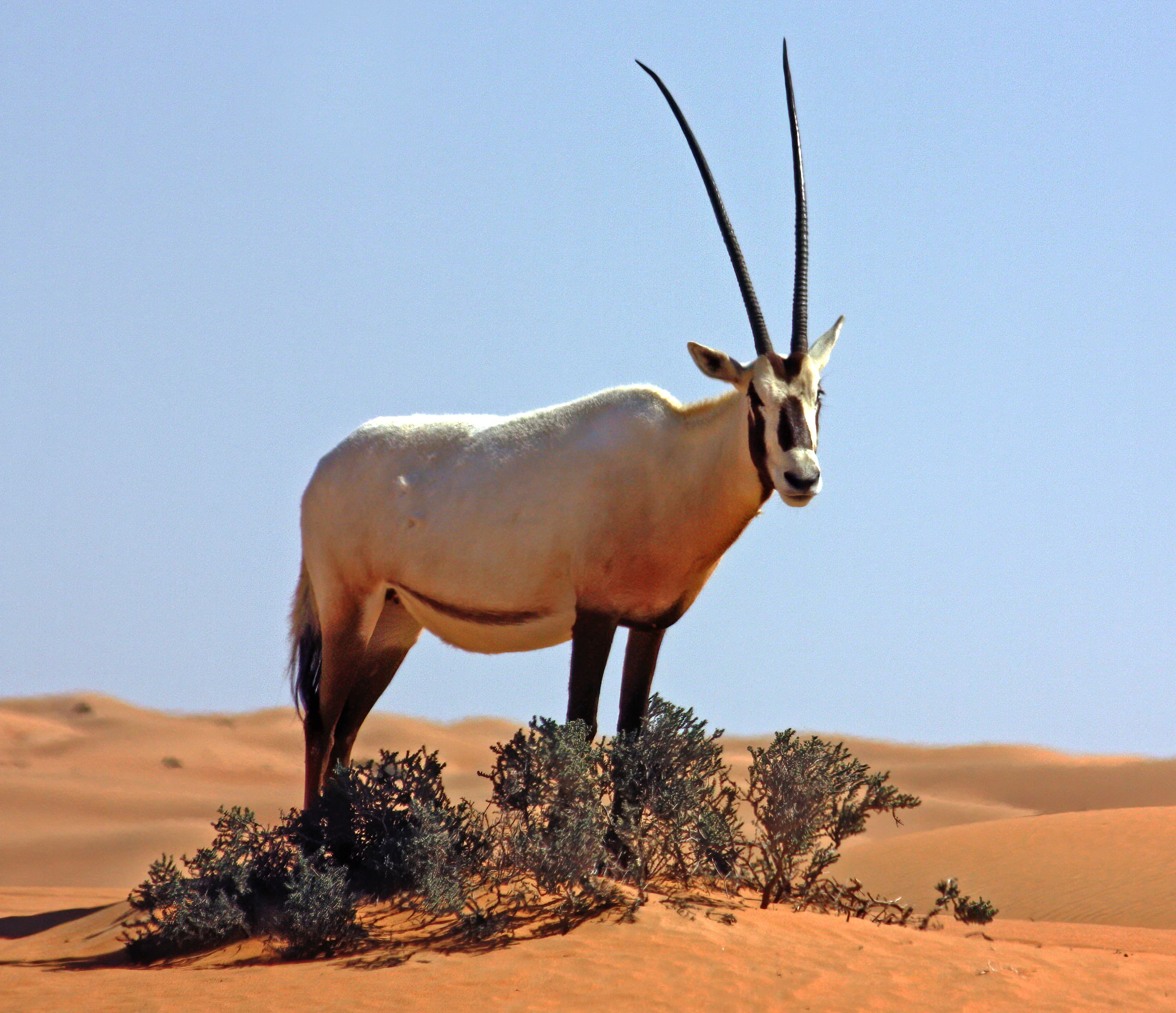
The Arabian oryx is a graceful white antelope with long, straight horns and bold black markings on its face and legs. It is the national animal of Qatar. The oryx is perfectly built for desert life – it can survive for weeks without drinking water by getting moisture from the plants it eats.

Tell me more

The Arabian oryx has a truly remarkable story. In the 1970s, every single wild oryx had disappeared – they had been hunted to extinction in the wild. But zoos and wildlife centres around the world kept small groups of oryx safe. After careful breeding programmes, oryx were released back into the wild. Today there are thousands living in Arabian deserts again.

An oryx can survive in temperatures above 45Β°C – hotter than most ovens! Their white coats reflect the fierce sun. When it is very hot, they slow down their body processes so they need less water. At night, when it is cooler, they graze on desert grasses and shrubs.

In Qatar, oryx roam in protected reserves where they are looked after and studied. The oryx appears on Qatar's coat of arms, on bank notes, and even on the tail fins of Qatar Airways planes – a reminder of how much this animal means to the country.

In the classroom

Walk your class through this in 15 minutes.

Talk together

Discussion prompts

  1. 01The oryx was saved because people in zoos cared for them when there were none left in the wild. Why is it important to protect animals before they disappear completely?
  2. 02Why might a white coat be useful in a hot, sunny desert?
  3. 03Countries often choose a special animal as their national symbol. What animal would you choose for your country and why?
Try this

Classroom activity

Read the oryx extinction-and-comeback story together, then ask children to make a simple timeline: 'In the wild', 'Extinct in the wild', 'Safe in zoos', 'Released again'. Draw one picture for each stage.