
Classroom lesson Β· Wildlife Β· πŸ‡ΆπŸ‡¦ Qatar

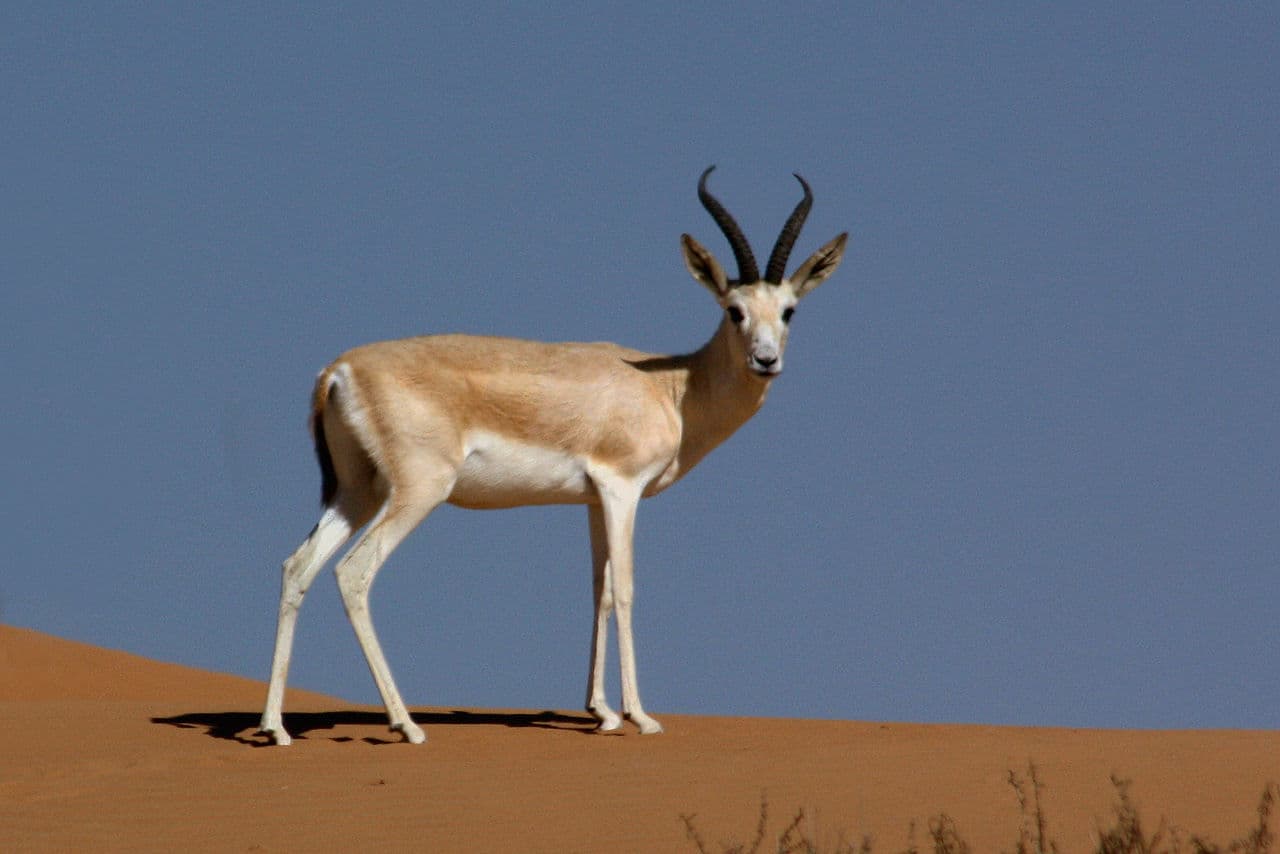
Arabian Sand Gazelle

A speedy little desert antelope built for hot, dry places

Photo Β· Wikimedia Commons

What is it?

The Arabian sand gazelle – also called a 'rheem' – is a small, elegant antelope that lives in the deserts of Qatar and other Arabian countries. It has sandy-coloured fur that blends perfectly into the desert and can run at up to 80 kilometres per hour to escape predators. These gazelles are perfectly suited to life where water is scarce.

Tell me more

Sand gazelles eat dry grasses, herbs, and leaves. They can get almost all the moisture they need from their food, so they rarely need to find a water source – very handy in the desert. During the hottest part of the day they rest in the shade of bushes or even scrape little hollows in the sand to stay cool.

Baby gazelles are called fawns. Within hours of being born, a fawn can already stand up and begin to walk alongside its mother. This is essential in the desert, where the family may need to move quickly to find new patches of food. Gazelles live in small herds and keep watch for eagles, foxes, and wildcats.

Qatar has protected areas where sand gazelles roam freely. They were once much rarer due to hunting, but protected reserves and breeding programmes have helped their numbers recover. Today, seeing a herd of gazelles bounding across a sandy plain is one of the rewards of visiting Qatar's desert interior.

In the classroom

Walk your class through this in 15 minutes.

Talk together

Discussion prompts

  1. 01Being able to survive without drinking water is extraordinary. What other ways do desert animals save water?
  2. 02Sand gazelles have a colour that matches the desert perfectly. Why is camouflage useful for animals that are not very big?
  3. 03Gazelles live in groups and take turns watching for danger. Can you think of times when working as a group keeps people safer too?
Try this

Classroom activity

Camouflage experiment: cut out small gazelle shapes from sandy-yellow card and from brightly coloured card. Scatter both types on a sandy tray or on a yellow piece of paper. Time how long it takes to spot each type. Discuss the results.