
Classroom lesson Β· Wildlife Β· πŸ‡ΆπŸ‡¦ Qatar

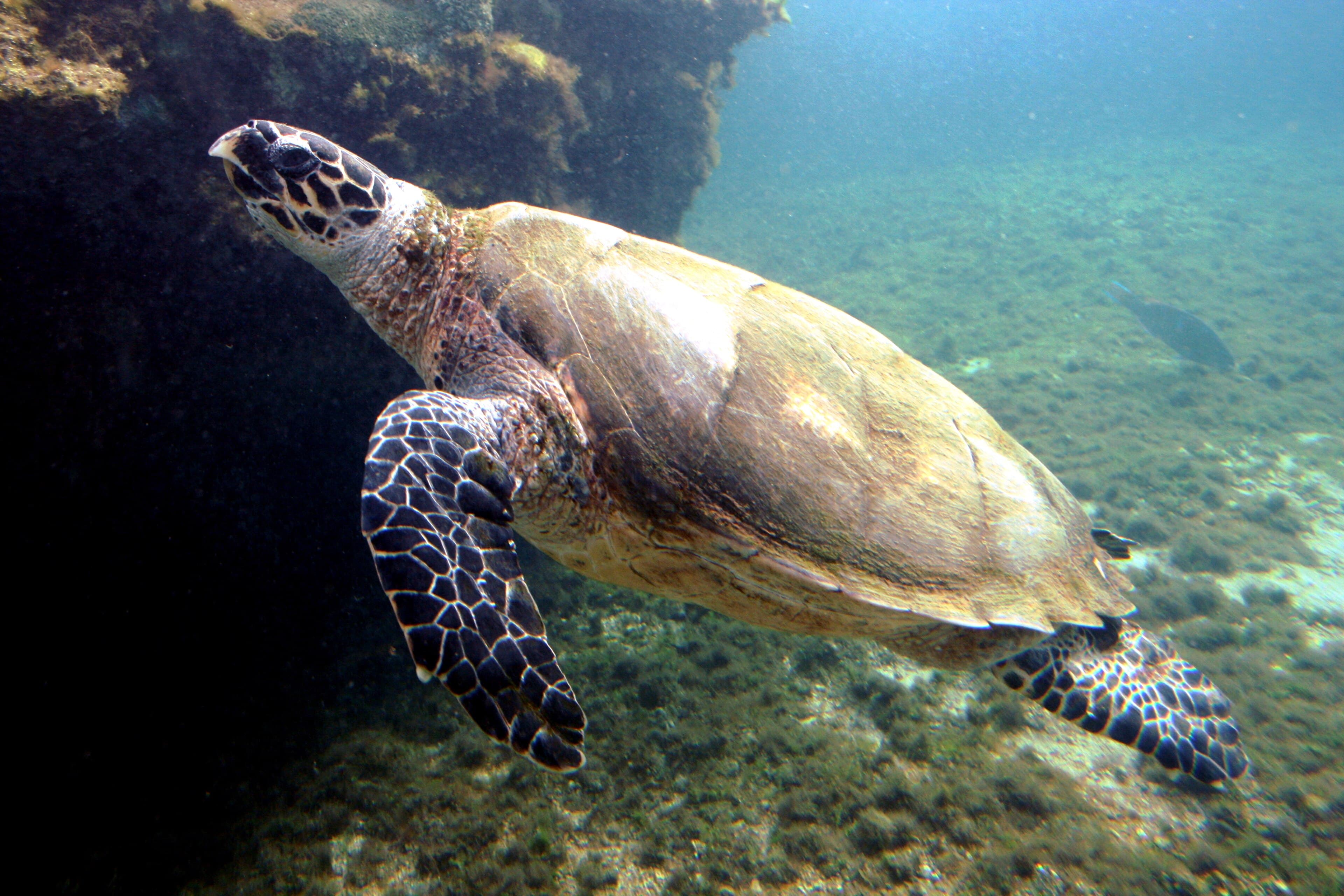
Hawksbill Turtle

A beautiful ancient turtle that nests on Qatar's beaches

Photo Β· Wikimedia Commons

What is it?

The hawksbill turtle is named after its narrow, pointed beak, which looks just like a hawk's bill. It visits Qatar's quiet beaches to lay its eggs in the warm sand. Hawksbill turtles have swum in the world's oceans for more than 100 million years – they were already here when dinosaurs walked the Earth.

Tell me more

Hawksbill turtles are experts at finding food in coral reefs and rocky seabeds. Their narrow beak is perfect for reaching into cracks in rocks to find sponges, which are their favourite food. By eating sponges, hawksbill turtles help keep coral reefs healthy, because sponges would otherwise crowd out the coral.

Female hawksbill turtles return to the same beach where they were born to lay their own eggs – even if that beach is thousands of kilometres away. They swim enormous distances across the ocean, guided by the Earth's magnetic field, to find their home beach. In Qatar, they nest on secluded stretches of coastline away from bright lights and noise.

Qatar's conservation teams patrol nesting beaches at night to protect the eggs and guide the hatchlings safely to the sea. Baby turtles are tiny – about the size of your hand – and use the glow of moonlight on the water to find the sea. Street lighting can confuse them, so protective measures around nesting beaches help them stay on track.

In the classroom

Walk your class through this in 15 minutes.

Talk together

Discussion prompts

  1. 01Baby turtles use moonlight to find the sea. What might happen if beaches have too many bright lights?
  2. 02Hawksbill turtles help coral reefs by eating sponges. Can you think of other animals that help keep a habitat healthy just by eating?
  3. 03Turtles return to the beach where they were born, sometimes after travelling thousands of kilometres. How do you think they remember where home is?
Try this

Classroom activity

Draw a life cycle of the hawksbill turtle as a circle: egg in sand β†’ hatchling on beach β†’ young turtle in open ocean β†’ adult turtle on reef β†’ female returning to nest. Label each stage and add one interesting fact.