
Classroom lesson Β· Food Β· πŸ‡ΆπŸ‡¦ Qatar

Luqaimat

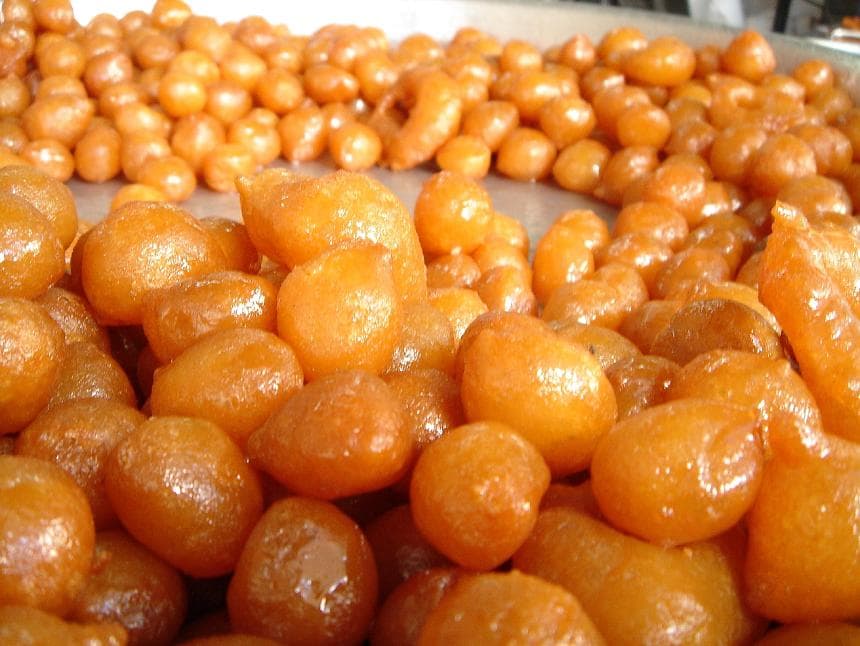
Crispy golden dumplings drizzled with date syrup – Qatar's favourite sweet treat

Photo Β· Wikimedia Commons

What is it?

Luqaimat are small, round fried dough balls – crispy on the outside, soft and fluffy on the inside – served drizzled with date syrup and sprinkled with sesame seeds. They are one of the most popular sweet snacks in Qatar and across the Arabian Gulf, and are especially loved during celebrations and the holy month of Ramadan.

Tell me more

The dough for luqaimat is made from flour, yeast, and a little saffron or cardamom for flavour. It is left to rise until light and bubbly, then spoonfuls are dropped into hot oil where they puff up into perfect golden balls in just a few minutes. Street vendors across Qatar fry them fresh to order.

Date syrup – made from Qatar's beloved date palm fruit – is drizzled generously over the top while the luqaimat are still warm. The combination of crunchy exterior, soft warm centre, and sweet sticky syrup is irresistible. Some people add a drizzle of honey or a sprinkle of cinnamon as well.

Luqaimat have been made in this region for hundreds of years. The name means 'small bites' in Arabic. In old times, they were often the treat given to guests to welcome them, a tradition that is still alive today. Sharing a plate of luqaimat with someone is a way of saying, 'I am glad you are here.'

In the classroom

Walk your class through this in 15 minutes.

Talk together

Discussion prompts

  1. 01Many countries have their own version of fried sweet dough – doughnuts, churros, beignets. Why do you think this type of sweet appears in so many places?
  2. 02Luqaimat are shared with guests as a welcome. What food would you offer someone to show you are happy they visited?
  3. 03Dates grow on tall date palms. Can you find a date palm on a map of places where they grow – do you notice anything about the climate of those places?
Try this

Classroom activity

Mix flour, sugar, and a little cinnamon in a bowl (no cooking needed for this step). Children feel the dry mixture, then add enough water slowly to make a soft dough. Discuss how yeast makes dough rise and draw a before-and-after diagram of risen dough.