
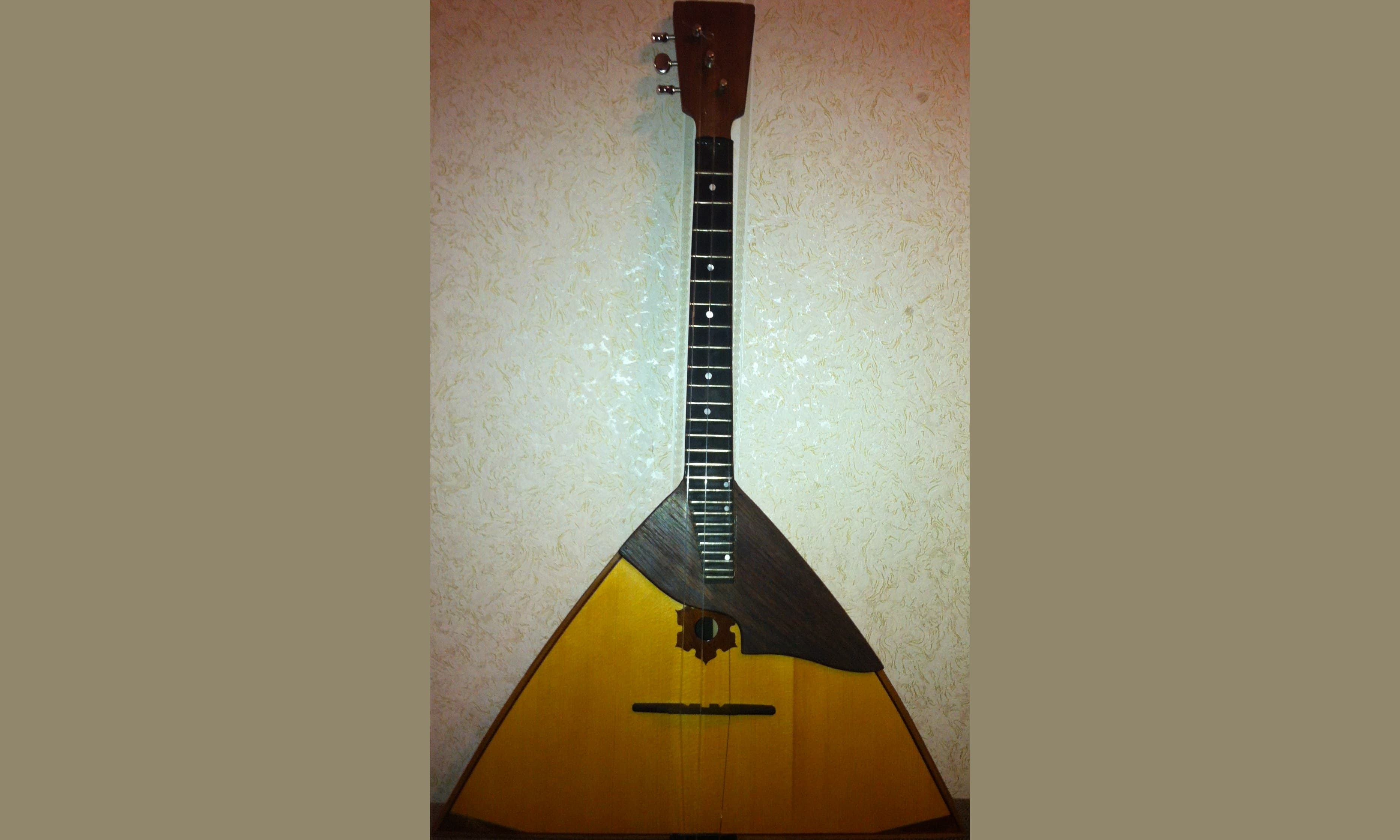
The balalaika's triangular shape makes it immediately recognisable - there is no other instrument in the world quite like it. The three strings are usually made from nylon today, though historically they were made from gut. Players pluck individual strings for melody or strum across all three strings together for a rich, chiming chord. The flat back of the instrument rests against the player's body while the arm wraps around the triangular front.
Balalaikas became popular across Russia several hundred years ago and were played at village dances, celebrations and market fairs. Different sizes of balalaika play different pitches, from the small prima (highest pitched) to the giant contrabass (lowest pitched). When an entire orchestra of balalaikas plays together, covering from the highest to the lowest notes, the combined sound is warm, joyful and unmistakably Russian.
Many of the most famous Russian folk songs and dances are traditionally played on the balalaika. One of the most well-known is a song called 'Korobeiniki', which became world-famous as the theme tune to the computer game Tetris - so if you have ever played Tetris, you have already heard a piece of balalaika-inspired music. Today the balalaika is enjoyed both as a folk instrument and in classical concert halls.