
Classroom lesson ยท Wildlife ยท ๐Ÿ‡ท๐Ÿ‡บ Russia

Beluga Whale

The cheerful white whale of Arctic waters

Photo ยท Wikimedia Commons

What is it?

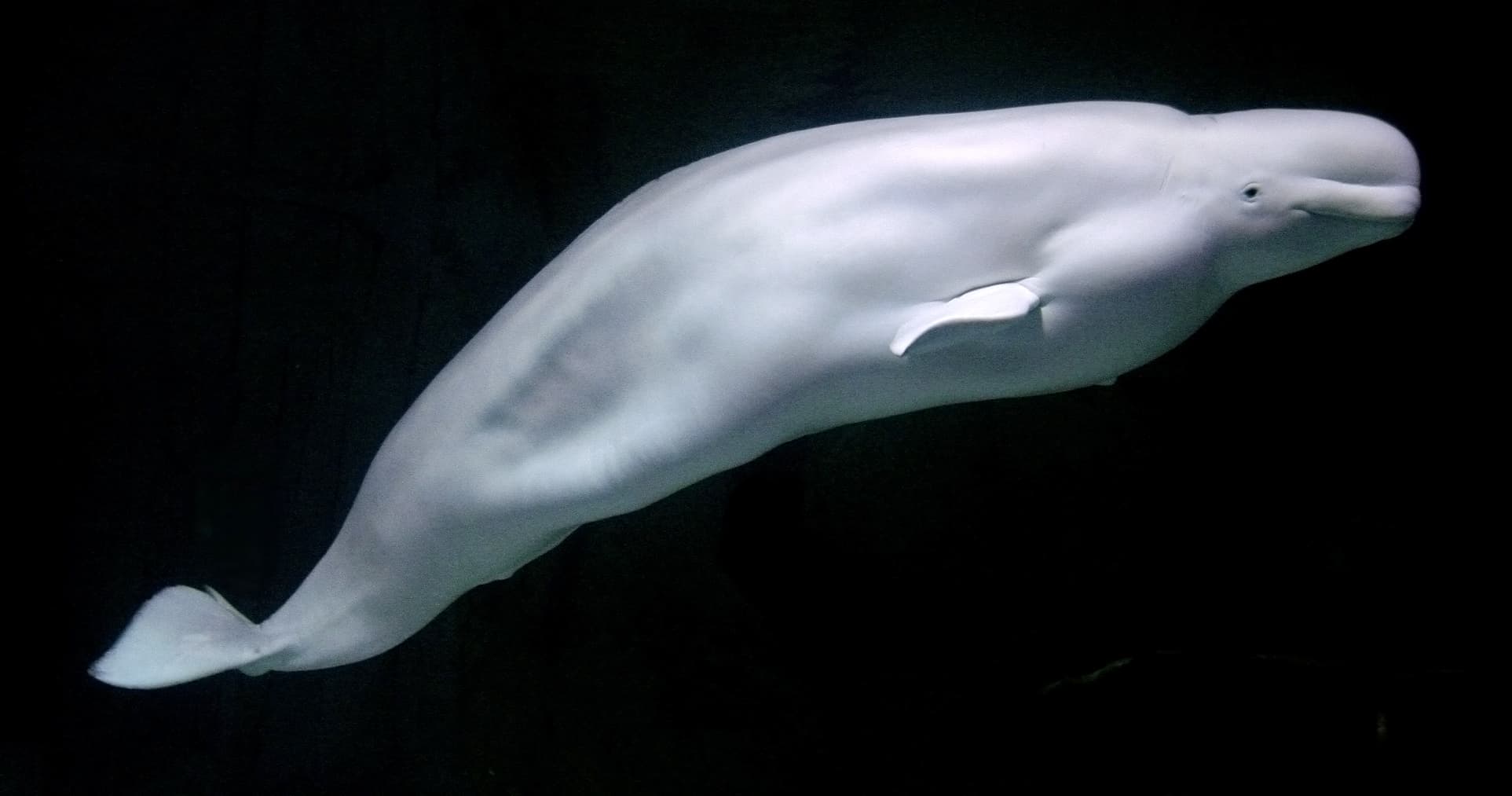
The beluga whale is a small, all-white whale that lives in the Arctic and sub-Arctic seas around northern Russia. Unlike most whales, belugas have a flexible neck and can turn their heads from side to side. They are also famous for the wide range of clicking, whistling and singing sounds they make, which has earned them the nickname 'canaries of the sea'.

Tell me more

Belugas are relatively small for whales, reaching about 4 to 5 metres in length - roughly the size of a large car. Their pure white colour helps them blend in with Arctic ice, and their thick layer of blubber (up to 15 centimetres thick) keeps them warm in freezing water. The round, lumpy forehead - called a melon - is used to focus the clicking sounds belugas use to find their way and communicate.

Belugas are extremely social animals and live in groups called pods. Pods can range from a few individuals to thousands of whales travelling together. They communicate constantly with each other using an impressive variety of sounds - chirps, squeals, clicks and bell-like tones. Scientists have recorded belugas making over 50 different types of sound, and they seem to be very playful, often rolling, chasing each other and even blowing bubble rings.

Every summer, enormous groups of belugas gather in shallow, warm river estuaries along Russia's Arctic coast. Here they rub against the sandy and rocky shallows to shed their old outer skin - a behaviour called moulting. These gatherings of hundreds or even thousands of white whales are a remarkable sight. Scientists travel to locations like the White Sea and the Anadyr Estuary to study the whales and count their numbers.

In the classroom

Walk your class through this in 15 minutes.

Talk together

Discussion prompts

  1. 01Belugas make over 50 different sounds. How do you think scientists figure out what each sound might mean?
  2. 02A thick layer of blubber keeps belugas warm in freezing water. How do humans stay warm in cold places?
  3. 03Belugas are very playful and social. How is being social helpful for an animal living in the Arctic?
Try this

Classroom activity

Listen to a recording of beluga whale sounds (freely available online). Ask children to describe what they hear using musical words: high, low, fast, slow, repeating, etc. Then try inventing a 'whale language' - each child creates three different hand signals or sounds that mean different things and teaches them to a partner.