
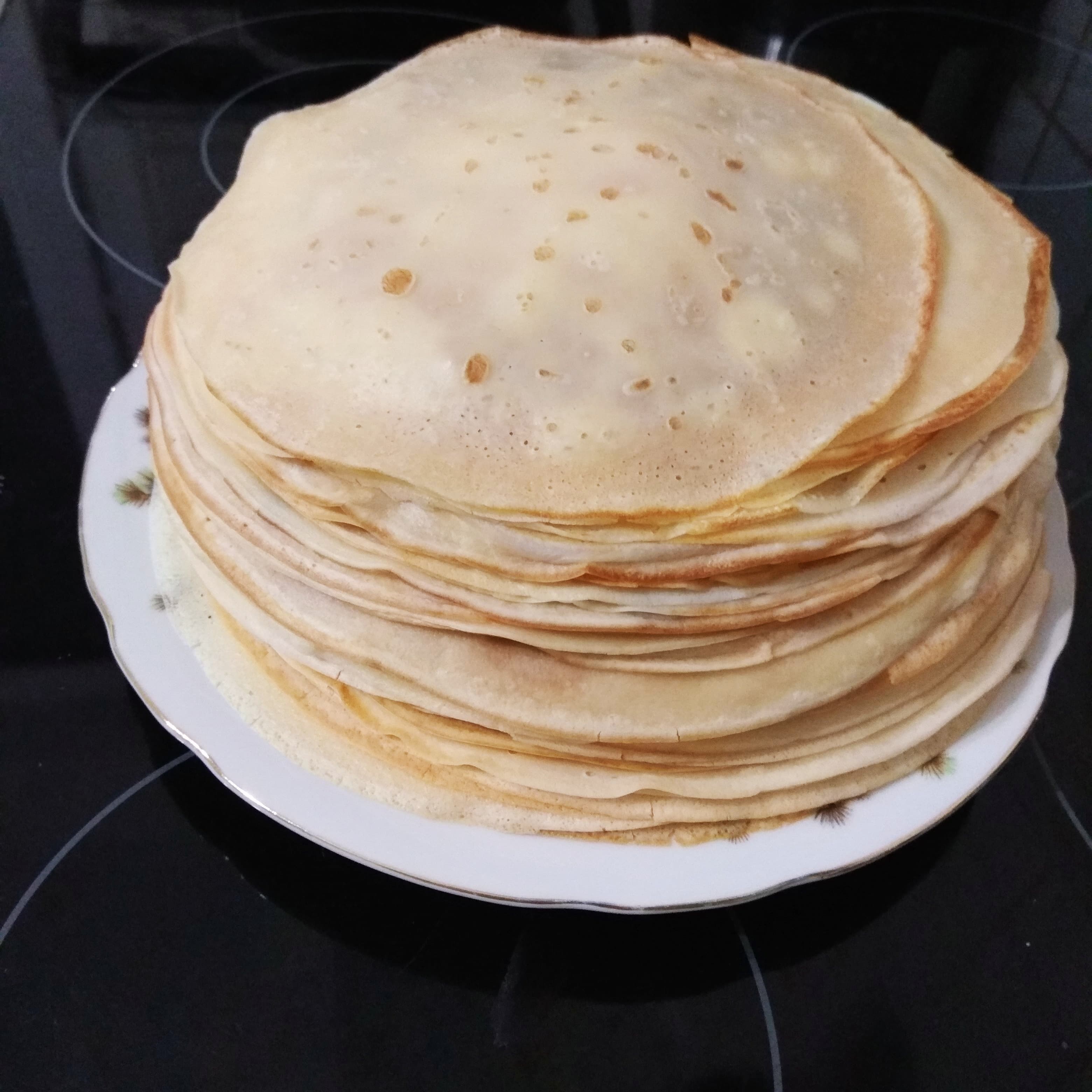
Making blini is a skill that Russian cooks are very proud of. The batter is poured into a hot buttered pan and swirled quickly to make a thin, even circle. The first blini from a new batch is traditionally expected to be imperfect - there is even a Russian saying, 'the first pancake is always a lump', which means it is natural to make mistakes when you are just starting something new.
Blini hold a special place in Russian culture as a symbol of the sun, because of their round, golden shape. They have been made since before written records began, first as offerings for the coming of spring and later as the centrepiece of Maslenitsa - the festive week before the beginning of Lent in the Russian Orthodox calendar. During Maslenitsa, families make enormous quantities of blini and share them with friends, neighbours and anyone who drops by.
Today blini are enjoyed all year round. Topping choices are almost endless: sour cream, strawberry jam, cherry jam, caramel, condensed milk, chopped walnuts, smoked salmon, caviar, fried mushrooms with onions, or simply a knob of melting butter. In cafés across Russia, blini are as common as sandwiches are in Britain. Rolling them up or folding them into triangles is half the fun of eating them.