
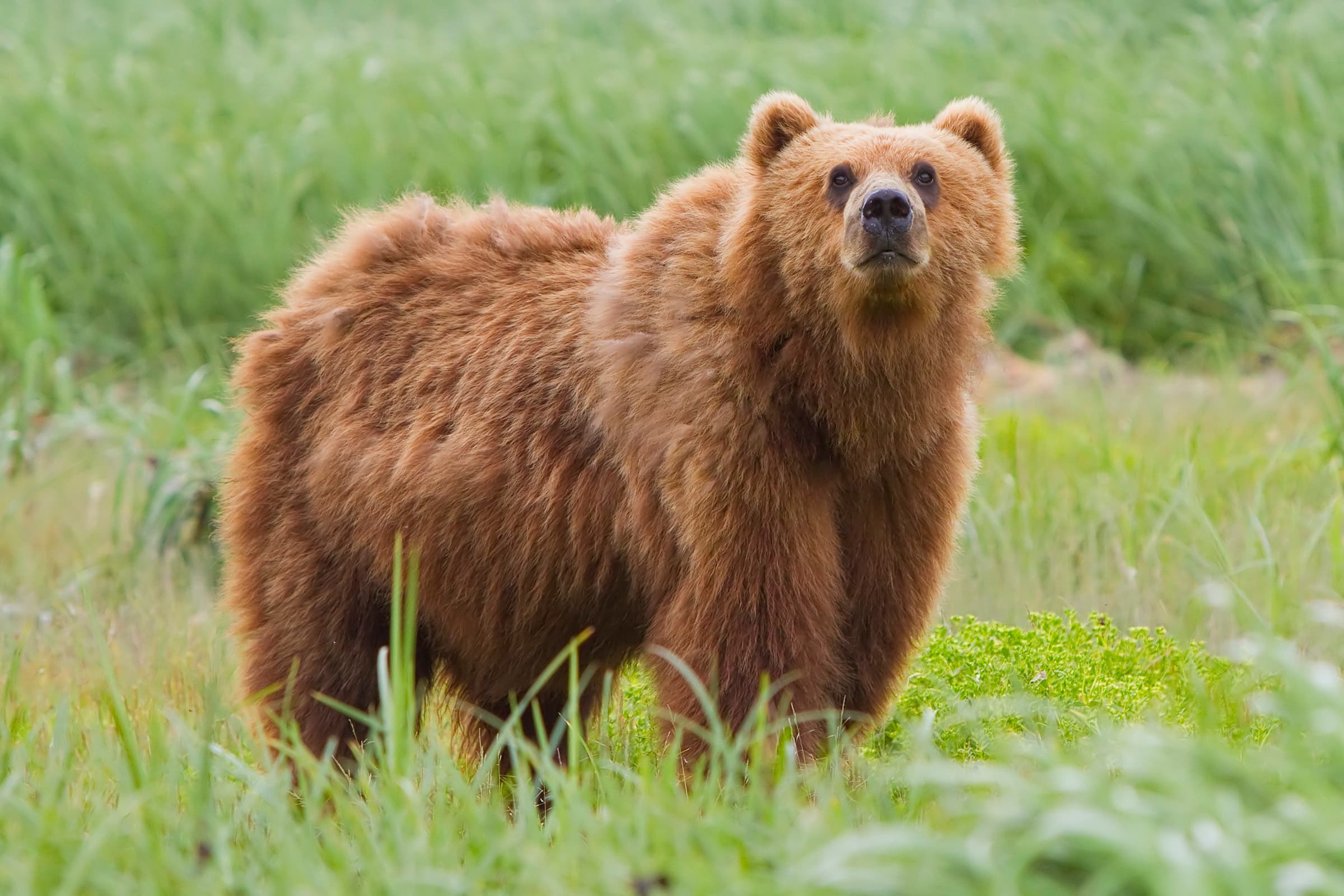
Brown bears are omnivores, which means they eat both plants and animals. Through spring and summer they munch on berries, roots, mushrooms, honey, insects and fish. In Kamchatka, rivers fill with salmon every year and the bears gather in large numbers to catch the fish as they leap upstream. A bear can eat enormous amounts in autumn to build up fat stores for winter - sometimes adding 180 kilograms of body weight before hibernation.
In winter, brown bears go into a deep sleep called hibernation in a cosy den they dig in a hillside or under tree roots. During hibernation their heart rate slows right down and they live entirely off their fat reserves for four to six months. In spring they emerge hungry and thin, and immediately begin searching for the first spring plants to eat.
In Russian folk stories, the bear is often called 'Misha' - a friendly nickname - and appears as a wise, powerful but good-natured character. The bear features in countless Russian fairy tales, toys, songs and even the famous Misha mascot for the 1980 Moscow Olympics. Today Russia works hard to protect bears and their forest habitat, and scientists study their behaviour by fitting some bears with special radio collars.