
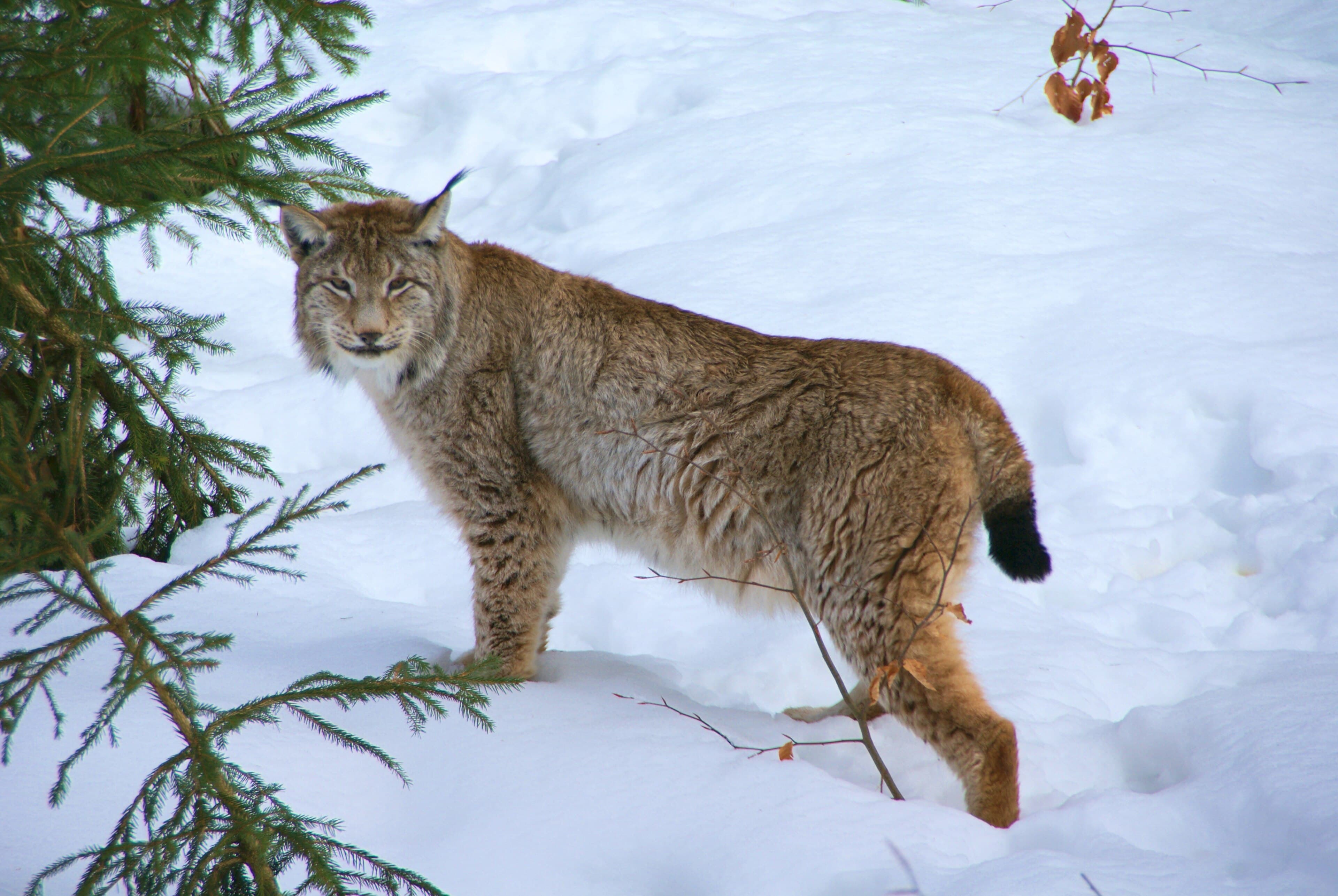
Lynx live alone in dense forests, usually hunting at dawn and dusk. They prey mostly on deer, including the small roe deer, and can leap down on their prey from a tree branch. Their huge, furry paws spread wide on soft snow - a bit like built-in snowshoes - allowing them to walk silently and quickly through deep drifts where other animals would sink and struggle.
The ear tufts on a lynx are not just for show - scientists think they help the lynx pick up sounds, acting rather like a satellite dish to focus sound into the ears. Lynx also communicate with one another using scent marks left on trees and rocks, and during breeding season in late winter the males make surprisingly loud, haunting calls that echo through the forest.
Russia has a healthy population of Eurasian lynx, with tens of thousands living across the boreal forests. They are an important part of the forest ecosystem: by hunting deer, they help stop any one animal from eating too many plants, keeping the forest balanced. Although they are shy, camera traps have captured wonderful images of lynx families, including mother lynx teaching their cubs to hunt.