
Classroom lesson · Festival · 🇷🇺 Russia

Maslenitsa

Russia's joyful pancake festival welcoming spring

Photo · Wikimedia Commons

What is it?

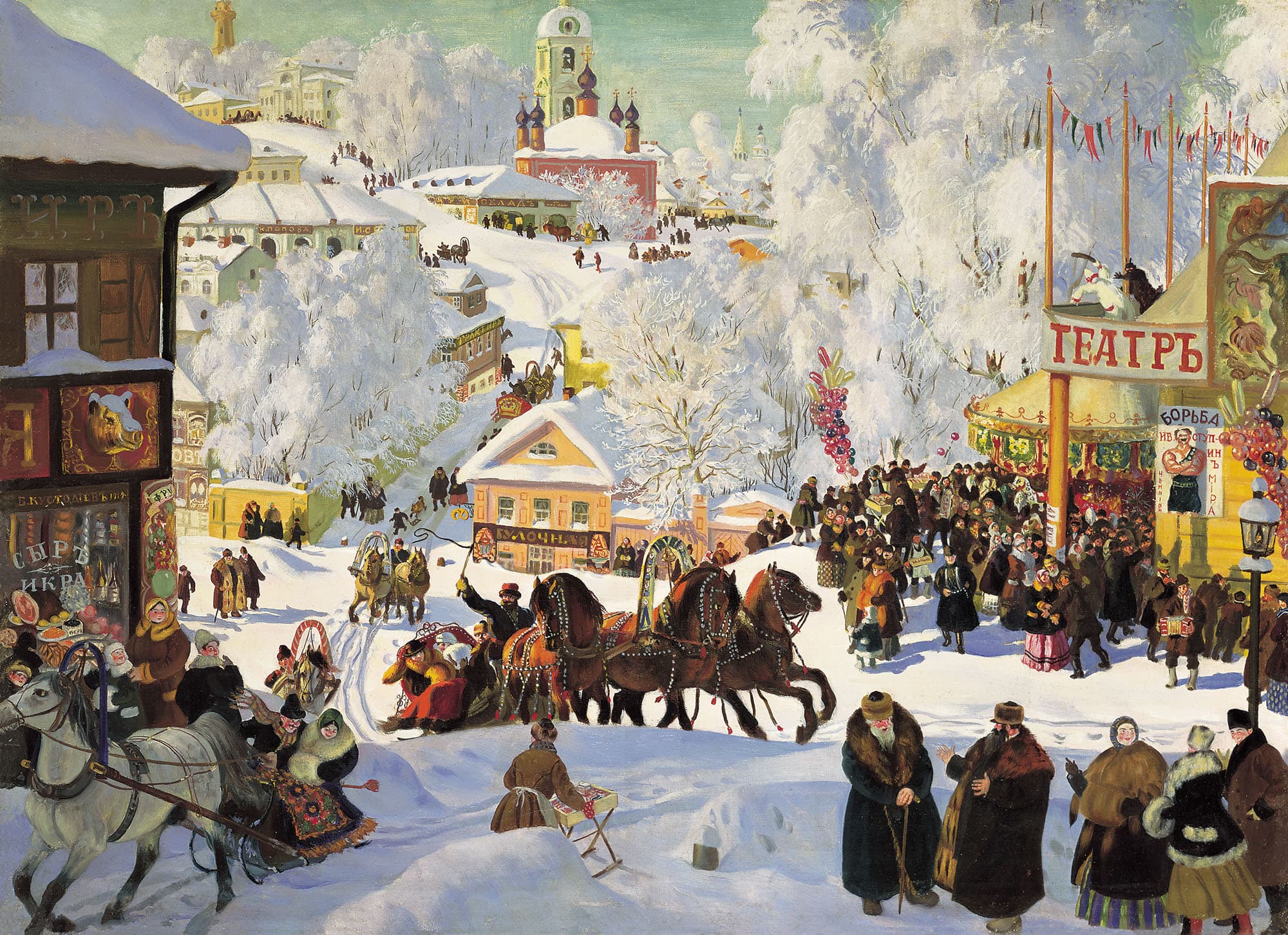
Maslenitsa is a week-long Russian festival that celebrates the end of winter and the coming of spring. Every single day of the festival week, families make and eat huge amounts of blini - the thin pancakes that represent the golden sun. There are outdoor markets, folk music, sledging, games, and on the last day, a large straw figure representing winter is burned in a bonfire to say goodbye to the cold season. Maslenitsa is on the UNESCO list of Intangible Cultural Heritage.

Tell me more

Maslenitsa falls at a different time each year because it is linked to the religious calendar - it always takes place in the week before Lent begins (the same timing as Shrove Tuesday or Mardi Gras in other countries). In Russia the festival dates back over a thousand years, with roots in ancient spring celebrations. The name comes from the word 'maslo', meaning butter, because rich buttery foods like blini are eaten throughout the week.

Each day of Maslenitsa week has a traditional name and purpose. The first couple of days are for preparation, the middle days are for visiting friends and relatives, and the last day - Forgiveness Sunday - is when people ask each other for forgiveness for any unkind things that happened during the year. On this day the straw effigy of Lady Maslenitsa (representing winter) is burned on a bonfire to the cheers of the crowd, and people throw the ashes onto the ground to bring good luck for spring crops.

Outdoor Maslenitsa celebrations are wonderful, lively events. People wear traditional embroidered costumes, groups of singers perform folk songs, and huge crowds gather for games: tug-of-war, pillow fights, climbing greased poles for prizes, and sledging down enormous wooden snow ramps. Hot blini are sold everywhere, and the smell of butter and pancakes fills the air. It is one of the most festive and joyful events in the Russian calendar.

In the classroom

Walk your class through this in 15 minutes.

Talk together

Discussion prompts

  1. 01Maslenitsa has a Forgiveness Sunday where people say sorry for any unkindness. Why might setting aside a special day for forgiveness be a good idea?
  2. 02Many cultures around the world have a festival marking the end of winter. Why might people want to celebrate that change of season?
  3. 03Burning a straw figure of 'Lady Winter' is a way of saying goodbye to the cold. Do you know of other festivals that use fire or light as part of the celebration?
Try this

Classroom activity

Create a 'festival week planner'. Ask each child to invent their own seven-day festival celebrating a change of season. What is the festival called? What is the special food? What game is played? What happens on the last day? Share plans in small groups and vote on the best ideas.