
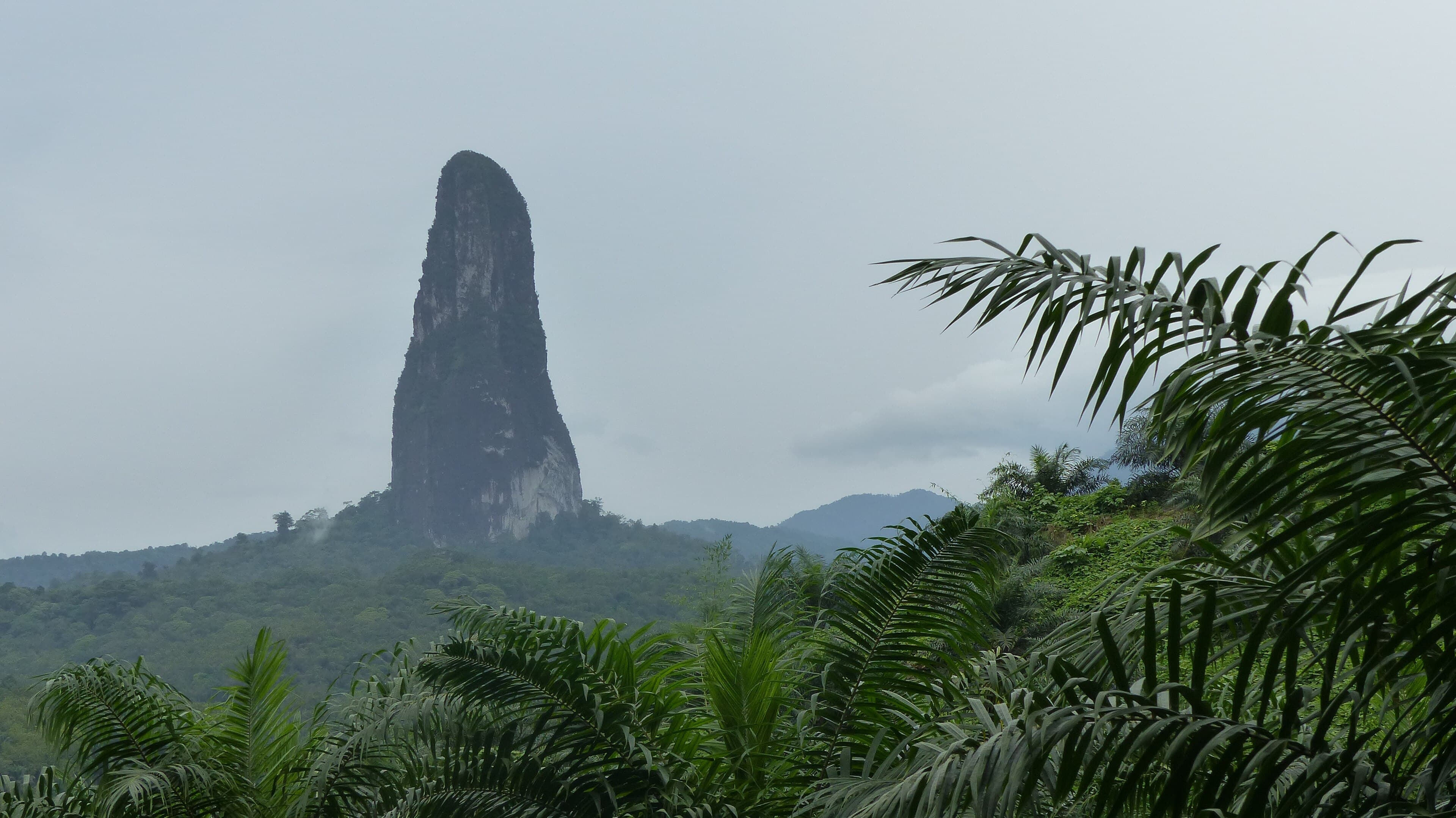
Pico Cão Grande was formed millions of years ago when a volcano pushed thick, hard rock up through the earth. Over a very long time, rain and wind wore away the softer rock all around it, leaving this pointed tower standing alone above the treetops. Scientists call this kind of rock formation a volcanic plug.
Clouds often wrap around the top of the peak like a scarf, making it look mysterious. From the ground, it can be hard to see the very top because mist hides it. On a clear morning, local people say it looks as if the peak is wearing a white hat.
The dense green jungle at the base of Pico Cão Grande is alive with birds and insects found almost nowhere else on Earth. The rock face itself is very steep and slippery - only a handful of experienced climbers have ever reached the top.
The peak is one of the most recognised symbols of São Tomé and Príncipe. It appears on postcards, paintings and even on stamps, and local schoolchildren are proud that their small island has one of the most dramatic rock spires in all of Africa.