
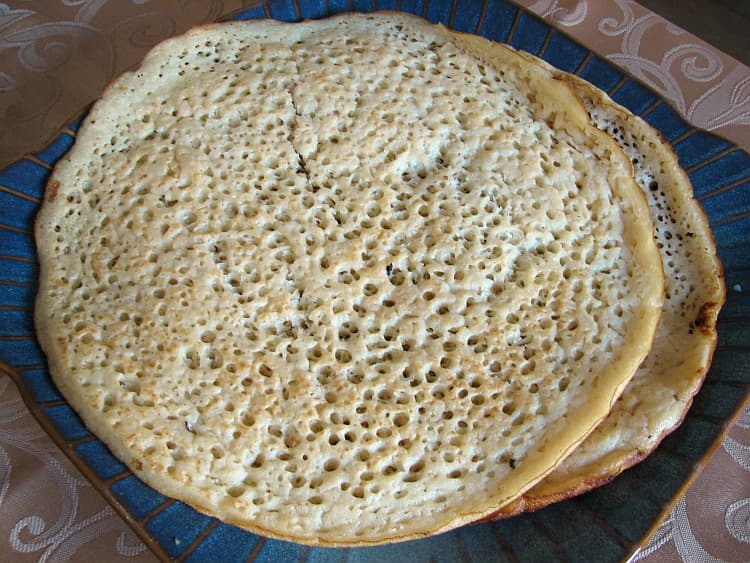
Canjeero is a sourdough bread, which means it rises naturally without any added yeast - instead, wild yeasts and bacteria in the air ferment the batter overnight, making it bubble and develop a gentle sour flavour. This is one of the oldest bread-making methods in the world, used by people long before packaged yeast was invented.
Making canjeero well is a skill that many Somali cooks are proud of. The batter must be exactly the right thickness, the pan must be the right temperature, and you should only swirl the batter once before leaving it to set. The tiny holes that appear on the surface are the sign of a perfect canjeero - they make it soft and spongy and ideal for soaking up sauces.
Canjeero is usually eaten at breakfast with honey, sesame oil or a stew called suqaar, but it appears at almost every Somali meal in some form. When large canjeero are baked, they can be used like a plate - food is piled on top and everyone eats together from the same sheet. Sharing food from one canjeero is a tradition that brings people together.