
Classroom lesson Β· Wildlife Β· πŸ‡ΈπŸ‡΄ Somalia

Dik-dik

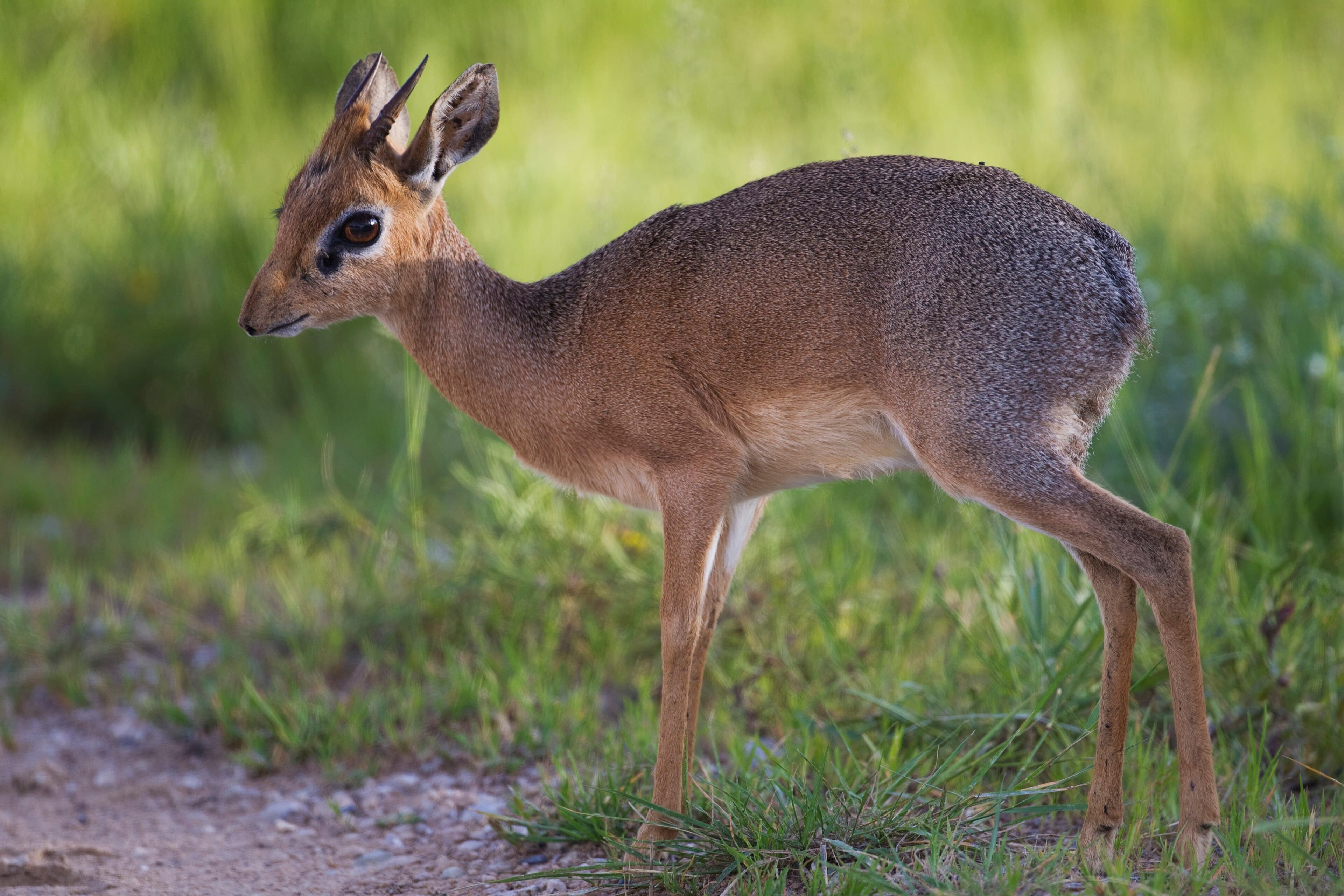
A tiny antelope no taller than a house cat

Photo Β· Wikimedia Commons

What is it?

The dik-dik is one of the world's smallest antelopes, standing only about 35–45 centimetres tall at the shoulder β€” roughly the same height as a house cat. It lives in the dry scrublands of Somalia, moving through thorny bushes on delicate little legs. Its name comes from the high-pitched 'dik dik!' alarm call that pairs make when they spot danger.

Tell me more

Dik-diks are perfectly designed for life in hot, dry places. They barely need to drink water because they get almost all the moisture they need from the leaves and berries they eat. Their big eyes help them spot danger in the low light of dawn and dusk β€” the times they are most active, when it is cool enough to move around.

Dik-diks live in pairs and mate for life, which is unusual in the animal world. A pair will share a small territory together and mark its boundaries using a special gland under each eye β€” they rub a dark sticky substance onto twigs to signal 'this is our home'. The male has tiny pointed horns, barely longer than a finger.

When a dik-dik is frightened, it zigzags away at speed, bouncing left and right to confuse any chasing animal. Their pale tan coats blend in with dry grass and sandy soil, making them hard to spot even when you are quite close. A baby dik-dik can run with its parents within hours of being born.

In the classroom

Walk your class through this in 15 minutes.

Talk together

Discussion prompts

  1. 01The dik-dik gets water from its food instead of drinking. Can you think of other animals that survive without much water?
  2. 02Dik-diks live in pairs for life. How do you think they communicate with each other?
  3. 03The dik-dik's coat blends into dry grass. What is this called, and which other animals use the same trick?
Try this

Classroom activity

Draw a dik-dik next to a house cat and a human hand to show how small it is to scale. Then write a 'fact file' about one adaptation β€” a body feature that helps it survive in a hot dry place β€” and explain in your own words how that adaptation works.