
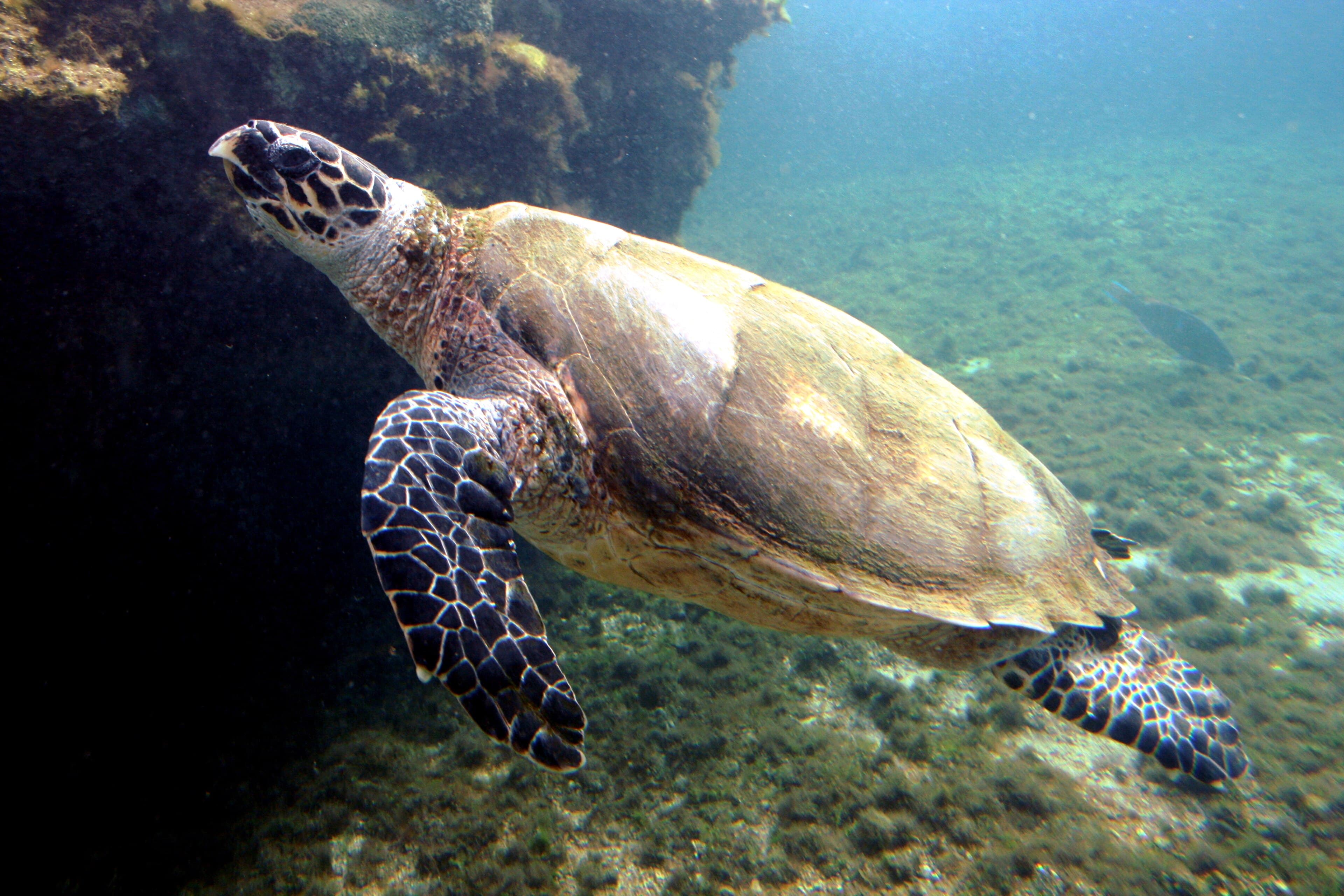
Hawksbill turtles are named for their narrow, hooked beak, which is perfect for reaching into cracks in coral reefs to pull out sea sponges - their favourite food. Sea sponges are creatures that many other animals cannot eat, so the hawksbill plays a very important role: by eating sponges it keeps the reef healthy and gives coral space to grow.
Every few years, a female hawksbill returns to the very beach where she herself was born - sometimes swimming thousands of kilometres to get there. Scientists think she navigates using the Earth's magnetic field, like a living compass. She hauls herself up the sand at night and digs a deep nest with her flippers before laying around 130 eggs the size of ping-pong balls.
The eggs hatch about two months later, usually at night. The tiny hatchlings scramble towards the lightest part of the horizon (usually the sea) and dash for the water. A hawksbill that survives to adulthood can live for more than 50 years and grow to 90 centimetres long - roughly the length of a guitar.