
Classroom lesson · Wildlife · 🇸🇩 Sudan

Dinder National Park

Sudan's greatest wildlife sanctuary

Photo · Wikimedia Commons

What is it?

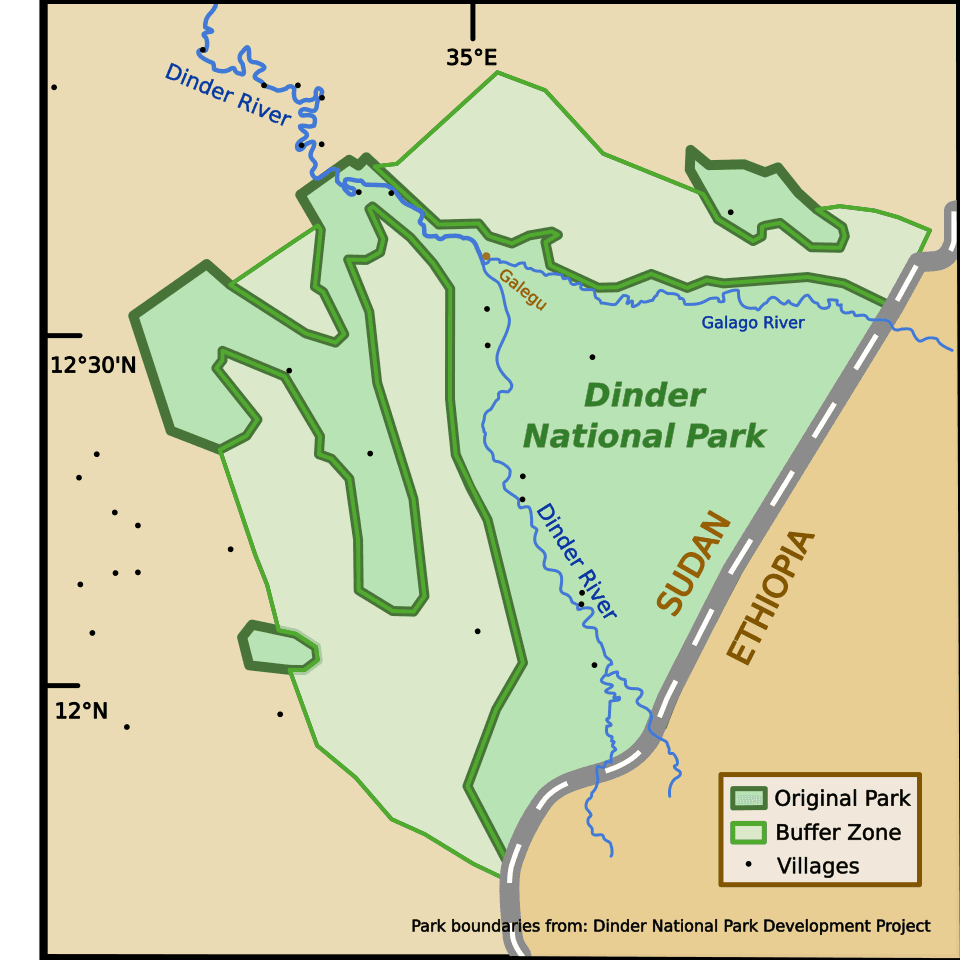
Dinder National Park is Sudan's largest wildlife reserve, stretching across a beautiful area of woodland, grassland and seasonal pools in the south-east of the country near the Ethiopian border. It is home to lions, leopards, African wild dogs, buffaloes, giraffes and over 160 species of birds. The park was created in 1935 to protect Sudan's incredible wildlife.

Tell me more

Dinder gets its name from the Dinder River, which flows through the park and fills up a series of shallow pools called mayas during the wet season. As the dry season arrives and the pools shrink, animals from across the park gather at the remaining water. This makes the mayas the best place to spot all kinds of wildlife drinking side by side — lions, antelopes, baboons and elephants can sometimes all be seen at the same pool.

The park has a remarkable mix of habitats packed into one area. In the wetter south, tall acacia woodland provides shade and shelter for leopards, monkeys and hundreds of birds. In the north, open grasslands are home to large herds of roan antelope and lelwel hartebeest — two striking antelopes with long, curved horns. The mix of trees and grassland means the park can support an enormous variety of species.

Birdwatchers love Dinder because more than 160 species have been recorded there, including the very rare shoebill stork — a huge bird with a foot-wide beak shaped like a wooden shoe. Elephants also visit the park, particularly along the river corridors. Scientists and conservationists work at Dinder to understand how wildlife populations are doing and what the park needs to keep thriving.

In the classroom

Walk your class through this in 15 minutes.

Talk together

Discussion prompts

  1. 01During the dry season, animals that would normally avoid each other gather at the same pool. Why do you think they manage to share the water without constant fighting?
  2. 02Dinder has woodland in one part and open grassland in another. Why does having different habitats allow more types of animals to live there?
  3. 03If you were in charge of protecting a national park, what would be the three most important rules you would make?
Try this

Classroom activity

Create a Dinder food chain poster. Research one food chain that exists in the park (grass → antelope → lion, for example). Draw each link in the chain with an arrow, and add labels explaining what each animal eats and what eats it. Then add a second chain that connects to the first — show how different chains link to form a web.