
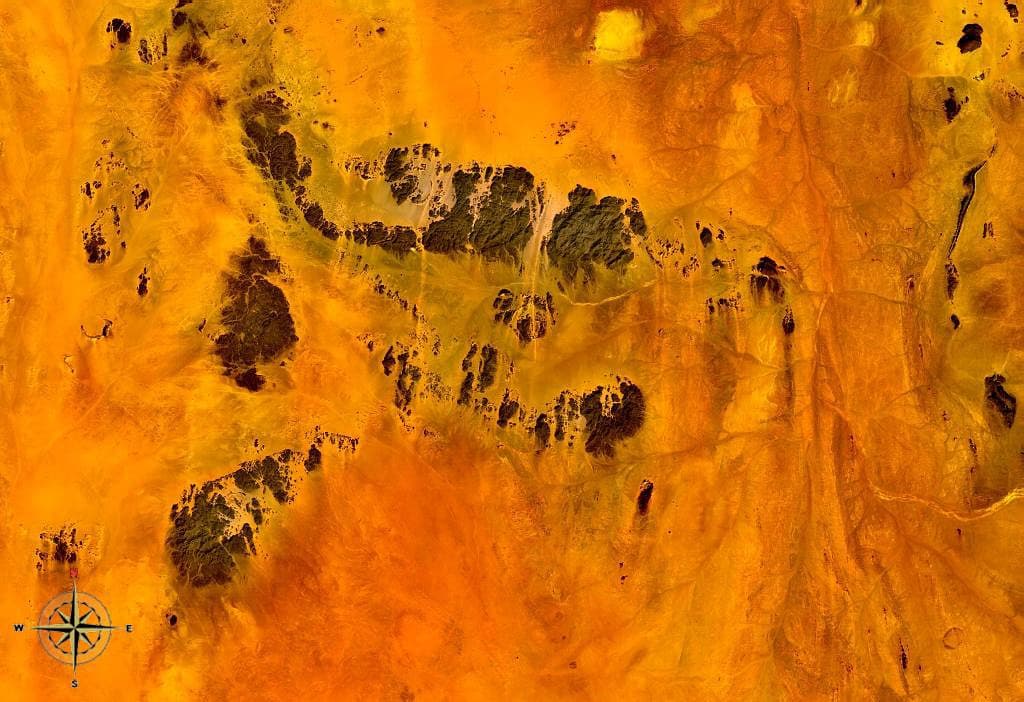
The Nubian Desert is part of the great Sahara, the largest hot desert in the world. In Sudan's corner of it, the ground is mostly made of flat gravel and exposed sandstone rock, with sand dunes in between. The colours shift from pale yellow to deep red depending on the time of day and the minerals in the rock.
Even in this fierce heat, life finds a way. Lizards dash between rocks in the early morning before it gets too hot. Scorpions hide under stones during the day and come out at night. Desert plants called succulents store water inside their thick stems so they can survive long dry spells. Along dry riverbeds called wadis, acacia trees grow where rainwater soaks into the ground after a rare storm.
For thousands of years, traders and travellers crossed the Nubian Desert with camel caravans, carrying gold, ivory and other goods. The caravans followed ancient routes between oases - pockets of green where underground water comes to the surface. Those same routes helped the ancient Kingdom of Kush become rich by trading between the heart of Africa and the Mediterranean world.