
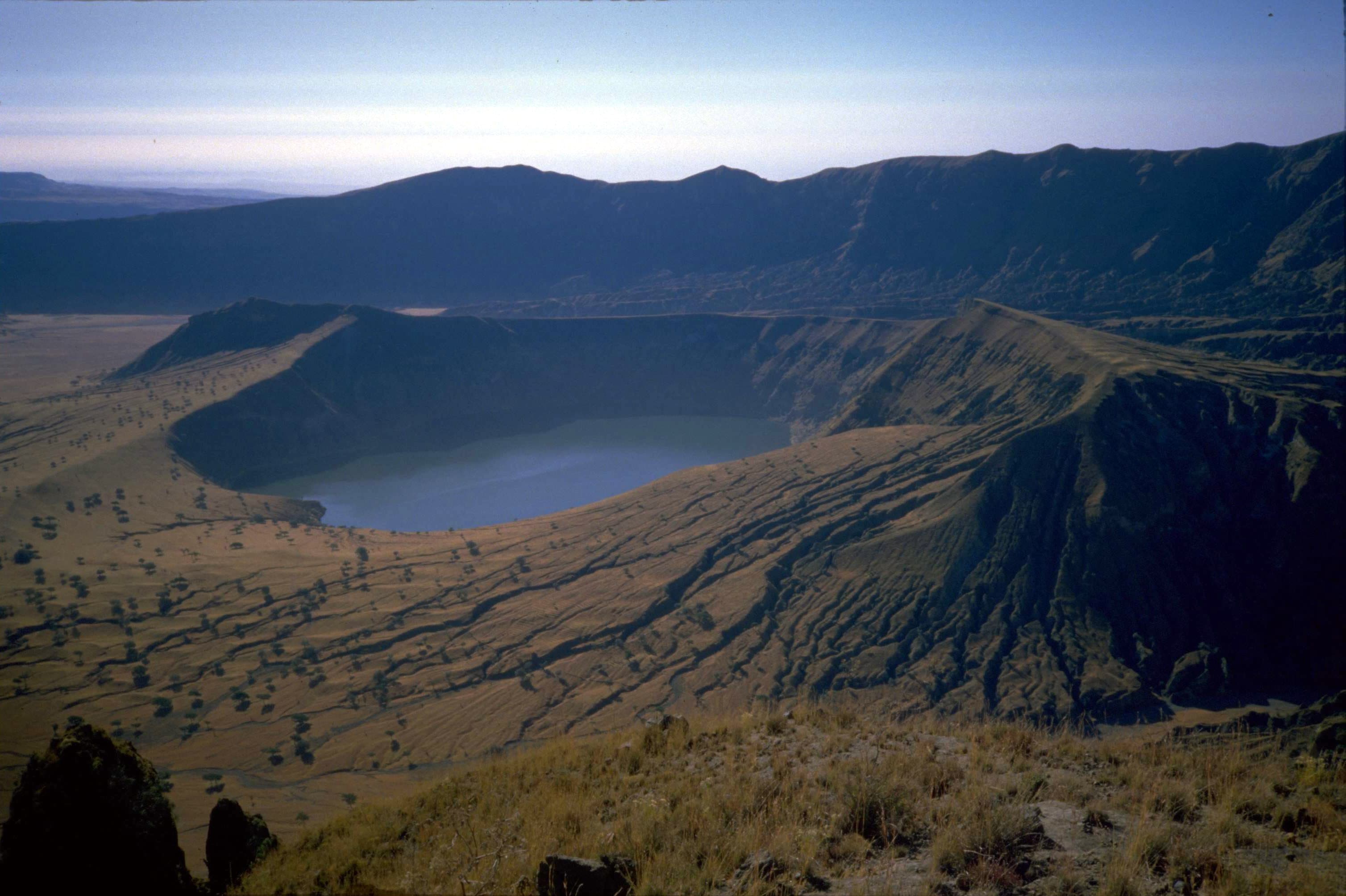
Jebel Marra was formed by volcanoes that were active millions of years ago. The peaks were built up layer by layer as lava cooled and hardened. Today the volcanoes are quiet, but they left behind a dramatic landscape of steep ridges, deep valleys and a stunning caldera - a bowl-shaped hollow at the summit - filled with a blue-green lake called Deriba Caldera. The lake sits at about 2,900 metres above sea level.
Because the mountains are so tall, they catch rain that never reaches the desert below. Streams tumble down the slopes and create small waterfalls. The hillsides are covered with juniper trees, wild herbs and flowering plants that simply do not exist in the hot, dry lowlands. Monkeys, birds of prey and many insects live in this cooler, wetter world high above the desert.
Farmers on the lower slopes of Jebel Marra grow mangoes, citrus fruits and vegetables using the extra water that comes from the mountains. The terraced fields carved into the hillsides have been farmed for many generations. Visitors who reach the crater lake at the top are rewarded with views stretching out across the vast flat plains of Sudan in every direction.