
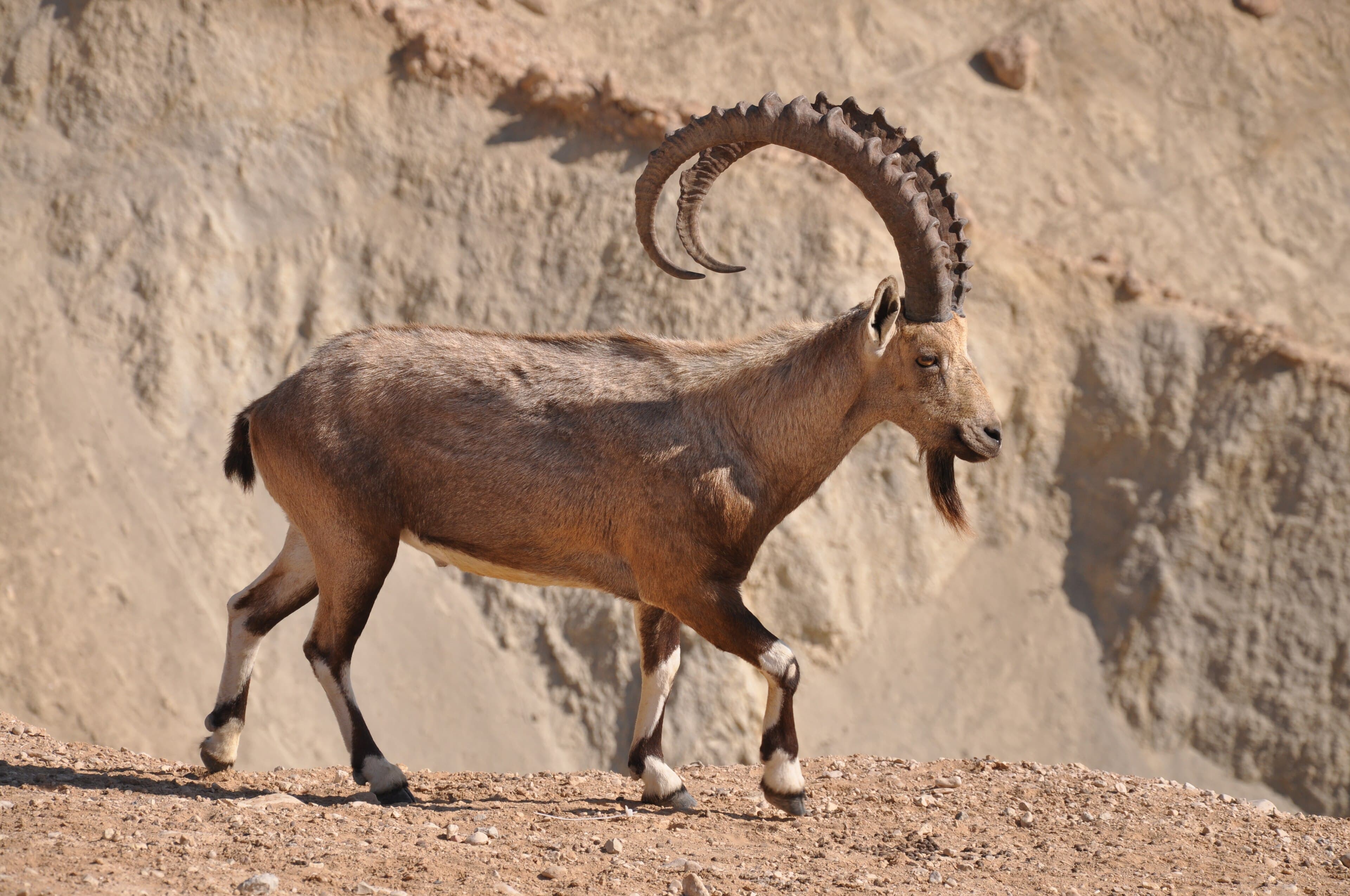
Nubian ibex are built for life on cliffsides. Their hooves have hard outer edges for gripping rock and soft, rubbery inner pads that work like sticky suction cups. This design lets them walk along ledges only a few centimetres wide and leap between rocks several metres apart without slipping. Watching them move on a sheer cliff face can look like magic.
The horns of a male Nubian ibex can grow up to a metre long, curving backwards in a graceful arc. Males use their horns to impress females and sometimes to spar with each other - they rear up on their back legs and clash horns together, making a loud cracking sound. Females have much shorter, thinner horns.
Nubian ibex eat grasses, leaves and the thin dry plants that grow in rocky desert areas. Because food and water are scarce, they are most active in the early morning and late afternoon when it is cooler. During the hottest part of the day they rest in the shade of overhanging rocks. Their sandy-brown coat blends perfectly with the colour of desert cliffs, making them hard to spot even when they are sitting still.