
Classroom lesson · Music · 🇸🇩 Sudan

Oud Music

The ancient lute at the heart of Sudanese music

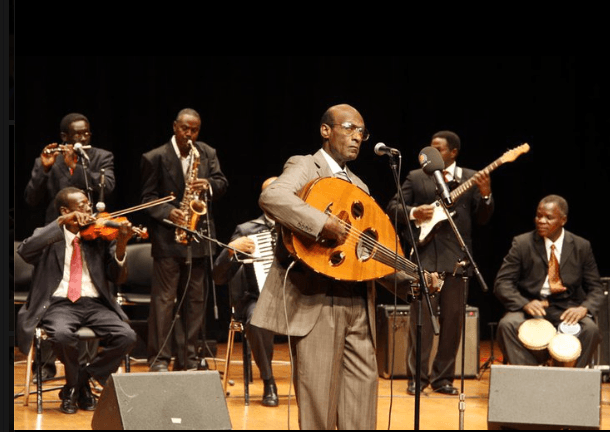
Photo · Wikimedia Commons

What is it?

The oud is a pear-shaped stringed instrument, a bit like a guitar but with a deeper, rounder belly and no frets. It is one of the oldest instruments in the world and sits at the very heart of music in Sudan and across North Africa and the Middle East. Sudanese musicians play it at weddings, festivals and family gatherings.

Tell me more

The oud has been played for at least 3,000 years. Its name comes from the Arabic word for wood, and every part of it is carefully made by hand — the curved wooden back, the flat spruce top and the strings, which were once made from animal gut but are now usually nylon. A skilled oud maker can spend weeks building a single instrument.

Playing the oud takes years of practice. Players use a small plectrum — sometimes made from a feather or a piece of plastic — to pluck or strum the 10 or 11 strings in rapid patterns. Because there are no frets (the little metal bars on a guitar), the player's fingers can slide between notes to create smooth, gliding sounds that feel very different from Western string instruments. This gives oud music its distinctive floating, dreamy quality.

In Sudan the oud often plays alongside singers performing long, emotional love songs and praise songs called madeeh. Famous Sudanese oud players are celebrated like pop stars. Children learn the oud in schools and music clubs across Sudan, carrying a musical tradition that stretches back thousands of years. The oud also inspired the European lute, which later inspired the modern guitar.

In the classroom

Walk your class through this in 15 minutes.

Talk together

Discussion prompts

  1. 01The oud has no frets, which allows players to slide between notes. How do you think that changes what the music sounds like compared to a guitar?
  2. 02The oud eventually influenced the guitar — can you think of other inventions that inspired something completely different thousands of years later?
  3. 03Why do you think music is so important at weddings and celebrations in every culture around the world?
Try this

Classroom activity

Make a simple rubber-band 'oud'. Stretch four or five rubber bands of different thicknesses across an open shoebox lid. Pluck them gently — notice how thicker bands make lower sounds and thinner bands make higher sounds. Try creating a short melody. Compare the sound to a guitar if your school has one.