
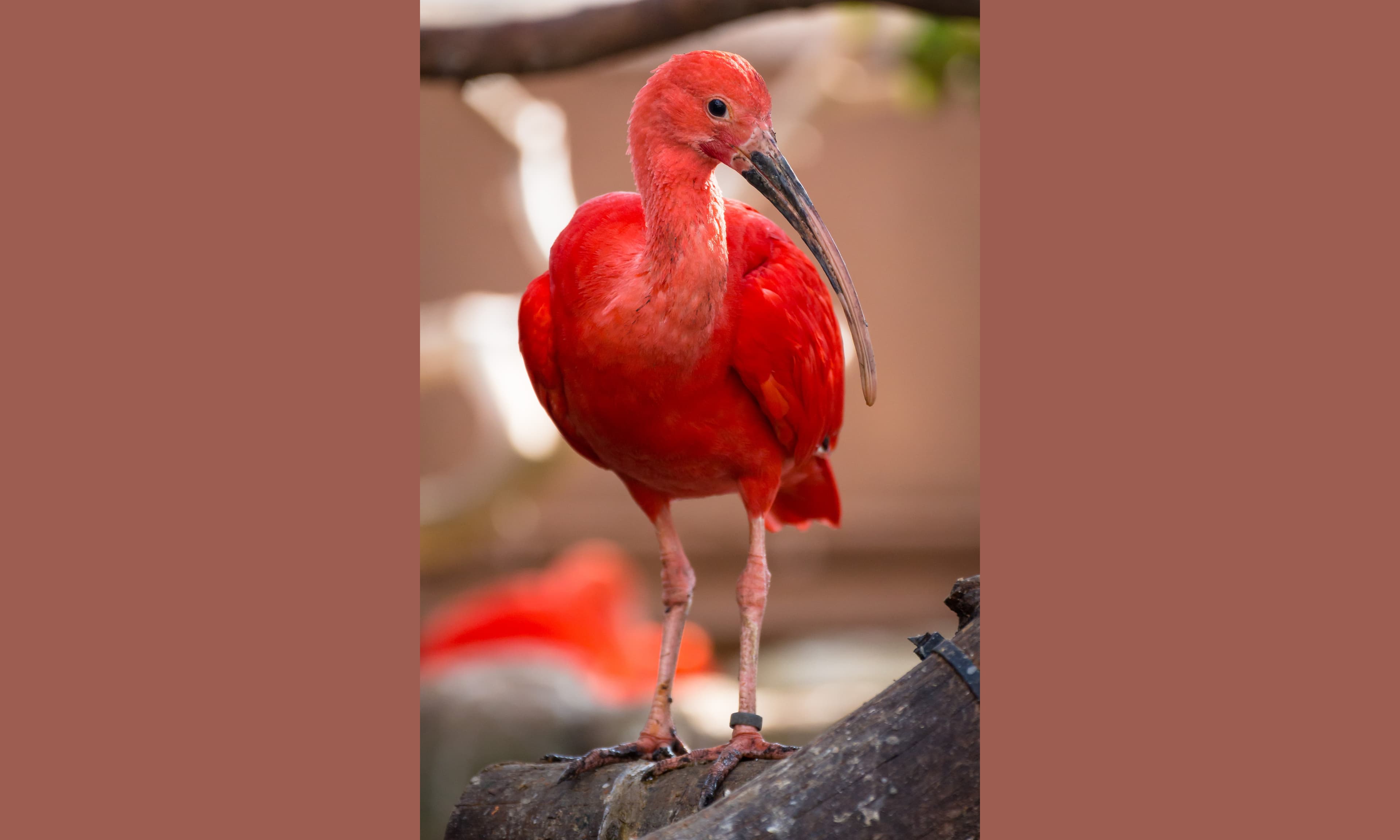
The scarlet ibis gets its red colour from the food it eats. It uses its long curved beak to probe into mud and shallow water for small crabs, shrimps and beetles - and all these creatures contain a natural red pigment. The more the ibis eats, the redder it becomes. Young ibises start out grey or brown and turn redder as they grow.
Scarlet ibises nest together in huge colonies in the mangrove forests along Suriname's coast. These mangrove forests are important in their own right - the tangled roots hold the coastline together and provide nurseries for young fish. So protecting ibises means protecting the mangroves, which protects the fish, which helps the fishermen. Everything is connected.
At dusk, watching thousands of scarlet ibises fly in to roost in the trees is one of the great wildlife spectacles of South America. The birds come in wave after wave, turning the trees red as they land. Suriname has several protected areas along the coast where visitors can watch this happen by boat.