
Classroom lesson ยท Wildlife ยท ๐Ÿ‡น๐Ÿ‡ฏ Tajikistan

Pamiri Yak

A shaggy mountain giant that has been a faithful helper to Pamir families for centuries

Photo ยท Wikimedia Commons

What is it?

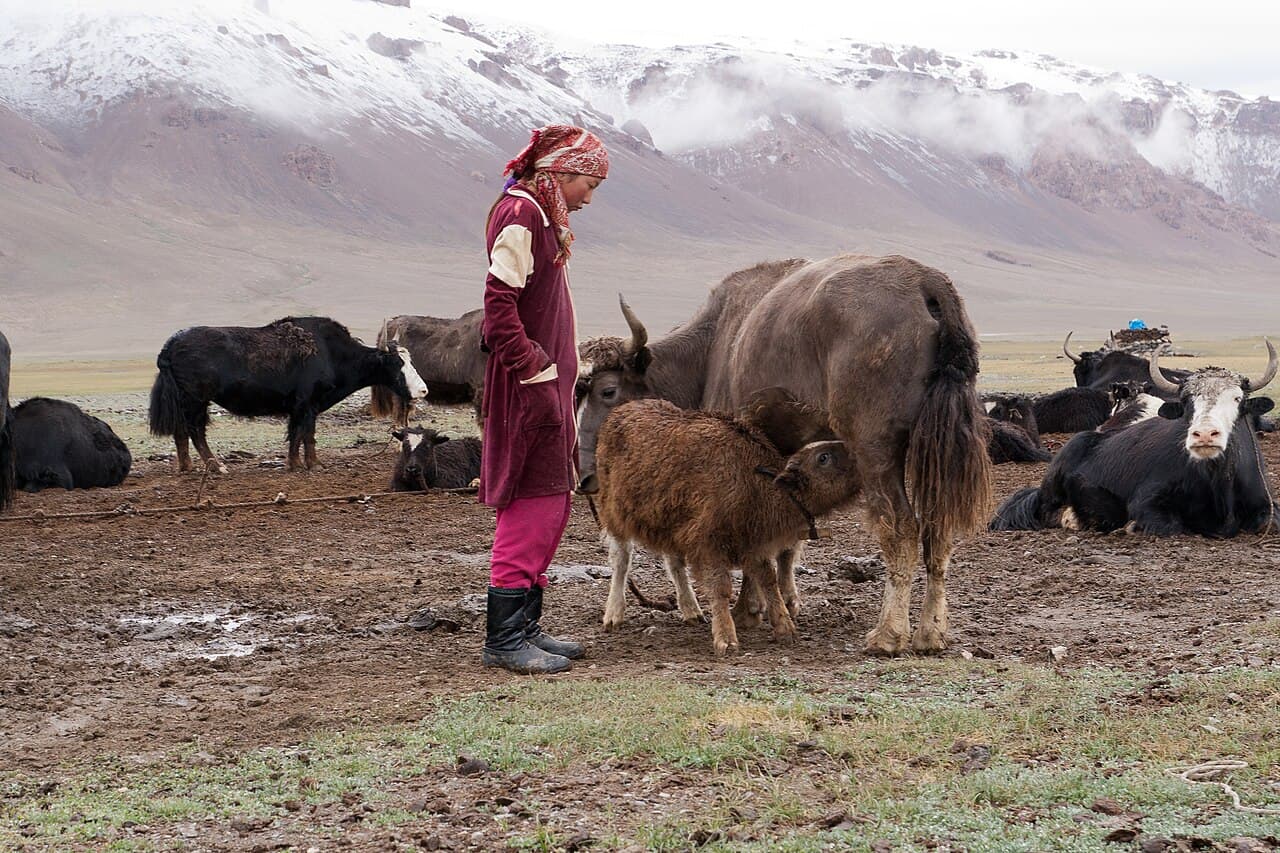
The yak is a large, shaggy animal related to cattle, but perfectly suited to life in the high Pamir Mountains. Wild yaks roam the highest plateaus, while domestic yaks live alongside Pamiri families and help them with many tasks. Their thick coats, calm natures and sure-footed steps make them one of the most important animals in the whole region.

Tell me more

A yak's coat is extraordinary: a dense inner layer of very fine wool, and a shaggy outer layer of long coarse hair that hangs almost to the ground. This double layer keeps the yak warm at temperatures below minus 40 degrees Celsius โ€” colder than the coldest freezer you will ever touch. In summer, people comb out the soft inner wool to spin into clothing.

Pamiri families rely on yaks for milk, butter, cheese and yogurt โ€” all from the same animal. The yak's milk is much richer and creamier than cow's milk. Yak butter is used to make a warming salty butter tea that Pamiri people drink to stay warm and energised during cold mountain work.

Yaks are also excellent pack animals, carrying heavy loads across steep mountain passes where wheeled vehicles cannot go. Their wide hooves grip rocky paths and prevent slipping. In some remote villages, yaks are still the main way of moving goods and supplies across the mountains โ€” acting as the local delivery service.

In the classroom

Walk your class through this in 15 minutes.

Talk together

Discussion prompts

  1. 01If you had to choose one animal to help you survive in a cold mountain village, which would you choose and why?
  2. 02Yaks provide milk, wool, carrying power and more. Can you think of other animals that help humans in many different ways?
  3. 03Why might salty tea (rather than sweet tea) be especially helpful after hard physical work?
Try this

Classroom activity

Draw a yak outline and annotate it like a diagram. Label at least six things the yak provides or does for Pamiri families (e.g. wool, milk, butter, transport). Use arrows pointing to the part of the animal that gives each product โ€” e.g. an arrow to the coat for wool.