
Classroom lesson · Mount Agou · 🇹🇬 Togo

Mount Agou

Togo's highest mountain, rising above the clouds

Photo · Wikimedia Commons

What is it?

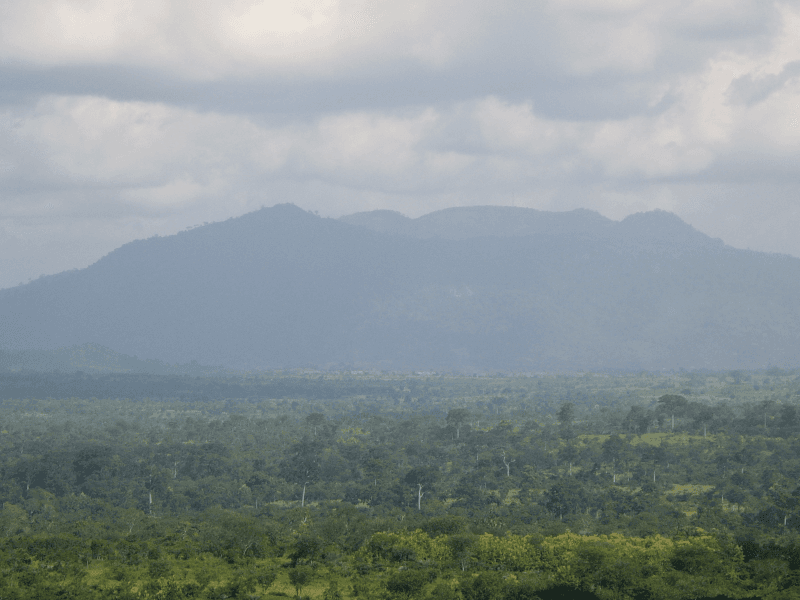
Mount Agou is the highest mountain in Togo, reaching 986 metres above sea level. It sits in the centre of the country, covered in dense green forest all the way up its slopes. On clear mornings, hikers who reach the top can see all the way to the ocean — the Gulf of Guinea — more than 100 kilometres away.

Tell me more

Even though 986 metres does not sound as tall as some of the world's famous mountains, Mount Agou is impressive because the land around it is quite flat, so it pops up dramatically above the countryside. Local people call it 'the mountain that watches over Togo'. Villages are scattered on its lower slopes, where farmers grow coffee, cocoa, and vegetables in the rich volcanic soil.

The forests on Agou are home to many birds, butterflies, and small mammals. The moist mountain air creates a slightly cooler, misty environment that is very different from the hot plains below. Walking through those forests is like stepping into a quiet green tunnel, with sunlight filtering through leaves and monkeys calling somewhere overhead.

Hikers can climb Mount Agou via trails that wind through the forest and past small villages. The reward at the top — on a cloudless day — is a breathtaking 360-degree view. You can see the hills of neighbouring Ghana to the west and, if the air is very clear, spot the shimmer of the sea to the south.

In the classroom

Walk your class through this in 15 minutes.

Talk together

Discussion prompts

  1. 01Why might farmers choose to grow crops on a mountain slope rather than on flat land?
  2. 02Mount Agou lets you see 100 km on a clear day. What is the furthest you have ever been able to see, and where were you?
  3. 03How do you think the weather on top of a mountain might be different from the weather at the bottom?
Try this

Classroom activity

Draw a cross-section of Mount Agou from bottom to top. Label what you might find at each level: villages and farms at the base, forest in the middle, open rocky peak at the top. Add small drawings of animals or plants that live at each level. Compare your mountain cross-section with a mountain from your own country.