
Classroom lesson ยท Wildlife ยท ๐Ÿ‡น๐Ÿ‡ด Tonga

Flying Fox

Sacred fruit bats that roost in trees across Tonga

Photo ยท Wikimedia Commons

What is it?

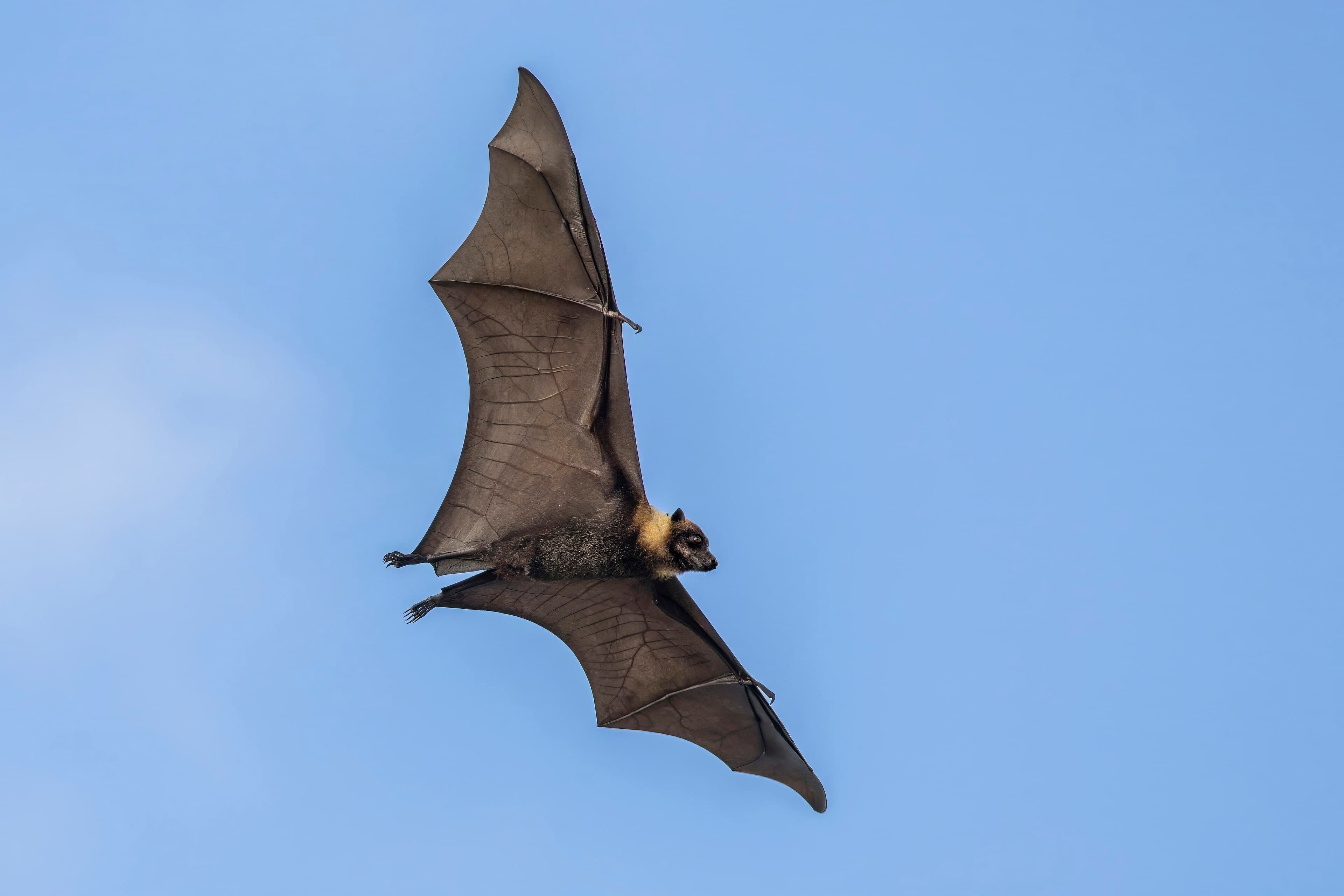
Flying foxes are large fruit bats that hang upside down in trees during the day and fly out to eat fruit at dusk. In Tonga they are considered sacred animals and are protected โ€” this means they can be very tame and easy to spot, hanging in great clusters in the trees of certain gardens and forests.

Tell me more

Despite the name, flying foxes are not foxes at all โ€” they are bats. They are called flying foxes because of their dog-like faces, pointy ears, and reddish-brown fur, which make them look a little like a fox wearing a cloak. The Pacific flying fox found in Tonga has a wingspan of up to a metre โ€” about as wide as a grown-up's outstretched arms โ€” making it one of the largest bats in the world.

During the day, flying foxes roost in trees in big noisy groups called camps. They wrap their leathery wings around themselves like a blanket and hang upside down, occasionally bickering with their neighbours for a better branch. As the sun goes down, they all take off at once, filling the sky with their dark, flickering shapes as they fly out to find fruit, flowers, and nectar to eat.

In Tonga, flying foxes play an important role in the forest. As they move from tree to tree eating fruit, they spread seeds in their droppings โ€” helping new trees to grow in places they might not otherwise reach. They also pollinate flowers by carrying pollen on their fur as they feed. This means that some of Tonga's forest trees depend on flying foxes to reproduce.

In the classroom

Walk your class through this in 15 minutes.

Talk together

Discussion prompts

  1. 01Flying foxes help forests grow by spreading seeds. Can you think of other animals that help plants spread their seeds?
  2. 02These bats sleep upside down all day. What adaptations (special body features) do you think they need to make that comfortable?
  3. 03In Tonga, flying foxes are considered sacred and protected. How does protecting animals change the way those animals behave around people?
Try this

Classroom activity

Hang a length of string between two chairs to be a 'branch'. Cut out bat shapes from black card and attach a paper clip to each one. Children take turns clipping their bat onto the string upside down. Once all bats are hanging, count the cluster and label it a 'camp'. Then one child (the 'sunset') waves a yellow card โ€” all bats fly off at once. Discuss what it would look like in real life.